
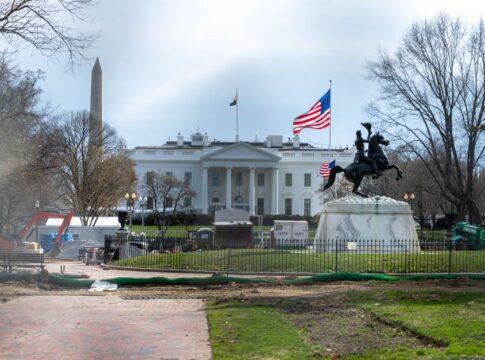
Photo: Quang Vuong / Pexels
By Daily American Press Newsroom, National Desk — Published November 14, 2026
Table of Contents
- Key Takeaways
- The Background & Context
- Why This Matters
- Reactions & Analysis
- What Happens Next
- Frequently Asked Questions
The White House counsel has publicly celebrated a Supreme Court decision as a landmark victory for executive authority, calling it a “generational win” that strengthens presidential power to remove federal officials. The statement signals the administration’s confidence that recent high court rulings have fundamentally reshaped the balance of power between the executive branch and independent agencies—a shift with profound implications for how the federal government operates and who controls its sprawling bureaucracy.
This declaration comes amid a broader legal and political landscape where presidential authority remains hotly contested. The Supreme Court has emerged as the central battleground for defining the scope of executive power, with multiple cases involving the current and former administrations potentially returning to the justices for further review. For millions of Americans who depend on federal agencies for everything from financial regulation to environmental protection, these legal battles will determine who ultimately governs the regulators.
The timing of the counsel’s remarks underscores the administration’s strategy to consolidate control over the executive branch. By framing the Court’s decision as a generational achievement, White House officials are signaling their intent to use this expanded authority aggressively—potentially reshaping agencies that have long operated with a degree of independence from direct presidential control.
Key Takeaways
- White House counsel characterized a recent Supreme Court ruling on presidential firing authority as a “generational win” for executive power
- The decision strengthens the president’s ability to remove federal officials, potentially affecting independent agencies across government
- Multiple major cases involving presidential authority may return to the Supreme Court for additional review and clarification
- The ruling shifts the constitutional balance between executive control and agency independence, with far-reaching consequences for federal governance
- Legal experts anticipate the decision will trigger waves of litigation as the administration tests the boundaries of its expanded removal power
- Citizens who rely on independent regulatory agencies face uncertainty about how enforcement priorities and policies may change under direct presidential control
The Background & Context
The question of presidential removal power has bedeviled American constitutional law since the nation’s founding. The Constitution grants the president authority to appoint principal officers with Senate consent, but remains conspicuously silent on removal. This ambiguity has spawned two centuries of debate about whether Congress can limit the president’s ability to fire officials who displease him.
For most of the twentieth century, the Supreme Court permitted Congress to insulate certain agency heads from at-will removal by the president. The reasoning was straightforward: independent agencies charged with quasi-legislative or quasi-judicial functions—like securities regulation or labor relations—should operate free from direct political pressure. Officials could only be removed “for cause,” meaning serious misconduct or incompetence, not mere policy disagreements.
This framework created a category of “independent agencies” whose leaders enjoyed job security even when their decisions angered the White House. The Federal Reserve, the Securities and Exchange Commission, the National Labor Relations Board, and dozens of other agencies operated under this model. Presidents of both parties sometimes chafed at this arrangement, but it became an accepted feature of the administrative state.
Recent Supreme Court decisions have begun dismantling this structure. The Court has grown increasingly skeptical of limitations on presidential removal power, viewing them as unconstitutional constraints on executive authority under Article II. Each new ruling has chipped away at the independence of agency officials, moving the constitutional needle toward a unitary executive theory—the idea that the president must have direct control over all executive branch functions.
The case that prompted the White House counsel’s celebration represents the latest and perhaps most significant step in this direction. While the specific details of the ruling remain subject to interpretation, its broader thrust is unmistakable: presidents now possess greatly expanded authority to remove officials who resist their policy directives, even in agencies traditionally shielded from political interference.
Why This Matters
For ordinary Americans, these constitutional debates might seem abstract. They are anything but. The question of who controls federal agencies directly affects the quality of the air we breathe, the safety of the food we eat, the security of our retirement savings, and the fairness of our workplaces.
Independent agencies were designed to make decisions based on expertise and evidence rather than political expediency. When the Federal Reserve sets interest rates, most Americans want those decisions driven by economic data, not by a president’s reelection calendar. When the Food and Drug Administration approves medications, we expect rigorous scientific review, not political favoritism toward pharmaceutical companies with White House connections.
The expanded presidential firing power could fundamentally alter this dynamic. Agency heads who know they serve at the president’s pleasure may prove more responsive to political pressure and less willing to make unpopular but necessary decisions. A Federal Reserve chair worried about removal might hesitate to raise interest rates before an election. An EPA administrator might soften pollution standards to please industries important to the president’s political coalition.
The implications extend beyond policy outcomes to basic questions of accountability and expertise. Career civil servants who have spent decades developing specialized knowledge may find their recommendations overridden by political appointees focused on short-term political gains. Regulatory consistency could give way to wild swings as each new administration purges agencies and installs loyalists.
Taxpayers also have a stake in this debate. Independent agencies exist partly to prevent corruption and self-dealing. When presidents can fire watchdogs at will, the temptation to use regulatory power for personal or political benefit grows stronger. History offers sobering examples of what happens when executive power operates without meaningful checks—from Watergate to more recent controversies involving politicized law enforcement.
Reactions & Analysis
The White House counsel’s triumphant rhetoric reflects the administration’s view that presidential control over the executive branch is both constitutionally required and practically necessary. From this perspective, the Supreme Court has simply corrected decades of judicial error that improperly fragmented executive power. A president elected by the American people, the argument goes, should not be forced to implement policies through officials he cannot remove.
Critics see the decision very differently. Constitutional scholars who favor agency independence warn that the ruling concentrates dangerous power in the presidency. They argue that the Framers deliberately created a system of separated powers and checks and balances precisely to prevent any single official from accumulating too much authority. Allowing presidents to fire any official for any reason, they contend, transforms the executive branch into a personal political machine.
The legal community remains divided on how far the Court’s reasoning extends. Some analysts predict the decision will be narrowly applied to specific types of officials. Others foresee a cascade of challenges to removal protections across the federal government, potentially affecting tens of thousands of positions currently insulated from political termination.
According to reports, multiple major cases involving presidential authority may return to the Supreme Court as lower courts grapple with applying the new standard. This suggests the legal battle over executive power is far from over. Each new case will test the boundaries of the ruling and potentially expand or limit its reach.
Members of Congress have begun weighing in, though their responses largely track partisan lines. Lawmakers aligned with the administration praise the decision as restoring constitutional balance. Opposition members warn of unchecked executive power and vow to explore legislative responses, though any statutory fix would likely face both political obstacles and constitutional challenges given the Court’s reasoning.
What Happens Next
The immediate practical question is how aggressively the administration will exercise its newly affirmed removal power. Will the White House move quickly to replace agency heads who have resisted its policy agenda? Or will it proceed cautiously, aware that mass firings could trigger public backlash and further litigation?
Early signals suggest the administration views the decision as a green light for significant personnel changes. The White House counsel’s characterization of the ruling as a “generational win” implies an intent to use this authority transformatively, not merely symbolically. Observers expect a wave of departures from independent agencies in the coming months, whether through direct removal or the more subtle pressure of knowing one’s job security has evaporated.
The legal landscape will continue evolving as well. As noted by legal analysts, major cases involving presidential authority may cycle back through the court system, creating opportunities for the Supreme Court to refine or expand its reasoning. Each iteration will clarify what limits, if any, remain on presidential removal power.
Congress faces difficult choices about how to respond. Lawmakers could attempt to restore agency independence through new legislation, but such efforts would likely be struck down under the Court’s current interpretation of Article II. Constitutional amendments remain theoretically possible but practically impossible given the supermajority requirements. The legislative branch may find itself largely sidelined in this debate, able to complain but unable to constrain.
For federal agencies themselves, the decision creates profound uncertainty. Career officials must now navigate an environment where political loyalty may matter as much as technical expertise. Agency cultures built around independence and professionalism will face pressure to become more responsive to White House direction. The long-term effects on government effectiveness and public trust remain to be seen.
The business community and regulated industries will be watching closely. Some sectors may welcome more direct presidential control, seeing opportunities to influence policy through political channels. Others may worry about regulatory instability and the loss of expert, consistent decision-making. Markets generally prefer predictability, and the politicization of independent agencies could introduce new volatility.
Frequently Asked Questions
What exactly did the Supreme Court decide about presidential firing power?
The Supreme Court strengthened the president’s constitutional authority to remove federal officials, limiting Congress’s ability to protect agency heads from at-will termination. While the specific scope depends on the particular case, the decision generally expands presidential control over executive branch personnel, even in agencies traditionally considered independent. The White House counsel characterized this as a landmark victory for executive authority that will shape governance for a generation.
Which federal agencies could be affected by this ruling?
The decision potentially affects any agency whose leadership currently enjoys for-cause removal protection. This could include independent regulatory agencies like the Securities and Exchange Commission, the Federal Trade Commission, the Consumer Financial Protection Bureau, and others. The exact scope will become clearer as the administration tests the ruling’s boundaries and as additional cases work through the courts. Agencies involved in financial regulation, consumer protection, labor relations, and other quasi-independent functions face the most immediate uncertainty.
Can Congress do anything to restore agency independence?
Congress faces significant constitutional constraints in responding to the Supreme Court’s decision. Any legislative attempt to reinstate removal protections would likely be challenged as violating the president’s Article II powers under the Court’s current interpretation. While lawmakers can hold hearings, issue statements, and explore options, their practical ability to reverse the decision through statute appears limited. Constitutional amendments would require overwhelming political consensus that does not currently exist.
How does this affect ordinary Americans who rely on federal agencies?
The ruling could significantly impact how federal agencies make decisions that affect daily life. Agencies responsible for food safety, environmental protection, financial regulation, workplace safety, and consumer protection may become more responsive to presidential political priorities and less insulated to make decisions based purely on expertise and evidence. This could mean faster policy changes aligned with each administration’s agenda, but potentially less consistency and more vulnerability to political pressure. The long-term effects on regulatory effectiveness and public protection remain uncertain.
The White House counsel’s celebration of this Supreme Court decision marks a pivotal moment in the ongoing struggle to define presidential power in the modern administrative state. Whether Americans ultimately view this as a necessary correction or a dangerous concentration of authority may depend on how responsibly future presidents wield their expanded removal power—and whether the guardrails of expertise, ethics, and public accountability can survive in an era of diminished agency independence.