
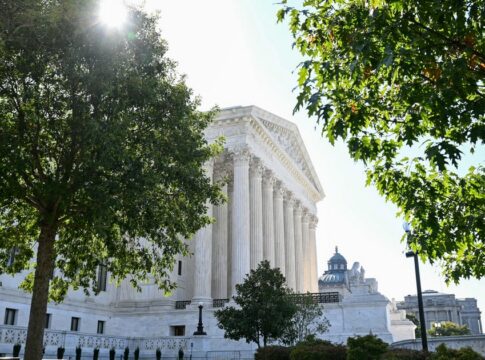
The Supreme Court will rule by summer on whether President Trump possesses constitutional authority to suspend asylum access for migrants crossing the southern border illegally, a decision that could fundamentally reshape executive power over immigration enforcement and border security.
Presidential Authority Challenged in Federal Courts
President Trump issued a proclamation on his first day back in office declaring an invasion at the southern border. The directive suspended entry for migrants crossing between ports of entry and barred them from seeking asylum or other legal protections. The Department of Homeland Security implemented guidance allowing immigration authorities to summarily remove illegal border crossers without processing asylum applications, marking a significant shift in border enforcement procedures.
Three nonprofit organizations and thirteen individuals filed a class-action lawsuit in February 2025 challenging the proclamation’s legality. Federal Judge Randolph Moss ruled against the administration several months later, determining that neither the Constitution nor federal immigration law granted the executive branch authority to override congressional asylum procedures. Moss certified a class covering all individuals affected by the proclamation and blocked enforcement against them.


Constitutional Questions Before the High Court
The case centers on whether the president can unilaterally limit noncitizen rights to apply for asylum, a question with far-reaching implications for separation of powers. Judge Moss concluded that immigration law does not give the president authority to replace rules and procedures enacted by Congress. The Trump administration argues that executive action is necessary to address what it characterizes as an invasion requiring immediate response to protect national security and public safety.
The D.C. Circuit Court halted Moss’s ruling pending Supreme Court review, allowing the administration to continue enforcing its asylum suspension policy during ongoing legal proceedings. The temporary stay preserves current border enforcement practices while the nation’s highest court examines the constitutional boundaries of presidential immigration authority.
Stakes for Border Security and Executive Power
A Supreme Court decision expected by late June or early July will determine whether future presidents can act independently on immigration matters or must work within congressional frameworks. The ruling could either validate presidential emergency powers at the border or reinforce legislative supremacy over immigration policy. This case represents a critical test of constitutional limits on executive authority, with profound consequences for how America manages border security and asylum processing for years to come.
Sources
Cbsnews: Supreme Court takes up case over Trump effort to suspend asylum access at southern border