
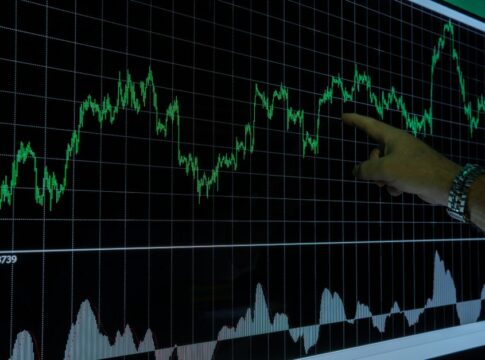
Photo: Rafael Minguet Delgado / Pexels
By Daily American Press Newsroom, Economy Desk — Published November 23, 2026
Table of Contents
- Key Takeaways
- The Background & Context
- Why This Matters
- Reactions & Analysis
- What Happens Next
- Frequently Asked Questions
Wall Street’s attention has turned sharply to a potential buying opportunity as Goldman traders signal an entry point in US stocks, even as they caution investors about significant risks ahead. The timing comes amid heightened market volatility that has rattled portfolios and left many wondering whether the recent turbulence represents a chance to buy the dip or a warning of deeper trouble to come.
The conflicting signals from one of the nation’s most influential financial institutions reflect the complex crosscurrents facing the American economy. Interest rates remain elevated, inflation concerns persist despite recent cooling, and jobs data continues to send mixed messages about the health of the labor market. For everyday investors watching their retirement accounts and college savings, the question isn’t academic—it’s deeply personal.
According to reports from multiple financial news outlets, Goldman’s trading desk is identifying what they view as attractive valuations in US equities, particularly after a technology-driven selloff that has created steep losses across major indices. Yet the same analysts who see opportunity are simultaneously flagging considerable dangers that could derail any recovery attempt.
Key Takeaways
- Goldman Sachs traders have identified what they believe is an entry point for US stock investments following recent market declines
- The assessment comes with explicit warnings about ongoing risks that could undermine any potential rally
- Stock traders are bracing for continued volatility, particularly in the technology sector which has driven recent market turmoil
- The mixed signals reflect broader uncertainty about the economy, with questions surrounding inflation, interest rates, and employment trends
- Investors face a challenging decision about whether current market conditions represent a buying opportunity or a value trap
- The situation highlights the delicate balance Wall Street is attempting to strike between optimism and caution in an unpredictable environment
The Background & Context
The current market environment didn’t materialize overnight. It’s the product of years of unprecedented monetary policy, pandemic-era stimulus, and the subsequent attempt by the Federal Reserve to tame inflation without triggering a recession. That delicate balancing act has created whipsaw conditions for investors.
Technology stocks, which led the market higher for much of the past decade, have become a particular source of volatility. The sector’s outsized influence on major indices means that when tech sells off, it drags the broader market down with it. Recent reports indicate that traders are preparing for more turbulence specifically driven by technology-sector dynamics.
Goldman Sachs occupies a unique position in this landscape. As both a major market participant and a closely watched analyst of market conditions, its pronouncements carry weight. When Goldman traders speak, investors listen. The firm’s dual role as both player and commentator gives it insight into actual trading flows and positioning—not just theoretical models.
The concept of an “entry point” is familiar to seasoned investors but can be treacherous for the uninitiated. It suggests a moment when assets have fallen enough to represent good value, but not so far that they indicate fundamental problems. Identifying these inflection points is more art than science, and even the most sophisticated Wall Street operations get it wrong.
What makes this particular moment noteworthy is the explicit warning that accompanies the opportunity assessment. Goldman isn’t simply saying stocks look cheap—it’s saying they look cheap but dangerous. That nuanced message reflects the genuine uncertainty pervading financial markets right now.
Why This Matters
For the average American, Wall Street’s machinations might seem distant from daily life. But the health of stock markets affects far more than wealthy traders. Retirement accounts, pension funds, college savings plans, and even the job security of millions of workers depend on market stability and growth.
When markets experience sustained volatility, it creates ripple effects throughout the economy. Companies may delay hiring or expansion plans. Consumer confidence can erode as people watch their investment accounts fluctuate. The wealth effect—where people spend more when they feel richer—works in reverse during market downturns.
The Goldman assessment matters because it could influence how other major investors position themselves. If a significant portion of Wall Street follows Goldman’s lead and begins buying, it could help stabilize markets and support asset prices. Conversely, if the warned risks materialize, those who bought the dip could face substantial losses.
Interest rate policy sits at the heart of these dynamics. The Federal Reserve’s decisions about borrowing costs affect everything from mortgage rates to credit card interest to business investment. Higher rates, implemented to fight inflation, make stocks less attractive relative to safer bonds. They also slow economic growth by making borrowing more expensive. The jobs market responds to these pressures, sometimes with a significant lag that makes real-time assessment difficult.
Inflation remains a critical concern for American households, even as headline numbers have moderated from their peaks. Grocery bills, housing costs, and insurance premiums continue straining family budgets. If market volatility leads to broader economic weakness, it could affect job security and wage growth—the very factors that help families cope with elevated prices.
Reactions & Analysis
The investment community’s response to Goldman’s mixed message has been cautious. Some market participants view the current environment as an opportunity to accumulate quality stocks at reduced prices. Others see the warnings as sufficient reason to stay on the sidelines until conditions clarify.
The technology sector’s role as a volatility driver has prompted particular scrutiny. Tech stocks had reached valuations that many considered stretched, making them vulnerable to any negative catalyst. The recent rout has brought some of those valuations back to earth, but questions remain about whether the correction is complete or just beginning.
Professional money managers face a difficult calculus. Their job is to generate returns while managing risk, and the current environment makes both objectives challenging. Missing a market bottom can be as costly as buying too early into a continuing decline. The Goldman assessment provides some cover for managers who want to begin deploying cash but need justification for doing so in uncertain conditions.
Retail investors—ordinary Americans managing their own portfolios—confront similar dilemmas without the resources and expertise of professional traders. The temptation to time the market can be strong, but history shows that most investors are better served by consistent, long-term strategies rather than attempting to catch falling knives or time perfect entries.
What Happens Next
The coming weeks and months will test whether Goldman’s traders have correctly identified a buying opportunity or stepped into a continuing decline. Several factors will prove decisive.
Economic data releases will matter enormously. Jobs reports, inflation readings, and GDP growth figures will all influence market sentiment and Federal Reserve policy. Strong data could support the case for buying stocks, while weakness might vindicate caution.
Corporate earnings season provides another crucial test. If companies can deliver solid profits and positive guidance despite economic headwinds, it would support higher stock prices. Disappointing results or cautious outlooks could trigger renewed selling.
Federal Reserve communications will be parsed for any hints about the future path of interest rates. Markets are extremely sensitive to rate expectations, and any shift in the central bank’s stance could trigger significant moves in either direction.
Geopolitical developments, while often unpredictable, can also drive market volatility. Trade tensions, international conflicts, or policy shifts in major economies can all affect investor sentiment and capital flows.
The technology sector’s trajectory will be particularly important given its outsize influence on major indices. Whether the recent selloff represents healthy consolidation or the beginning of a more sustained decline will significantly impact overall market direction.
Frequently Asked Questions
What does Goldman Sachs mean by an “entry point” in stocks?
An entry point refers to a price level or market condition where investors might consider buying stocks because they appear attractively valued. Goldman traders are suggesting that recent declines have created potential buying opportunities, though they emphasize that significant risks remain. It’s essentially a signal that stocks may have fallen enough to represent reasonable value for those willing to accept the accompanying uncertainties.
Should individual investors follow Goldman’s assessment and buy stocks now?
Individual investment decisions should be based on personal circumstances, risk tolerance, and time horizon rather than any single market call from a Wall Street firm. While Goldman’s assessment provides useful perspective, it comes with explicit warnings about risks. Most financial advisors recommend that individual investors maintain diversified portfolios and avoid trying to time the market, instead focusing on consistent, long-term investment strategies appropriate to their goals.
Why is the technology sector causing so much market volatility?
Technology stocks have grown to represent a large portion of major stock indices, meaning their performance significantly affects overall market direction. Many tech companies reached high valuations that made them vulnerable to negative news or changing investor sentiment. When these stocks sell off sharply, they can drag the entire market lower. The sector’s volatility reflects both its importance to the economy and questions about whether previous valuations were sustainable.
How do interest rates and inflation affect the stock market?
Interest rates and inflation influence stock prices through multiple channels. Higher interest rates make bonds more attractive relative to stocks and increase borrowing costs for companies, potentially reducing profits. Inflation erodes purchasing power and can force the Federal Reserve to raise rates further. Together, these factors affect corporate earnings, investor preferences, and economic growth—all of which drive stock prices. The current environment of elevated rates and persistent inflation concerns contributes to market uncertainty.
As Americans navigate these turbulent financial waters, the Goldman assessment serves as a reminder that even Wall Street’s most sophisticated players are grappling with genuine uncertainty. The opportunity may be real, but so are the risks. In markets as in life, there are rarely easy answers—only informed decisions made in the face of incomplete information.