
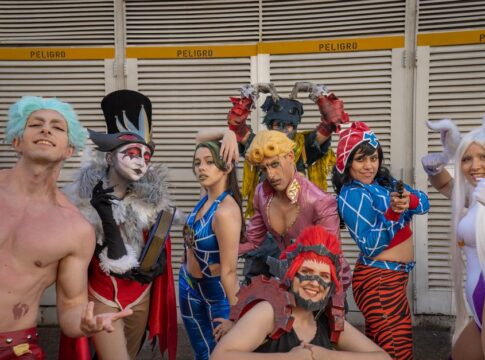
Photo: Martin.que / Pexels
By Daily American Press Newsroom, Entertainment Desk — Published October 20, 2026
Table of Contents
- Key Takeaways
- The Background & Context
- Why This Matters
- Reactions & Analysis
- What Happens Next
- Frequently Asked Questions
Halloween has undergone a radical transformation. The holiday once dominated by witches, vampires, and superheroes now finds itself hijacked by a new breed of costume: the hyperspecific, meme-centric ensemble that requires a PhD in internet culture to decode. This year, the phenomenon has reached peak visibility, particularly within queer communities where Halloween has long held special cultural significance.
Reports from entertainment and pop culture observers indicate that internet memes have fundamentally reshaped how Americans—especially younger generations—approach Halloween costume selection. The shift represents more than just a passing trend. It signals a broader evolution in how streaming culture, viral moments from TV shows and movies, and social media have merged to create an entirely new language of self-expression through dress-up.
The phrase “I hate gay Halloween” itself has become a tongue-in-cheek meme, acknowledging the elaborate, often obscure costume choices that have become synonymous with LGBTQ+ Halloween celebrations. These aren’t your grandmother’s costumes. They’re references layered upon references, inside jokes made visible, and cultural commentary wrapped in polyester and hot glue.
Key Takeaways
- Internet memes have fundamentally transformed Halloween costume culture, replacing traditional options with hyperspecific references requiring deep online knowledge
- Queer communities have particularly embraced this trend, creating costumes so niche they’ve spawned their own meta-memes about being incomprehensible
- The phenomenon reflects how streaming platforms, social media, and pop culture have created shared cultural moments that translate into costume choices
- Traditional costume retailers and party-goers now compete with elaborate, reference-heavy ensembles that prioritize cultural literacy over recognizability
- The trend has generated significant online discussion about the evolution of Halloween as a holiday and its meaning across different communities
- Entertainment industry observers note this shift mirrors broader changes in how audiences consume and interact with movies, TV shows, and digital content
The Background & Context
Halloween has always been a shape-shifter. The ancient Celtic festival of Samhain evolved into a Christian observance, then transformed into the candy-fueled, costume-centric American holiday we know today. But the past decade has accelerated changes that would have taken generations in earlier eras.
According to cultural observers tracking the phenomenon, internet memes have taken over Halloween in ways that would have been impossible before social media. The mechanism is straightforward: a moment from a TV show goes viral, spawns countless memes and remixes, embeds itself in the collective consciousness, and by October 31st, appears at parties nationwide in costume form.
The queer community’s relationship with Halloween runs deep. For decades, the holiday has offered a rare mainstream opportunity for gender expression, creativity, and camp—a chance to be seen and celebrated rather than marginalized. Gay neighborhoods have long hosted elaborate Halloween celebrations that put straight suburban trick-or-treating to shame.
What’s changed is the nature of the costumes themselves. Where previous generations might have dressed as Cher or Freddie Mercury—recognizable icons—today’s revelers show up as “the exact frame where Jennifer Coolidge realizes she’s been betrayed in White Lotus Season 2” or “the specific shade of green used in Wicked marketing materials before anyone had seen the movie.”
Reports examining hyperspecific queer Halloween costumes note that the accuracy of these observations has resonated widely. The costumes have become so elaborate, so reference-dependent, that they’ve generated their own ecosystem of memes about being incomprehensible to outsiders.
Why This Matters
This isn’t just about costumes. It’s about cultural fragmentation and community formation in the streaming age.
For the entertainment industry, the phenomenon represents both opportunity and challenge. Studios and streaming platforms now see their content transformed into Halloween costumes within weeks of release, providing free marketing but also revealing which moments truly resonate with audiences. A character or scene that generates costume interpretations has achieved a level of cultural penetration that traditional metrics struggle to capture.
For American consumers, the shift raises questions about accessibility and inclusion. When costumes require extensive knowledge of niche internet culture, movies, or streaming shows, Halloween risks becoming stratified by digital literacy and access. Not everyone can afford multiple streaming subscriptions or has time to stay current with every viral moment.
The phenomenon also highlights generational divides. Older Americans who might recognize a Spider-Man costume are left baffled by someone dressed as “the pause before Succession’s Kendall Roy says ‘I’m not a good person.'” This creates both humor and disconnection at multigenerational gatherings.
From a business perspective, traditional costume retailers face disruption. When the most desired costumes are hyperspecific references to recent pop culture moments, mass-produced options arrive too late or miss the mark entirely. This has fueled a DIY renaissance, with party-goers creating elaborate costumes from thrift store finds and craft supplies.
For queer communities specifically, these costumes serve multiple functions. They’re identity markers, signaling membership in particular subcultures. They’re artistic expression, showcasing creativity and cultural knowledge. And they’re defensive humor, acknowledging and celebrating the community’s reputation for taking Halloween “too seriously.”
Reactions & Analysis
Social media has exploded with reactions to the hyperspecific costume trend. The discourse reveals both celebration and exhaustion.
Many participants embrace the challenge. Creating a costume that only fifty people in the country will immediately understand becomes a badge of honor, proof of one’s cultural fluency and creative vision. These costumes photograph well, generate engagement online, and create instant connections with fellow insiders who “get it.”
Others express fatigue. The phrase “I hate gay Halloween” emerged from within queer communities as affectionate self-mockery, acknowledging the pressure to produce increasingly elaborate, reference-heavy costumes. What was once playful has become competitive, with social media raising the stakes each year.
Cultural critics examining the trend note its democratic and exclusive qualities simultaneously. Anyone with internet access can participate in meme culture, but truly understanding the layered references requires significant time investment. The costumes create in-groups and out-groups, sometimes intentionally.
Entertainment industry analysts see the phenomenon as evidence of how deeply streaming culture has penetrated American life. When obscure moments from prestige TV shows become costume inspiration, it demonstrates the power of these platforms to create shared cultural experiences despite audience fragmentation.
Some observers worry about sustainability—both environmental and creative. The drive for novelty means costumes rarely get reused, and the hyperspecific nature means they date quickly. Next year’s party-goers need entirely new references, creating a treadmill of consumption and waste.
What Happens Next
The trajectory seems clear: costumes will become more specific, more online, more reference-dependent.
As streaming platforms multiply and content proliferates, the shared cultural moments that enable recognizable costumes may become rarer. We might see increased clustering, where different friend groups inhabit entirely separate costume universes based on their media consumption patterns.
Alternatively, certain moments might break through so powerfully that they unite disparate audiences. A truly viral movie or TV moment can still create costumes that transcend subcultural boundaries. The challenge is predicting which moments will achieve that status.
The entertainment industry will likely adapt by creating more “costume-ready” content—characters and moments designed for visual replication and viral spread. This could influence creative decisions, for better or worse.
For Halloween itself, the holiday continues evolving. Each generation remakes it in their image, and the current hyperspecific, meme-centric approach reflects our fragmented, extremely online moment. Whether this represents Halloween’s future or just a phase remains to be seen.
The queer community’s role as Halloween innovator seems secure. Whatever comes next, LGBTQ+ party-goers will likely lead the way, pushing boundaries and inspiring both admiration and the exasperated declaration: “I hate gay Halloween.”
Frequently Asked Questions
What does “hyperspecific meme-centric” mean in costume context?
Hyperspecific meme-centric costumes are Halloween ensembles based on extremely detailed references to internet memes, viral moments from streaming shows and movies, or niche pop culture phenomena. Rather than dressing as a general character like “vampire” or even “Dracula,” someone might dress as a specific facial expression from a single scene in a TV show that became a meme. These costumes require deep knowledge of online culture and recent entertainment to recognize.
Why is this trend particularly associated with queer Halloween celebrations?
The queer community has a long history of elaborate Halloween celebrations that emphasize creativity, camp, and cultural references. LGBTQ+ individuals have traditionally used Halloween as an opportunity for expression and community gathering. This existing culture of taking Halloween seriously, combined with queer communities’ strong presence in online spaces and entertainment fandom, has made them leaders in the hyperspecific costume trend. The phrase “I hate gay Halloween” emerged as self-aware humor within these communities about the increasingly elaborate expectations.
How have internet memes changed Halloween costume culture?
Internet memes have shifted Halloween costumes from traditional archetypes and mainstream characters toward extremely current, reference-heavy ensembles. Memes create shared cultural moments that spread rapidly online, and Halloween provides an opportunity to embody these moments physically. This has accelerated costume trends, made them more dependent on recent pop culture and streaming content, and created costumes that may only be recognizable for a single season or even a few weeks after a viral moment peaks.
Are traditional Halloween costumes disappearing?
Traditional costumes haven’t disappeared, but they’re increasingly seen as less creative or interesting in certain social circles, particularly among younger, more online demographics and in urban queer communities. Many Americans still dress as classic characters, superheroes, or generic costumes, especially for family-friendly events or trick-or-treating with children. However, adult Halloween parties, particularly in cultural trendsetter communities, have shifted heavily toward hyperspecific, reference-based costumes that demonstrate cultural knowledge and creativity rather than simply purchasing a recognizable character outfit.
As October 31st approaches each year, the arms race continues. Somewhere right now, someone is planning a costume so specific, so perfectly calibrated to this moment’s internet culture, that it will require a fifteen-minute explanation to anyone who asks. And that’s exactly the point. Halloween has always been about transformation, but now it transforms along with our fragmented, streaming, meme-saturated culture—one hyperspecific costume at a time.