
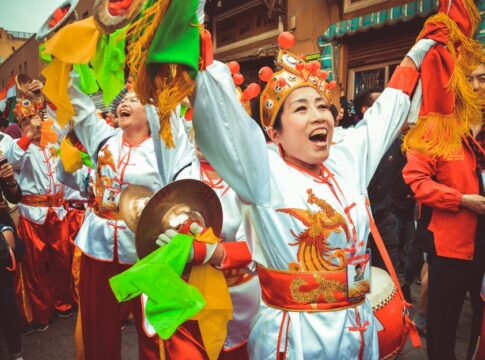
Photo: Bishoy Milad / Pexels
By Daily American Press Newsroom, Entertainment Desk — Published October 12, 2026
Table of Contents
- Key Takeaways
- The Background & Context
- Why This Matters
- Reactions & Analysis
- What Happens Next
- Frequently Asked Questions
America’s entertainment landscape is shifting. Chinese pop culture—from streaming dramas to viral social media trends—is carving out space in the daily lives of young Americans, particularly Generation Z. While South Korean pop culture captured global attention over the past decade, a quieter but equally significant cultural wave from China is now gaining momentum.
The rise of Chinese culture in the United States reflects broader changes in how entertainment crosses borders in an age of digital streaming and social media virality. Chinese films, television series, music, and online content are no longer confined to diaspora communities. They’re reaching mainstream American audiences, especially younger viewers who consume content without the geographic boundaries that once limited cultural exchange.
This shift carries implications beyond entertainment. Cultural influence shapes perceptions, drives economic opportunities, and reflects changing global power dynamics. For American audiences, understanding this trend means recognizing how the world’s second-largest economy is projecting soft power through the universal language of pop culture.
Key Takeaways
- Chinese pop culture is experiencing measurable growth in the United States, particularly among Generation Z consumers who access content through streaming platforms and social media.
- The “Becoming Chinese” trend reflects increasing appeal of Chinese cultural products, fashion, language, and lifestyle elements among younger demographics.
- Chinese cultural influence is developing along a trajectory similar to South Korean pop culture, though with distinct characteristics and challenges.
- Streaming services and digital platforms have eliminated traditional barriers to cross-cultural content consumption, enabling Chinese entertainment to reach American audiences directly.
- This cultural exchange represents a form of soft power that carries economic, diplomatic, and social implications for U.S.-China relations.
- American entertainment industries face new competition and collaboration opportunities as Chinese pop culture gains traction domestically.
The Background & Context
For decades, American pop culture dominated global entertainment markets. Hollywood films, American music, and television shows shaped cultural consumption worldwide. That dominance went largely unchallenged until the 2010s, when South Korean pop culture—K-pop music, Korean dramas, and Korean cinema—demonstrated that non-Western entertainment could capture massive international audiences.
The Korean Wave, or Hallyu, proved a critical point: streaming technology and social media had fundamentally changed how culture travels. Geography became less relevant. Language barriers diminished with subtitles and dubbing. Fans could discover, share, and celebrate content from anywhere.
Chinese pop culture is now following a similar path, though the dynamics differ significantly. China’s entertainment industry benefits from the world’s largest domestic market, substantial government investment, and increasingly sophisticated production values. Chinese streaming platforms like iQIYI and Tencent Video produce content rivaling Western production budgets. Historical dramas, fantasy epics, and contemporary romances attract devoted fanbases.
The phenomenon extends beyond traditional entertainment. Short-form video platforms have amplified Chinese cultural trends. Fashion styles, makeup tutorials, cooking videos, and lifestyle content from Chinese creators reach American viewers who may never watch a full-length Chinese film or television series. This fragmented, algorithm-driven cultural exchange operates differently than previous waves of foreign influence.
Generation Z—Americans born roughly between 1997 and 2012—represents the primary demographic driving this consumption. They grew up with streaming services, YouTube, and TikTok. For them, content origin matters less than content quality and relevance. They’re comfortable with subtitles, accustomed to global fandoms, and skilled at navigating cross-cultural references.
Why This Matters
Cultural influence carries weight beyond entertainment value. When American audiences consume Chinese pop culture, they encounter Chinese perspectives, values, and narratives. This shapes perceptions of China itself—its people, history, and contemporary society. In an era of strategic competition between the United States and China, these cultural connections create complexity.
Economically, the trend signals opportunities and challenges. American streaming platforms compete for licensing rights to popular Chinese content. Collaboration between Chinese and American production companies increases. Simultaneously, domestic entertainment industries face new competition for audience attention and spending.
The rise represents a test case for cultural exchange in a politically fraught relationship. Trade tensions, technology disputes, and geopolitical rivalry characterize U.S.-China relations at the governmental level. Yet cultural products flow across borders, consumed by audiences largely indifferent to diplomatic tensions. This disconnect between political relations and cultural consumption creates an unusual dynamic.
For American viewers, especially younger ones, Chinese pop culture offers something different from the familiar. Historical dramas provide glimpses into Chinese history and mythology. Contemporary shows explore modern Chinese life, aspirations, and social dynamics. Even when idealized or fictionalized, this content broadens understanding of the world’s most populous nation.
The “Becoming Chinese” trend—a phrase capturing the appeal of Chinese cultural elements—suggests deeper engagement than passive consumption. Language learning apps report increased interest in Mandarin among young Americans. Chinese fashion aesthetics influence American streetwear. Traditional Chinese cultural elements appear in unexpected contexts, from wellness practices to design trends.
Reactions & Analysis
Academic researchers have begun examining how Chinese pop culture develops in the United States, particularly in comparison to the well-documented Korean Wave. Studies focusing on Generation Z consumption patterns reveal that Chinese cultural products follow similar distribution channels—streaming platforms, social media, and fan communities—while facing distinct obstacles.
Language presents a more significant barrier for Chinese content than Korean content, despite both requiring subtitles for most American viewers. Mandarin’s tonal complexity and character-based writing system create higher barriers to fan engagement through language learning. Korean’s alphabet system, while foreign, proves more accessible to English speakers attempting to learn phrases or song lyrics.
Political context also shapes reception differently. South Korea maintains strong alliance relationships with the United States, creating fewer complications for cultural exchange. Chinese pop culture navigates a more complex political environment, with content sometimes scrutinized for political messaging or government influence.
Industry observers note that Chinese entertainment companies are becoming more sophisticated in understanding international audiences. Production values continue rising. Storytelling techniques incorporate global influences while maintaining cultural specificity. Marketing strategies target international fans from the outset rather than treating them as afterthoughts.
American entertainment executives watch these developments closely. Some see partnership opportunities. Others worry about market share erosion. The reality likely involves both—collaboration in some areas, competition in others, and overall expansion of the entertainment ecosystem as audiences prove willing to consume more content from more sources.
What Happens Next
The trajectory of Chinese pop culture influence in the United States remains uncertain but several trends appear likely. Streaming platforms will continue expanding Chinese content libraries, testing audience appetite across genres. Social media will amplify viral moments, introducing Chinese cultural elements to Americans who might never seek out full-length programming.
Generational differences will persist. Generation Z and younger cohorts will drive consumption, while older Americans remain less engaged with foreign-language content generally. This creates a gradual but significant cultural shift as younger audiences age into greater cultural and economic influence.
Political factors could accelerate or constrain growth. Deteriorating U.S.-China relations might prompt restrictions on content licensing or distribution. Conversely, cultural exchange could serve as a rare area of continued engagement even amid broader tensions. The interplay between governmental policy and market forces will shape outcomes.
Chinese entertainment companies face decisions about adaptation versus authenticity. Content can be modified for international audiences, potentially broadening appeal but risking cultural distinctiveness. Alternatively, producers can maintain cultural specificity, accepting smaller but more devoted international fanbases. Different companies will likely pursue different strategies.
American audiences will ultimately determine success. If Chinese pop culture continues delivering compelling stories, memorable characters, and fresh perspectives, consumption will grow. If quality falters or content feels inaccessible, the wave may crest without reaching Korean pop culture’s heights. Early indicators suggest sustained interest, but entertainment trends prove notoriously difficult to predict.
Frequently Asked Questions
How does Chinese pop culture differ from Korean pop culture in the U.S. market?
Chinese pop culture faces different challenges and opportunities than Korean content. While both require subtitles for most American viewers, Chinese content contends with more complex political perceptions and language barriers. However, China’s massive domestic market and production budgets enable high-quality content that appeals to international audiences. The distribution patterns are similar—streaming platforms and social media—but Chinese pop culture is at an earlier stage of U.S. market penetration compared to the well-established Korean Wave.
Why is Generation Z particularly interested in Chinese entertainment?
Generation Z grew up with global content access through streaming services and social media, making them comfortable consuming entertainment from any country. They’re accustomed to subtitles, skilled at navigating different cultural contexts, and less constrained by traditional geographic boundaries in entertainment choices. For this demographic, content quality and relevance matter more than country of origin, creating openness to Chinese pop culture that older generations may not share.
What does the “Becoming Chinese” trend actually mean?
The “Becoming Chinese” trend refers to the growing appeal of Chinese cultural elements among international audiences, particularly younger demographics. This encompasses interest in Chinese language learning, fashion aesthetics, traditional cultural practices, and lifestyle elements beyond just entertainment consumption. It suggests deeper engagement with Chinese culture rather than passive viewing of Chinese content, indicating that pop culture is serving as a gateway to broader cultural appreciation and adoption of Chinese cultural elements.
Could Chinese pop culture become as influential as American pop culture globally?
While Chinese pop culture is gaining influence, matching American pop culture’s global dominance remains a distant prospect. American entertainment benefits from decades of infrastructure, English as a global lingua franca, and established distribution networks worldwide. Chinese pop culture is growing its footprint, particularly in Asia and among younger demographics globally, but faces language barriers, political complications, and competition from both American and other regional content. The more realistic scenario involves a more multipolar entertainment landscape where multiple countries contribute influential pop culture rather than single-country dominance.
The rise of Chinese pop culture in America tells a story about changing global connections and evolving entertainment consumption. For young Americans discovering Chinese dramas, music, and online content, these are simply good stories well told. The broader implications—cultural, economic, and political—will unfold over years as this generation’s tastes shape the entertainment landscape and, perhaps, international understanding in unexpected ways.