
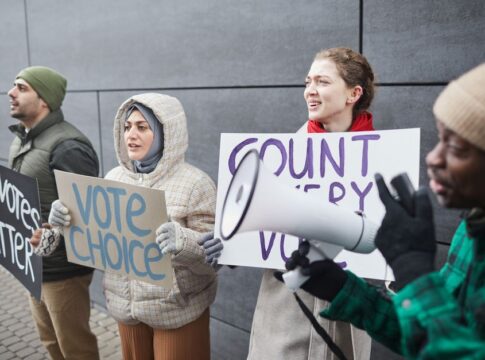
Photo: Edmond Dantès / Pexels
By Daily American Press Newsroom, Politics Desk — Published September 5, 2026
Table of Contents
- Key Takeaways
- The Background & Context
- Why This Matters
- Reactions & Analysis
- What Happens Next
- Frequently Asked Questions
The right to vote stands as the cornerstone of American democracy. Yet across the nation, debates over access to the ballot box continue to reshape how millions of citizens participate in elections. Understanding why voting rights matters has never been more essential as state legislatures, Congress, and the courts grapple with questions that will determine the future of political participation in the United States.
At stake is not merely the mechanics of casting a ballot. The broader question touches on who gets to vote, how easy or difficult that process becomes, and whether the democratic promise of equal representation remains intact. From local school board races to presidential campaigns, the rules governing elections affect every level of American civic life.
This issue transcends party politics. It reaches into communities nationwide, affecting working parents who struggle to find time to vote, elderly citizens navigating new identification requirements, and young people registering for the first time. The legislation and court decisions shaping voting access today will echo through generations.
Key Takeaways
- Voting rights remain a contested issue across federal and state governments, with ongoing debates about ballot access, identification requirements, and election administration.
- Historical struggles for suffrage, from women’s voting rights to the civil rights movement, inform contemporary discussions about who can vote and under what conditions.
- State legislatures have enacted varying approaches to election laws, creating a patchwork of rules that differ significantly across the country.
- Federal legislation attempts to establish nationwide standards face political obstacles in Congress, leaving many decisions to individual states.
- Courts continue to interpret constitutional protections for voting rights, with rulings that shape election practices nationwide.
- Voter turnout and civic engagement depend partly on how accessible and secure citizens perceive the electoral process to be.
The Background & Context
The American story of voting rights is one of gradual expansion. The original Constitution left voting qualifications largely to states, which initially limited suffrage to white male property owners. Over two centuries, amendments and federal laws progressively expanded access.
The Fifteenth Amendment, ratified after the Civil War, prohibited denying the vote based on race. The Nineteenth Amendment granted women’s suffrage in 1920. The Voting Rights Act of 1965 became landmark legislation, dismantling barriers that had prevented African Americans from voting in many Southern states. The Twenty-Sixth Amendment lowered the voting age to eighteen in 1971.
Each expansion came after prolonged struggle. Activists faced violence, arrest, and social ostracism fighting for ballot access. Their victories reshaped American democracy, bringing millions into the political process who had been excluded.
Today’s debates echo those historical tensions. Questions about voter identification, early voting periods, mail-in ballots, registration deadlines, and polling place locations all determine how easily citizens can exercise their franchise. Proponents of stricter requirements argue they prevent fraud and maintain election integrity. Advocates for broader access contend that burdensome rules disproportionately affect minority voters, the elderly, students, and low-income citizens.
The balance between security and accessibility defines much of the contemporary voting rights conversation. States serve as laboratories of democracy, experimenting with different approaches. Some have expanded vote-by-mail options and automatic registration. Others have tightened identification requirements and reduced early voting windows.
Why This Matters
Voting rights directly affect the legitimacy and function of American democracy. When citizens believe the system is fair and accessible, they participate more readily. When they perceive barriers or manipulation, trust erodes.
The practical consequences touch every policy area. Elected officials respond to their constituents. If certain communities face obstacles to voting, their concerns may receive less attention from lawmakers. This creates a feedback loop where political power concentrates among those with easiest ballot access.
Economic policy, healthcare, education funding, infrastructure investment, and criminal justice reform all flow from elected representatives. The composition of Congress, state legislatures, and local councils depends on who votes. When voting becomes harder for specific populations, their policy priorities may be sidelined.
Campaign strategies shift based on voting rules. Candidates focus resources on likely voters. If registration is difficult or polling places are scarce in certain neighborhoods, campaigns may write off those areas. This can leave entire communities politically marginalized.
The integrity of elections also matters profoundly. Citizens must trust that votes are counted accurately and that ineligible voters cannot dilute legitimate ballots. Finding the right balance between access and security challenges policymakers across the political spectrum.
International perception plays a role too. The United States has long promoted democracy abroad. When domestic voting rights controversies make headlines, it complicates America’s moral authority on the world stage. Allies and adversaries alike watch how the nation handles its own democratic processes.
For individual citizens, voting represents both a right and a responsibility. It connects people to their government and gives them voice in collective decisions. When that connection feels broken or inaccessible, civic engagement suffers across the board. People become less likely to attend town halls, contact representatives, or participate in community organizing.
Reactions & Analysis
The voting rights landscape has become increasingly polarized along partisan lines, though the issue affects all Americans regardless of political affiliation. Elected officials at every level of government have staked positions that reflect broader ideological divides.
State legislatures have emerged as primary battlegrounds. Some states have moved to expand access through measures like same-day registration, extended early voting periods, and no-excuse absentee balloting. These changes aim to accommodate voters with inflexible work schedules, transportation challenges, or disabilities that make in-person voting difficult.
Other states have taken opposite approaches, implementing stricter photo identification requirements, reducing early voting windows, and limiting mail-in ballot options. Supporters argue these measures protect against fraud and ensure only eligible voters participate. Critics contend the restrictions solve a problem that barely exists while creating real obstacles for legitimate voters.
Congress has attempted to address voting rights through federal legislation, but partisan divisions have prevented major bills from becoming law. The debate centers on how much authority the federal government should exercise over state election administration. Some argue national standards are necessary to protect constitutional rights. Others maintain that states should retain control over their own electoral processes.
Civil rights organizations have turned to the courts, challenging state laws they view as discriminatory or unconstitutional. Litigation has produced mixed results, with different courts reaching different conclusions about similar laws. The legal landscape remains unsettled, with ongoing cases that could reshape voting access nationwide.
Academic researchers study the real-world effects of various voting laws. Their findings sometimes challenge assumptions on both sides. Some studies suggest that certain restrictions have minimal impact on turnout, while others document significant disparities in how rules affect different demographic groups.
Local election administrators often find themselves caught in the middle. They must implement whatever laws their states enact while managing practical challenges like funding shortages, poll worker recruitment, and aging voting equipment. Many express frustration that political debates overlook the operational realities of running elections.
What Happens Next
The trajectory of voting rights in America remains uncertain. Several factors will shape the coming years.
State-level activity will likely continue as the primary driver of change. Each election cycle brings new proposals to expand or restrict access. The outcomes depend on which parties control state legislatures and governorships. Voters themselves will decide through their ballot choices what direction their states take.
Federal action remains possible but challenging. Congressional composition after each election determines whether national legislation can advance. Even if bills pass one chamber, they may stall in the other or face presidential veto. The filibuster rule in the Senate adds another obstacle to major voting rights legislation.
Court decisions will continue shaping the legal framework. Cases working through the judicial system address questions about redistricting, voter identification, registration procedures, and the scope of federal versus state authority. Supreme Court rulings could establish precedents that affect elections for decades.
Technology introduces new variables. Electronic voting systems, online registration, and digital communication change how elections are conducted. These innovations offer convenience but also raise security concerns. Policymakers must balance modernization with protection against hacking and manipulation.
Demographic shifts will influence the debate. As the American population becomes more diverse and generational attitudes evolve, public opinion on voting access may change. Younger voters often express different priorities than older generations, potentially reshaping the political landscape.
International events and domestic crises can also affect voting rights. Pandemics, natural disasters, and security threats force adaptation in how elections are conducted. Temporary emergency measures sometimes become permanent changes.
Civic education and engagement will determine how many Americans understand and exercise their voting rights. Schools, community organizations, and media all play roles in informing citizens about registration deadlines, identification requirements, and polling locations. The more informed voters are, the more effectively they can navigate whatever system exists.
Frequently Asked Questions
Why do voting rights remain controversial in the United States?
Voting rights generate controversy because they sit at the intersection of fundamental democratic principles and practical political power. Different groups hold competing visions of how to balance ballot access with election security. Some prioritize making voting as easy as possible to maximize participation, while others emphasize strict rules to prevent fraud. These philosophical differences often align with partisan interests, since changes to voting laws can affect which candidates win elections. Additionally, America’s federal system gives states significant control over election administration, creating fifty different sets of rules that reflect local political cultures and priorities.
How do voting rights affect ordinary citizens?
Voting rights directly impact whether citizens can participate in choosing their representatives and influencing policy decisions. Restrictive laws may require voters to obtain specific identification, travel to distant polling places, or navigate complex registration procedures. These requirements can be especially burdensome for people with inflexible work schedules, limited transportation, or disabilities. Conversely, when voting is accessible and convenient, more citizens participate in elections, leading to governments that better reflect the full population’s views. The policies those governments enact on healthcare, education, taxes, and other issues then affect everyone’s daily lives.
What is the federal government’s role in protecting voting rights?
The Constitution grants Congress authority to regulate federal elections and enforce voting rights amendments. Historically, federal legislation like the Voting Rights Act established nationwide protections against discrimination and required certain jurisdictions to obtain approval before changing election laws. However, court decisions have limited some of these federal powers, and Congress has struggled to pass new voting rights legislation due to partisan divisions. The federal government can also enforce existing constitutional protections through the Justice Department, which can challenge state laws in court. The balance between federal oversight and state autonomy over elections remains a contested constitutional question.
How can citizens stay informed about voting rights in their state?
Citizens can access information about their state’s voting requirements through official secretary of state websites, which typically provide details on registration deadlines, identification requirements, polling locations, and absentee ballot procedures. Nonpartisan organizations also offer voter guides and resources explaining local election laws. Local election offices can answer specific questions about individual circumstances. News coverage of state legislative sessions reveals proposed changes to voting laws before they take effect. Attending town halls and contacting elected representatives allows citizens to voice their views on voting rights issues and learn about upcoming changes that might affect them.
The future of American democracy depends partly on how the nation resolves its ongoing voting rights debates. Citizens who understand the issues, participate in the process, and hold their representatives accountable will shape that outcome. The right to vote carries weight only when people can exercise it freely and when they choose to do so. As the country navigates these challenges, the decisions made today will determine how accessible and secure American elections remain for generations to come.