
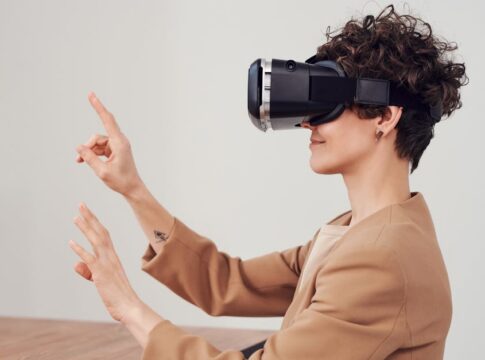
Rapid Overview: Virtual Reality Trends
Virtual reality technology has evolved from a niche gaming accessory to a transformative force across multiple industries. As hardware becomes more sophisticated and affordable, VR is reshaping how people work, learn, socialize, and experience digital content. Understanding the current trends in this rapidly developing field provides valuable insight into the future of human-computer interaction and immersive technology.
Enterprise Adoption and Workplace Integration
One of the most significant trends in virtual reality is its accelerating adoption in enterprise environments. Organizations across various sectors are discovering that VR offers practical solutions to real-world business challenges. Training and simulation represent the most mature use cases, with companies deploying VR systems to prepare employees for complex or hazardous situations without real-world risks.
Manufacturing facilities utilize VR to train workers on equipment operation and safety protocols, while healthcare institutions employ the technology for surgical training and medical procedure rehearsals. The aviation industry has long used flight simulators, and modern VR advancements are making these training tools more accessible and cost-effective. Remote collaboration tools built on VR platforms are also gaining traction, allowing distributed teams to meet in virtual spaces that simulate physical presence more effectively than traditional video conferencing.
Standalone Headsets Dominating the Market
The shift toward standalone VR headsets represents a pivotal trend in accessibility and user adoption. Unlike earlier systems that required powerful gaming computers or external sensors, modern standalone devices contain all necessary processing power within the headset itself. This architectural change eliminates setup complexity and reduces the barrier to entry for consumers and businesses alike.
These self-contained units offer inside-out tracking, which uses onboard cameras to map the environment and track movement without external hardware. The convenience factor has proven decisive in expanding VR’s reach beyond enthusiast communities into mainstream markets. As processor technology continues advancing, standalone headsets are achieving performance levels that previously required tethered connections to high-end computers.
Mixed Reality and Passthrough Technology
The boundary between virtual reality and augmented reality is becoming increasingly fluid. Modern VR headsets now incorporate high-resolution passthrough cameras that allow users to see their physical environment while wearing the device. This mixed reality capability enables new use cases that blend digital content with the real world.
Users can now switch seamlessly between fully immersive VR experiences and mixed reality modes where virtual objects appear anchored in physical spaces. This flexibility makes VR headsets more practical for daily use, as individuals can interact with virtual content without completely disconnecting from their surroundings. Developers are creating applications that leverage this capability, from furniture visualization tools to collaborative workspaces that integrate physical and digital elements.
Social VR Platforms Gaining Momentum
Virtual reality social platforms are evolving beyond simple chat rooms into comprehensive virtual worlds where users can interact, create, and participate in shared experiences. These platforms enable people to connect across geographical distances in ways that feel more personal than traditional social media or video calls.
Users create avatars, explore virtual environments, attend events, play games, and engage in activities that mirror real-world social interactions. Business meetings, educational lectures, concerts, and art exhibitions are increasingly hosted in these virtual spaces. The social VR trend accelerated significantly during global events that limited physical gatherings, demonstrating the technology’s potential to maintain human connection despite physical separation.
Healthcare and Therapeutic Applications
The healthcare sector is witnessing remarkable VR innovations extending beyond training into direct patient care. Therapeutic applications now address conditions ranging from anxiety disorders to chronic pain management. Exposure therapy delivered through VR allows patients to confront fears in controlled, gradual ways under professional supervision.
Pain management protocols are incorporating VR as a non-pharmaceutical intervention, with studies indicating that immersive experiences can reduce perceived pain levels during procedures and recovery. Physical rehabilitation programs use VR to make repetitive exercises more engaging, improving patient compliance and outcomes. Mental health professionals are exploring VR’s potential for treating PTSD, phobias, and other psychological conditions with promising early results.
Education and Immersive Learning
Educational institutions are increasingly recognizing VR’s potential to transform learning experiences. The technology enables students to explore environments and concepts that would be impossible, impractical, or unsafe to access otherwise. Virtual field trips transport learners to historical sites, distant ecosystems, or even inside the human body.
Complex scientific concepts become tangible through three-dimensional visualization, allowing students to manipulate molecular structures, explore astronomical phenomena, or witness historical events from first-person perspectives. Medical and technical education programs use VR to provide hands-on practice without requiring expensive equipment or risking damage to costly materials. The immersive nature of VR learning experiences also shows promise for improving retention and engagement compared to traditional instructional methods.
Advancing Hardware Capabilities
Technical improvements continue driving VR forward, with several key hardware trends shaping the user experience:
- Higher resolution displays reducing the screen-door effect and improving visual clarity
- Wider fields of view creating more immersive peripheral vision
- Improved refresh rates and reduced latency minimizing motion sickness
- Eye-tracking technology enabling foveated rendering and more natural interactions
- Haptic feedback systems providing tactile sensations beyond basic controller vibrations
- Lighter, more ergonomic designs allowing for extended comfortable use
Content Ecosystem Expansion
The VR content library continues expanding across entertainment, education, productivity, and fitness categories. Gaming remains a significant driver, but non-gaming applications now represent substantial portions of VR usage. Fitness applications turn exercise routines into immersive experiences, while productivity tools create virtual workspaces with unlimited screen real estate.
Documentary and narrative experiences are pushing creative boundaries, offering storytelling formats unique to the medium. The growing content diversity attracts broader audiences beyond early adopters, creating positive feedback loops that encourage further development investment.
Looking Forward
Virtual reality technology stands at an inflection point where capability, affordability, and application diversity are converging to drive mainstream adoption. The trends shaping this evolution—enterprise integration, standalone convenience, mixed reality fusion, social connectivity, healthcare innovation, educational transformation, and continuous hardware advancement—indicate that VR is transitioning from emerging technology to established platform. As these trends continue developing, virtual reality’s influence on how humans interact with digital information and each other will only deepen.