
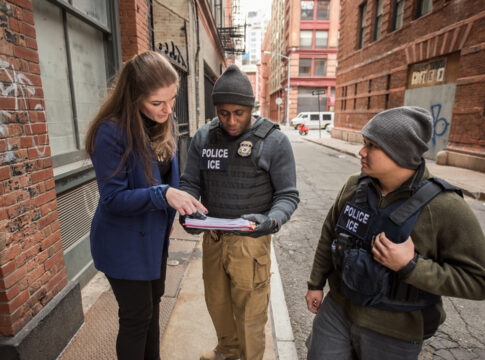
San Diego County Sheriff Kelly Martinez has banned Immigration and Customs Enforcement agents from using county training facilities while maintaining access for U.S. Customs and Border Protection officers, creating a selective enforcement policy that could reshape federal operations along America’s southern border.
Different Rules for Different Agencies
Martinez drew a sharp distinction between the two federal agencies as county officials moved to terminate facility agreements with both ICE and CBP. The sheriff announced she will continue allowing Border Protection agents to use the county’s Otay Range for firearms qualifications and training, citing potential economic consequences. She warned that removing CBP access could extend border wait times and damage the regional economy, affecting more than 225,000 people who cross through San Diego ports of entry daily.
The decision comes after the San Diego County Board of Supervisors directed the county’s chief administrative officer to have the Department of General Services end lease agreements with both federal agencies. Martinez, however, publicly opposes cutting off Border Protection access after consulting with community stakeholders over a two-week period.
Border Operations at Stake
According to figures from the sheriff’s office, more than 90,000 vehicles, 50,000 pedestrians and 5,500 commercial trucks enter the United States through San Diego ports daily. Current border wait times range between one and three hours. CBP officers must complete classroom instruction and firearms range qualifications as part of mandatory training requirements. Martinez argued that forcing officers to travel to distant facilities could pull them away from ports of entry for extended periods, reducing available personnel to staff inspection lanes.
The sheriff’s office said Border Protection lacks comparable training options nearby, with limited range availability at Marine Corps Air Station Miramar. Martinez also raised concerns about increased pollution from vehicles idling during longer border delays. The impact could extend to Imperial County, where some CBP officers use the Otay Range for training.
Community Trust Versus Federal Access
Martinez framed her selective approach around community relationships and public safety priorities. She stated that community trust and strong relationships form the cornerstone of effective local policing, emphasizing that law enforcement authority depends on confidence from the communities they serve. The sheriff said she balances decisions based on community trust and public safety considerations. Martinez declared that too many people on both sides of the border would suffer from ending Border Protection’s facility use, stating her duty extends to protecting everyone who lives in or enters San Diego County. The sheriff’s office confirmed it is exploring future training options.
Sources
Fox News: California sheriff blocks ICE from firing range, training facilities but keeps CBP access