
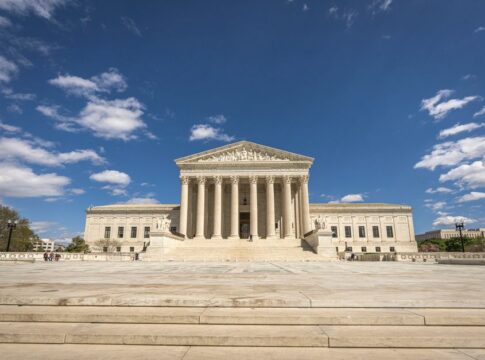
Photo: Mark Stebnicki / Pexels
By Daily American Press Newsroom, National Desk — Published October 1, 2026
Table of Contents
- Key Takeaways
- The Background & Context
- Why This Matters
- Reactions & Analysis
- What Happens Next
- Frequently Asked Questions
The nation’s highest court faces another politically charged decision as the Supreme Court weighs in on a contentious dispute over mail-in voting regulations. The case centers on restrictions affecting how the U.S. Postal Service handles mail ballots, a flashpoint issue that has divided officials and voting rights advocates since the 2020 election cycle. With the justices now positioned to decide the fate of these rules, the outcome could reshape how millions of Americans cast their ballots in future elections.
Recent developments show the court navigating treacherous political waters. While the Supreme Court has declined to intervene in some partisan election disputes, it now confronts a case where federal postal operations intersect with constitutional questions about voting access. The timing raises questions about how the justices will balance electoral integrity concerns against practical realities of mail-based voting systems that expanded dramatically during the pandemic.
At stake is whether new postal service rules restricting mail ballot handling can take effect, or whether courts will continue blocking key provisions that critics say threaten voter access. The legal battle has drawn intense scrutiny from civil liberties organizations and election officials nationwide, all watching to see if the Supreme Court will chart a middle course or side decisively with one vision of election administration.
Key Takeaways
- The Supreme Court is poised to decide whether to allow enforcement of new postal service rules affecting mail-in ballot handling
- Key parts of the controversial mail ballot restrictions remain blocked by lower courts, preventing their implementation
- The justices have shown reluctance to appear partisan in recent midterm election-related disputes, refusing involvement in some cases
- Civil liberties groups continue fighting to keep postal service restrictions from taking effect, arguing they threaten voting access
- The case represents the latest chapter in ongoing legal battles over mail voting that intensified during and after the Trump administration
- Any Supreme Court ruling could affect postal operations and ballot delivery systems across all fifty states
The Background & Context
Mail-in voting transformed from a niche accommodation to a mainstream practice during the 2020 election, when pandemic concerns drove unprecedented numbers of Americans to vote by mail. That shift sparked fierce debate. Supporters praised the accessibility and safety of remote voting. Critics raised concerns about security and potential fraud, though widespread irregularities were never substantiated.
The controversy persisted well beyond election day. Federal agencies, including the postal service, faced pressure to modify how they handle election mail. New regulations emerged, ostensibly aimed at standardizing procedures and ensuring ballot integrity. But voting rights advocates saw something else entirely: deliberate obstacles designed to make mail voting harder.
The U.S. Postal Service found itself at the center of this storm. As a federal agency responsible for delivering millions of ballots, any rule change affecting mail ballot handling carries enormous weight. The service’s operational decisions—how quickly ballots are processed, what tracking systems apply, which delivery standards govern election mail—directly impact whether votes arrive on time to be counted.
Lower courts stepped in when challenges mounted. Judges issued orders blocking enforcement of the most contentious provisions, finding that restrictions could disenfranchise voters or interfere with state election administration. Those injunctions left the postal service in legal limbo, unable to fully implement its new framework while litigation proceeded.
Now the Supreme Court must untangle this knot. The justices will evaluate whether lower courts overstepped in blocking the rules, whether the postal service has authority to implement such restrictions, and how to balance federal administrative power against voting rights protections. The legal questions are technical, but the practical consequences are profound.
Why This Matters
American voters deserve to know their ballots will be delivered reliably and counted fairly. That simple principle underlies the intense focus on postal service regulations. When the agency that handles election mail changes its rules, every citizen who votes by mail is affected—whether they live in rural Montana or downtown Chicago.
The numbers tell the story. Tens of millions of Americans now regularly vote by mail, a figure that spans partisan lines despite political rhetoric suggesting otherwise. Military personnel stationed overseas depend on mail ballots. Elderly citizens with mobility challenges rely on them. Workers juggling multiple jobs use them. Any restriction that makes mail voting harder doesn’t just affect one demographic; it ripples across the entire electorate.
State election officials face their own challenges. They must coordinate with federal postal operations while administering elections under state law. When federal rules change unexpectedly, states scramble to adjust. Voter education materials become outdated. Deadlines may need revision. The administrative burden falls on local clerks and county boards already stretched thin by limited budgets and tight timelines.
Public trust hangs in the balance too. Confidence in election systems depends partly on predictability and transparency. When rules keep changing—or when courts keep blocking new rules—voters grow confused about what to expect. That uncertainty breeds suspicion, regardless of whether any actual problems occur. Clear, stable procedures help maintain faith in democratic processes.
The Supreme Court’s decision will signal how the judiciary views its role in election disputes. Will the justices defer to federal agencies like the postal service? Will they prioritize voting access concerns raised by civil liberties groups? Will they try to avoid appearing partisan by finding narrow technical grounds for their ruling? Each approach carries different implications for future election litigation.
Reactions & Analysis
Civil liberties organizations have mounted vigorous opposition to the postal service restrictions. Their legal arguments emphasize constitutional voting rights and practical barriers the rules would create. By keeping key provisions blocked, these groups have claimed a temporary victory, but they know the Supreme Court could reverse that outcome.
The American Civil Liberties Union has been particularly active, framing the dispute as fundamental to democratic participation. Their position rests on evidence that mail voting serves essential functions in modern elections and that unnecessary restrictions disproportionately harm certain communities. They’ve urged courts to maintain existing injunctions until all legal questions are resolved.
On the other side, defenders of the new postal service rules argue that standardization and security measures serve legitimate governmental interests. They contend that federal agencies have authority to regulate their own operations, including how they handle election mail. From this perspective, court intervention represents judicial overreach into executive branch administration.
The Supreme Court itself has sent mixed signals about election cases. Recent decisions show the justices declining to insert themselves into some partisan disputes over midterm elections, suggesting a desire to avoid appearing politically motivated. That restraint could indicate the court will seek a narrow resolution that doesn’t wade into broader voting rights debates.
Legal scholars note the difficulty of the court’s position. Any decision will be scrutinized for partisan implications, regardless of the actual legal reasoning. If the justices allow the postal restrictions to proceed, critics will accuse them of enabling voter suppression. If they maintain the blocks, others will claim judicial activism. The court faces a no-win scenario in the court of public opinion, even as it tries to apply neutral legal principles.
What Happens Next
The Supreme Court will review briefs from all parties before deciding how to proceed. That process could take weeks or months, depending on the justices’ assessment of urgency. Meanwhile, the current injunctions remain in place, preventing enforcement of the contested postal service rules.
Several outcomes are possible. The court could issue a full ruling on the merits, definitively resolving whether the restrictions are lawful. Alternatively, the justices might send the case back to lower courts for further proceedings, essentially punting the ultimate decision. A third option involves allowing some provisions to take effect while keeping others blocked, splitting the difference between competing interests.
Whatever the Supreme Court decides will reverberate through upcoming election cycles. State officials will need to adjust their planning based on what postal service rules actually apply. Voters will need clear information about mail ballot procedures and deadlines. Political campaigns will adapt their get-out-the-vote strategies to reflect the new legal landscape.
The broader implications extend beyond this single case. How the court handles this dispute will influence future litigation over election administration, federal agency authority, and the balance between access and security in voting systems. Other pending cases involving election rules may be affected by the legal reasoning the justices employ here.
Congress could also respond, though legislative action on voting issues faces steep partisan hurdles. Some lawmakers may see the court’s decision as justification for federal voting rights legislation, while others might view it as confirmation that existing systems work adequately. The political branches rarely stay silent when courts rule on high-profile election matters.
Frequently Asked Questions
What specific postal service rules are being challenged?
The dispute centers on new regulations governing how the U.S. Postal Service handles mail-in ballots, including processing timelines, tracking requirements, and delivery standards for election mail. Courts have blocked key provisions that critics argue would restrict or delay ballot delivery, though the specific technical details of each contested rule involve complex postal operations procedures.
How does this case relate to the Trump administration?
The mail voting restrictions emerged during debates that intensified during the Trump era, when mail-in voting became politically controversial. While the case involves postal service regulations rather than direct presidential action, the broader context includes ongoing disputes about election integrity and access that gained prominence during and after the 2020 election cycle.
Will this Supreme Court decision affect the next presidential election?
The timing and scope of any Supreme Court ruling will determine its impact on future elections. If the justices rule quickly, their decision could affect how states and the postal service prepare for upcoming federal elections. However, states retain significant authority over their own election procedures, so the practical effects may vary considerably across different jurisdictions.
Why are civil liberties groups concerned about postal service rules?
Organizations like the ACLU argue that restrictions on mail ballot handling could make it harder for eligible citizens to vote, particularly those who rely on mail voting due to disability, work schedules, military service, or geographic isolation. Their concern focuses on whether new rules create unnecessary barriers that effectively disenfranchise voters without corresponding security benefits.
As the Supreme Court prepares to weigh these competing arguments, Americans across the political spectrum share a common interest in the outcome. Fair, accessible, and secure elections form the bedrock of representative democracy. How the justices navigate this latest challenge to that principle will shape not just postal operations or legal precedent, but public confidence in the voting systems that give citizens their voice in government. The decision, whenever it comes, will be watched closely by everyone who cares about the future of American democracy.