
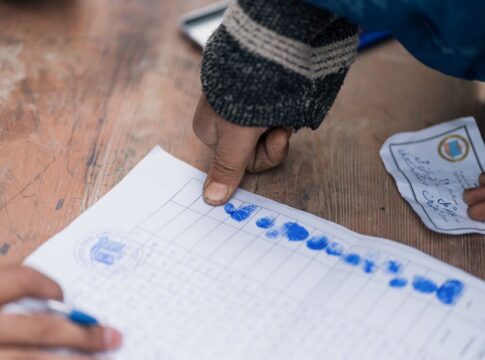
Photo: Faruk Tokluoğlu / Pexels
By Daily American Press Newsroom, National Desk — Published September 26, 2026
Table of Contents
- Key Takeaways
- The Background & Context
- Why This Matters
- Reactions & Analysis
- What Happens Next
- Frequently Asked Questions
A sweeping enforcement action in Texas has thrust the contentious issue of noncitizen voting back into the national spotlight. Among the 70 individuals arrested for allegedly casting ballots illegally stands an Indian grandfather whose case highlights the complex intersection of immigration status, voting rights, and criminal prosecution. The arrests, which span multiple jurisdictions across the Lone Star State, arrive at a moment when election integrity debates dominate political discourse and federal courts grapple with the boundaries of state enforcement power.
The case of the Indian grandfather who cast a ballot has become emblematic of broader questions about how states police voter rolls, who bears responsibility when ineligible individuals vote, and whether current safeguards adequately prevent illegal voting without disenfranchising eligible citizens. Texas officials have characterized the arrests as necessary enforcement of election law. Critics counter that such prosecutions may ensnare individuals who made honest mistakes navigating a complicated system.
This enforcement wave comes as states nationwide reassess voter registration procedures and as the Supreme Court weighs questions about federal versus state authority over election administration. For millions of legal immigrants and naturalized citizens, the arrests raise unsettling questions about the clarity of voting eligibility rules and the consequences of misunderstanding them.
Key Takeaways
- Seventy noncitizens have been arrested in Texas for allegedly voting illegally, including an Indian grandfather whose case has drawn particular attention to enforcement practices.
- The arrests represent one of the largest coordinated actions against alleged noncitizen voting in recent years, occurring amid heightened national focus on election integrity.
- Legal experts note that voting while ineligible can result from confusion about citizenship status, registration processes, or misunderstanding of legal permanent residency versus citizenship.
- The enforcement action raises questions about how states verify voter eligibility, the role of the federal government in election oversight, and potential Supreme Court review of state enforcement authority.
- Immigration advocates warn that aggressive prosecution of noncitizen voting may deter eligible naturalized citizens from exercising their lawful right to vote.
- The cases could test existing legal frameworks that distinguish between intentional fraud and unintentional violations of voting eligibility requirements.
The Background & Context
Noncitizen voting in federal elections has been illegal under U.S. law for decades. The Illegal Immigration Reform and Immigrant Responsibility Act of 1996 made it a federal crime for noncitizens to vote in federal elections. Violators face fines, imprisonment, and potential deportation. Yet the practical enforcement of these prohibitions has varied widely across states and over time.
Texas has positioned itself at the forefront of election integrity enforcement efforts. State officials have implemented multiple layers of voter verification, including citizenship checks during registration and periodic audits of voter rolls. These measures intensified following the 2020 election cycle, when unfounded claims of widespread noncitizen voting circulated widely despite a lack of supporting evidence.
The registration system itself creates potential pitfalls. When individuals apply for driver’s licenses or state identification, they may be offered voter registration. Legal permanent residents—green card holders—are not eligible to vote in federal or state elections, though some may be eligible in certain local elections depending on jurisdiction. This patchwork of rules can confuse immigrants navigating the system in good faith.
Research consistently shows that noncitizen voting is exceedingly rare. Studies by the Brennan Center for Justice and other nonpartisan organizations have found that incidents occur at rates between 0.0003% and 0.001% of all votes cast. When cases do arise, they often involve individuals who misunderstood their eligibility rather than deliberate fraud. Some legal permanent residents mistakenly believe that paying taxes or having lived in the United States for extended periods grants them voting rights.
The federal government maintains databases that states can access to verify citizenship, but the systems are imperfect. Names may be misspelled, records may be outdated, and databases may not reflect recent naturalizations. This creates both false positives—flagging eligible citizens as noncitizens—and false negatives—missing ineligible voters.
Why This Matters
The arrests carry profound implications for multiple constituencies. For legal immigrants pursuing citizenship, the prosecutions serve as a stark warning about the severe consequences of voting before naturalization. Even unintentional violations can result in criminal records, jeopardizing future naturalization applications or leading to removal proceedings.
For election administrators, the cases underscore the challenge of maintaining accurate voter rolls while avoiding wrongful disenfranchisement. Overly aggressive purges have repeatedly removed eligible citizens from rolls, forcing them to re-register or cast provisional ballots. Finding the right balance between access and security remains elusive.
The political ramifications extend nationally. Voter fraud claims, though largely debunked by comprehensive studies, continue to drive legislative agendas in multiple states. High-profile arrests, even in small numbers, provide ammunition for those advocating stricter voting restrictions. Conversely, civil rights organizations argue that such prosecutions are weaponized to justify barriers that disproportionately affect minority communities.
The Supreme Court’s involvement in related cases adds another dimension. Recent decisions have expanded state authority over election procedures while narrowing federal oversight under the Voting Rights Act. How the Court might rule on challenges to state enforcement actions against noncitizen voters could reshape the landscape of election law.
For the Indian-American community and immigrant communities broadly, the grandfather’s arrest resonates deeply. Many immigrants arrive from countries where voting eligibility rules differ significantly from those in the United States. In some nations, legal residents can vote in certain elections. The expectation that immigrants will immediately master the nuances of U.S. election law may be unrealistic, particularly for older individuals or those with limited English proficiency.
Reactions & Analysis
Texas officials have defended the arrests as essential to maintaining election integrity. State authorities argue that every illegal vote dilutes the votes of eligible citizens and undermines confidence in democratic processes. They emphasize that citizenship is a clear, bright-line requirement that leaves no room for ambiguity.
Defense attorneys and immigrant advocates tell a different story. They describe clients who received voter registration materials automatically, who were never informed they were ineligible, or who believed their long-term residency conferred voting rights. Some defendants are elderly individuals with limited education who relied on family members or community members for guidance about civic participation.
Legal scholars note that intent matters in criminal law. Prosecutors must typically prove that defendants knowingly violated the law. In voting cases, establishing that someone understood they were ineligible but voted anyway can be difficult. Many defendants may have genuinely believed they were following proper procedures.
Civil rights organizations have expressed alarm about the chilling effect on naturalized citizens. If legal voters fear that minor errors or misunderstandings could lead to arrest, they may choose not to participate at all. This would represent a tragic irony: enforcement actions intended to protect voting rights instead suppressing them.
Immigration attorneys warn that criminal convictions for voting violations create severe collateral consequences. Even misdemeanor convictions can be classified as aggravated felonies under immigration law, making defendants deportable and ineligible for most forms of relief. Individuals who have lived in the United States for decades, raised families, and built lives could face permanent exile.
What Happens Next
The 70 defendants will proceed through the criminal justice system, with outcomes likely varying based on individual circumstances. Those who can demonstrate lack of intent or reliance on official misinformation may secure dismissals or reduced charges. Others may face convictions carrying both criminal penalties and immigration consequences.
The cases may generate test litigation over state enforcement authority and due process protections. Federal courts could be asked to clarify when states overstep constitutional bounds in pursuing noncitizen voters, particularly if defendants can show they were affirmatively misled by government officials or registration systems.
Legislatively, the arrests may fuel renewed calls for automatic voter registration tied to citizenship verification, more robust voter education for immigrants, and clearer warnings on registration materials. Some advocates propose creating safe harbor provisions for individuals who self-report ineligibility before voting or who can demonstrate good-faith misunderstanding.
The Supreme Court’s evolving election law jurisprudence will shape how states balance access and security. Pending cases on voter roll maintenance, proof of citizenship requirements, and the scope of federal oversight could all affect future enforcement actions.
For immigrant communities, the arrests underscore the need for better civic education. Community organizations are likely to intensify outreach efforts, explaining voting eligibility in multiple languages and ensuring that legal permanent residents understand the distinction between their status and citizenship.
Frequently Asked Questions
Can legal permanent residents vote in any U.S. elections?
Legal permanent residents, commonly known as green card holders, cannot vote in federal or state elections anywhere in the United States. However, a small number of local jurisdictions permit noncitizens to vote in certain municipal elections, such as school board races. These local exceptions do not extend to congressional, presidential, or state-level contests. Confusion about these limited exceptions sometimes leads legal residents to mistakenly believe they have broader voting rights than the law permits.
What are the penalties for noncitizens who vote illegally?
Noncitizens who vote in federal elections face potential federal criminal charges carrying fines and up to one year in prison. State charges may also apply with varying penalties. Beyond criminal sanctions, noncitizen voting can trigger immigration consequences including deportation and permanent inadmissibility to the United States. Even individuals who voted unintentionally may face these severe outcomes, though prosecutors have discretion to consider intent when deciding whether to file charges or what charges to pursue.
How do states verify citizenship status for voter registration?
States use various methods to verify citizenship, including cross-referencing registration applications with motor vehicle records, Social Security databases, and state vital statistics. Some states require documentary proof of citizenship at registration. However, these systems have limitations. Databases may contain errors, recent naturalizations may not appear immediately, and matching algorithms sometimes flag eligible citizens incorrectly. The lack of a comprehensive, real-time national citizenship database complicates verification efforts.
What should legal immigrants know about voting eligibility?
Legal immigrants should understand that only U.S. citizens may vote in federal and state elections. Naturalization is the process by which immigrants become citizens and gain voting rights. Simply holding a green card, work visa, or other immigration status does not confer voting eligibility, regardless of how long someone has lived in the United States or whether they pay taxes. Immigrants who are unsure about their status should consult immigration attorneys or accredited representatives before attempting to register or vote. The consequences of voting while ineligible can be severe and permanent.
The arrest of an Indian grandfather and 69 others for illegal voting in Texas represents more than a law enforcement action. It reflects ongoing tensions over election integrity, the challenges immigrants face navigating complex legal systems, and fundamental questions about how America balances security with access to the ballot. As these cases unfold, they will test whether the justice system can distinguish between fraudulent intent and honest confusion—and whether our democratic institutions can protect both the integrity of elections and the rights of those who call this country home.