
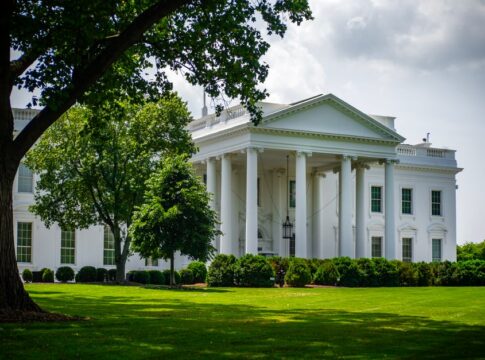
Photo: Ramaz Bluashvili / Pexels
By Daily American Press Newsroom, National Desk — Published September 22, 2026
Table of Contents
- Key Takeaways
- The Background & Context
- Why This Matters
- Reactions & Analysis
- What Happens Next
- Frequently Asked Questions
A constellation of concerns is emerging across the American political landscape as President Trump and his administration test the boundaries of executive authority in ways that legal experts, election officials, and civil liberties advocates say could reshape the relationship between the federal government and the democratic process itself. From unprecedented federal involvement in state-run elections to aggressive attempts to collect sensitive voter data, questions about presidential power are no longer academic—they’re unfolding in real time with consequences that reach into every voting precinct in the nation.
The question “Can President Trump do that?” has become a recurring refrain in newsrooms, courtrooms, and state capitals. Election experts warn that the federal government could assume an unprecedented role in upcoming midterm elections, while the Trump administration pursues access to voter information that states have historically guarded as their own. Meanwhile, after witnessing the president’s public rant about journalism, South Dakota’s governor remarked that Trump “can make his own decisions,” encapsulating a broader debate about executive discretion versus constitutional constraints.
These developments arrive at a moment when Americans are already deeply divided over questions of governance, federal overreach, and the integrity of democratic institutions. The stakes are high: what happens in the coming months could establish new precedents that define presidential authority for generations.
Key Takeaways
- Election experts are raising alarms about potential federal government involvement in midterm elections that would break with historical norms of state-controlled election administration.
- The Trump administration is seeking access to sensitive voter data from states, an effort legal advocates describe as threatening the rule of law and raising privacy concerns for millions of Americans.
- State officials are navigating tensions between federal pressure and their traditional authority over election systems, with some governors defending presidential discretion while others resist data-sharing demands.
- The Campaign Legal Center and other watchdog organizations are documenting what they characterize as systematic attempts to expand executive authority beyond constitutional limits.
- These issues converge around fundamental questions about the separation of powers, federalism, and the checks and balances designed to prevent any single branch or level of government from accumulating unchecked authority.
The Background & Context
American elections have traditionally been the domain of states. The Constitution grants states broad authority to conduct elections, and for most of the nation’s history, the federal government has played a limited role—setting broad civil rights protections and providing some funding, but leaving the mechanics of voter registration, ballot design, and vote counting to state and local officials. This arrangement reflects the Founders’ commitment to federalism and their wariness of centralized power.
That traditional division of labor is now under pressure. The Trump administration’s interest in voter data represents a significant departure from past practice. While the federal government maintains some voter information for specific purposes—enforcing the Voting Rights Act, for instance—states have resisted wholesale transfers of their voter files, which can contain not just names and addresses but also Social Security numbers, party affiliations, voting history, and other sensitive details.
The push for federal access to this data emerged alongside broader debates about election security, voter fraud claims, and the integrity of American democracy. Supporters argue that centralized data could help identify problems and ensure consistency. Critics counter that such efforts threaten individual privacy, could chill political participation, and violate the constitutional balance between state and federal authority.
The question of what a president “can” do legally versus what a president chooses to do politically has always been central to American governance. Presidents have long pushed the boundaries of their authority, from Thomas Jefferson’s Louisiana Purchase to Franklin Roosevelt’s New Deal to George W. Bush’s post-9/11 surveillance programs. Each era produces its own test cases, and each generation must decide where to draw the lines.
Why This Matters
For ordinary Americans, these may sound like abstract legal debates. They’re not. The integrity of voter data affects every registered voter in the country. If that information is mishandled, leaked, or used for purposes beyond election administration, the consequences could range from identity theft to targeted political suppression. States have different laws governing who can access voter files and for what purposes; a federal takeover of that data could override those protections.
The prospect of unprecedented federal involvement in midterm elections raises equally serious concerns. Elections are how citizens hold their government accountable. If the party in power can use federal resources to influence the administration of elections—through data collection, enforcement actions, or other means—the playing field tilts. Democracy depends on the perception and reality that elections are fair, transparent, and free from manipulation by those already in office.
These issues also matter for the Supreme Court and the federal judiciary. When legal challenges arise—and they almost certainly will—judges will be asked to interpret the limits of executive power, the scope of federal authority over elections, and the privacy rights of voters. Their decisions will shape American law for decades. Defense of constitutional norms often falls to the courts when political branches push boundaries, making judicial independence all the more critical.
For taxpayers, there are practical considerations too. Federal involvement in elections means federal spending. Resources devoted to voter data collection or election monitoring are resources not spent on other priorities. And if legal battles ensue, both sides will spend public money on litigation that could drag on for years.
Reactions & Analysis
The response to these developments has been sharply divided along predictable lines, but with some notable exceptions. Election experts interviewed by news outlets have expressed alarm at the trajectory, warning that federal encroachment into state-run election systems could create chaos, confusion, and opportunities for partisan manipulation. These experts span the political spectrum but share a common concern: once precedents are set, they’re hard to undo.
The Campaign Legal Center, a nonpartisan watchdog organization focused on election law and government ethics, has been particularly vocal. The group frames the administration’s attempts to obtain sensitive voter data as a threat to the rule of law itself—not merely a policy disagreement but a fundamental challenge to the legal structures that protect individual rights and limit government power. Their analysis suggests that what’s at stake is not just this administration’s actions but the precedent those actions set for future presidents of both parties.
State officials find themselves caught in the middle. Governors and secretaries of state—the officials typically responsible for election administration—must balance federal pressure with their obligations to state law and their constituents. Some, like South Dakota’s governor, have adopted a posture of deference to presidential authority, suggesting that Trump “can make his own decisions” even in controversial areas. This stance reflects a broader philosophy about executive power and a reluctance to second-guess presidential judgment.
Other state officials have taken a different view, refusing to hand over voter data and challenging federal demands in court. These officials argue they have a duty to protect their citizens’ privacy and to defend state sovereignty against federal overreach. The result is a patchwork response that reflects America’s federal system but also creates uncertainty about which rules apply where.
Legal scholars are watching closely. Some see the current moment as a stress test for constitutional guardrails. Others argue that the system is working as designed, with states pushing back, courts weighing in, and the political process sorting out competing claims. The truth likely lies somewhere in between: the system is resilient but not infinitely so, and the outcome depends on the willingness of institutions and individuals to defend established norms.
What Happens Next
The immediate future will likely bring more legal battles. States that refuse to comply with federal data requests may face lawsuits or administrative pressure. Conversely, privacy advocates and good-government groups may sue to block data transfers they view as unlawful. These cases will work their way through the federal courts, potentially reaching the Supreme Court if they raise significant constitutional questions.
Midterm elections will serve as a proving ground. If federal involvement increases as experts predict, voters and election officials will experience the practical consequences firsthand. Smooth elections that inspire public confidence could validate new approaches; problems, confusion, or perceived manipulation could trigger a backlash and demands for reform.
Congress retains the power to act, though partisan divisions make legislative solutions difficult. Lawmakers could clarify the boundaries of federal authority over elections, impose new privacy protections for voter data, or increase funding for state election systems with strings attached. But any such legislation would require bipartisan support and presidential approval—both uncertain in the current environment.
Public opinion will play a role too. Americans have strong views about government overreach, privacy, and election integrity. If these issues gain traction in the national conversation, they could influence both electoral outcomes and policy responses. Advocacy groups on all sides are mobilizing to shape that conversation, framing the debate in ways that serve their broader agendas.
The long-term implications extend beyond any single election or administration. Precedents established now will constrain or empower future presidents. Norms eroded today may prove difficult to restore tomorrow. The question “Can the president do that?” will be answered not just in courtrooms but in the accumulated weight of practice, acceptance, and resistance over time.
Frequently Asked Questions
What specific voter data is the Trump administration seeking?
While exact details vary by request, the administration has sought access to state voter registration databases that typically include names, addresses, dates of birth, party affiliations, voting history, and in some cases partial Social Security numbers and driver’s license information. This data is normally controlled by states and subject to state privacy laws, with access restricted to specific purposes like election administration and academic research.
Has the federal government ever been this involved in state elections before?
Federal involvement in elections has grown over time, particularly after the Voting Rights Act of 1965 and the Help America Vote Act of 2002. However, election experts characterize the current push for voter data and potential federal role in midterm administration as unprecedented in scope. Previous federal involvement focused on protecting voting rights and providing funding, not on collecting comprehensive voter information or directly managing election processes traditionally handled by states.
What legal authority does the president have over state election systems?
Presidential authority over state elections is limited. The Constitution grants states primary responsibility for conducting elections, though Congress can regulate federal elections and enforce voting rights protections. Presidents can use executive agencies to enforce federal election laws and investigate violations, but they cannot unilaterally take over state election systems or compel states to hand over data without legal authority. These boundaries are enforced through the courts when disputes arise.
How are states responding to federal requests for voter information?
State responses have been mixed. Some states have cooperated with federal requests, either fully or partially, while others have refused outright, citing state privacy laws and concerns about federal overreach. The patchwork response reflects different state laws, varying political perspectives among governors and secretaries of state, and differing assessments of the legal risks and benefits of compliance. This variation is characteristic of American federalism but creates uncertainty about data security and consistency.
The questions surrounding presidential authority and federal power are as old as the Republic, but each generation must answer them anew in light of contemporary challenges. What makes this moment particularly consequential is the convergence of technology, polarization, and institutional stress. The answers Americans arrive at—through courts, elections, and civic engagement—will define the boundaries of democratic governance for years to come. The question isn’t just what President Trump can do, but what any president should be allowed to do, and who gets to decide.