
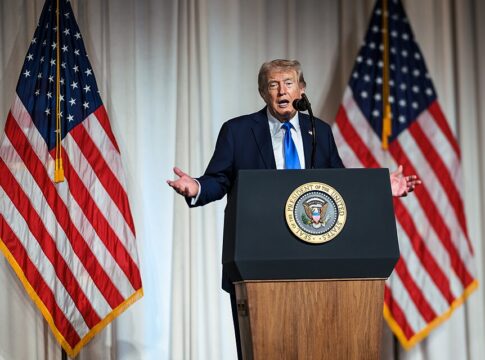
CNN, MS NOW, and Politico filed a federal lawsuit Monday demanding immediate restoration of White House access after President Trump revoked their press credentials, calling the ban an unconstitutional assault on press freedom that threatens unprecedented disruption to presidential coverage.
Networks Challenge Ban as Constitutional Crisis
The three news organizations filed their legal motion with a Washington, D.C. federal court on Monday, September 21, 2026, seeking emergency intervention after being denied entry to the White House on Saturday. The lawsuit names President Trump along with Chief of Staff Susie Wiles, spokesman Steven Cheung, and Secret Service chief Sean Curran as defendants. Their joint legal filing declares the ban represents a direct violation of First Amendment protections that have governed presidential press relations since the Republic’s founding.
CNN faces immediate operational challenges as the network was scheduled to serve as the pool team traveling with the president on Monday. Without a replacement, no television network will accompany Trump on official travel, marking an unprecedented break in White House press coverage traditions. The rotating pool system ensures all news outlets receive information and footage from journalists with direct presidential access.
Trump Defends Ban Against Credibility Claims
Speaking to reporters Friday, President Trump offered no specific incident triggering the ban but defended the decision based on coverage quality. He stated he sees no reason why outlets writing what he characterized as fake stories should access the White House. Trump argued that while the organizations remain free to publish their content, he maintains authority over access to what he called the people’s house, challenging traditional expectations about press credentials and coverage rights.
Legal Precedent and Constitutional Questions
Bruce Brown, president of the Reporters Committee for Freedom of the Press, condemned the ban as flatly unconstitutional viewpoint discrimination that courts will quickly overturn if challenged. Recent appellate rulings established distinctions between restricted spaces like the Oval Office or Air Force One, accessible only to rotating pool journalists, versus areas generally open to credentialed press like the briefing room. Courts have ruled the White House cannot exclude journalists from commonly accessible spaces based on their coverage viewpoint.
What This Means
The lawsuit represents a critical test of presidential authority over press access and First Amendment protections. While the White House has gained control over pool rotations, limiting wire service access to previously regular spaces, complete bans on credentialed organizations face higher constitutional scrutiny. The case will determine whether presidents can revoke credentials based on coverage content or whether traditional press access protections override executive branch preferences about media coverage quality and tone.