
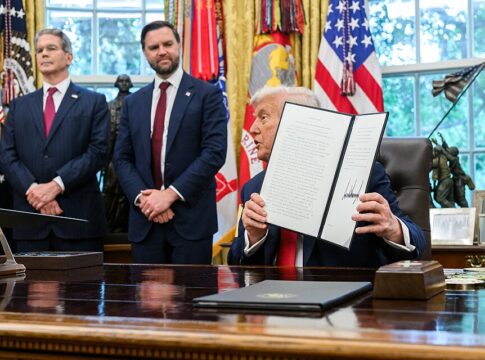
More than 140 House Democrats joined Republicans to permanently authorize President Trump’s National Fraud Enforcement Division, passing the measure 352 to 72 in a rare bipartisan victory that strengthens federal fraud prosecution powers.
Overwhelming Bipartisan Support
The Wednesday vote saw Minority Leader Hakeem Jeffries and the majority of his caucus support making the Justice Department division permanent. All 72 opposing votes came from Democrats, while every Republican backed the measure. The division, first created by the Trump White House in January 2026, targets fraud affecting federal programs and taxpayer dollars. Representative Jeff Van Drew of New Jersey defended the bill as a nonpartisan commitment to combat waste, telling colleagues that Americans are tired of squandered tax money.
Representative Jamie Raskin of Maryland offered what he called tepid support, noting the Justice Department has operated fraud divisions for decades. He dismissed the legislation as the least offensive measure from recent Republican efforts, though he ultimately voted yes. The unusual alliance highlights growing concern over fraud cases affecting federal programs nationwide.
Minnesota Controversy Fuels Debate
The division gained attention earlier this year when Vice President JD Vance referred Minnesota Governor Tim Walz and Attorney General Keith Ellison for potential criminal investigation. Republicans accused both officials of facilitating fraud in state social welfare programs. Walz and Ellison acknowledged taxpayer money was misused but claimed Republicans exaggerated the situation for political gain. The Trump administration cited Minnesota as experiencing a fraud epidemic when announcing the division’s creation.
Representative Harriet Hageman of Wyoming defended the focus on Minnesota, arguing the exposed criminal activity likely exists at higher magnitudes in other Democrat-controlled cities and states. The debate sparked heated exchanges on the House floor about partisan motivations versus legitimate fraud enforcement.
Partisan Tensions Despite Agreement
Raskin challenged Republicans to condemn Trump administration pardons of white-collar fraudsters, arguing the president’s actions undermine fraud enforcement efforts. He questioned whether pardoned individuals should avoid paying restitution to victims. Republicans pushed back against corruption allegations, with Hageman and Van Drew emphasizing the criminal nature of discovered fraud cases. The floor debate exposed underlying partisan divisions even as members voted together. The permanent authorization ensures the fraud division will continue operations regardless of future administrations, cementing expanded federal enforcement authority over government programs and taxpayer funds.