
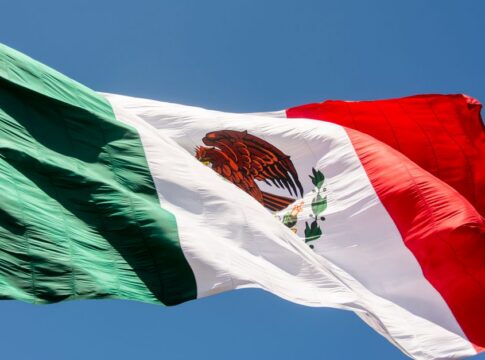
Photo: Jan van der Wolf / Pexels
By Daily American Press Newsroom, National Desk — Published September 20, 2026
Table of Contents
- Key Takeaways
- The Background & Context
- Why This Matters
- Reactions & Analysis
- What Happens Next
- Frequently Asked Questions
A Mexican national has been arrested and charged with casting an illegal ballot in the November 2024 election, according to multiple reports emerging from federal law enforcement. The case represents one of sixteen individuals recently charged by the Department of Justice for illegal voting and related election crimes, marking a significant federal enforcement action in the wake of the most recent presidential election cycle.
The arrest underscores ongoing tensions surrounding election integrity and immigration enforcement in the United States. While specific details about the individual remain limited in available reporting, the case has already drawn attention from national news outlets and raises questions about how non-citizens might gain access to voting systems ostensibly designed to prevent such occurrences.
This Mexican national charged with election fraud is part of a broader Justice Department initiative targeting alleged violations of federal voting laws. The timing—just months after a contentious national election—amplifies the political and legal significance of these prosecutions.
Key Takeaways
- A Mexican national has been arrested and charged with illegally voting in the November 2024 general election
- The Department of Justice has charged a total of sixteen individuals for illegal voting and related election crimes in a coordinated enforcement action
- The case highlights ongoing debates about election security, voter registration systems, and immigration policy enforcement
- Federal charges for illegal voting can carry significant penalties including fines, imprisonment, and deportation for non-citizens
- The arrest comes amid heightened scrutiny of election integrity measures following the 2024 presidential contest
- Questions remain about how the individual was able to register and cast a ballot despite lacking U.S. citizenship
The Background & Context
Federal law unequivocally prohibits non-citizens from voting in federal elections. The statute is clear: only U.S. citizens may participate in elections for president, vice president, senator, or representative in Congress. Violations can result in criminal prosecution, fines up to $10,000, imprisonment, and for non-citizens, removal from the United States.
Despite these legal prohibitions, cases of non-citizen voting do occur, though their frequency and impact remain subjects of intense political debate. Election security advocates argue that even isolated incidents undermine public confidence in democratic processes. Others contend that such cases are exceedingly rare and that aggressive prosecution efforts may intimidate legitimate voters, particularly in immigrant communities.
The Department of Justice’s announcement of charges against sixteen individuals signals a coordinated federal response to alleged election crimes. While the specific nature of all sixteen cases has not been fully detailed in available reporting, the inclusion of at least one Mexican national indicates that immigration status plays a role in at least some of these prosecutions.
Voter registration systems vary by state, creating a patchwork of verification processes across the country. Most states require individuals to attest to their citizenship when registering, but the rigor of verification differs. Some states cross-reference databases; others rely primarily on signed attestations. Critics of current systems argue that gaps in verification allow non-citizens to slip through. Defenders note that existing safeguards catch the vast majority of ineligible registrations and that voter fraud remains statistically negligible.
The 2024 election cycle saw renewed focus on election integrity measures. Multiple states implemented new identification requirements, updated voter roll maintenance procedures, and enhanced coordination with federal immigration databases. These changes occurred against a backdrop of ongoing litigation and political controversy stemming from disputes over the 2020 election results.
Why This Matters
For American citizens, the integrity of elections represents a foundational element of democratic governance. Every illegal vote potentially dilutes the voice of a legitimate voter. When non-citizens cast ballots, it raises fundamental questions about the effectiveness of safeguards meant to preserve the franchise for those legally entitled to it.
The case carries particular weight given the narrow margins that often decide elections. In recent cycles, presidential contests have been determined by tens of thousands of votes across a handful of swing states. Congressional races and local elections frequently hinge on even smaller numbers. While no evidence suggests that the sixteen cases announced by the Justice Department affected any election outcome, the symbolic importance resonates beyond the numbers.
For immigrant communities, aggressive prosecution of voting violations creates a climate of heightened scrutiny. Advocates worry that fear of investigation may discourage naturalized citizens—those fully entitled to vote—from participating in elections. The distinction between a non-citizen who votes and a naturalized citizen exercising their lawful right can become blurred in public discourse, potentially chilling civic engagement.
From a policy perspective, these cases fuel ongoing debates about federal versus state control of election administration. The Constitution grants states primary authority over election procedures, but federal law establishes baseline requirements and prohibitions. Tensions between state autonomy and federal enforcement have intensified in recent years, with the Supreme Court weighing in on various aspects of voting rights and election regulations.
The federal government’s decision to prosecute these sixteen cases reflects priorities within the Justice Department. Prosecutorial discretion determines which violations warrant federal charges. The decision to pursue these particular cases—and to announce them publicly—sends a message about enforcement priorities and may influence future behavior by both potential violators and state election officials.
Reactions & Analysis
The Justice Department’s announcement of charges against sixteen individuals for illegal voting has generated responses across the political spectrum, though detailed public statements remain limited in the immediate aftermath of the news breaking.
Election security advocates have long called for more aggressive prosecution of voting violations. They view the Justice Department’s action as a necessary step toward accountability and deterrence. From this perspective, each prosecution reinforces the message that election laws will be enforced and that violations carry real consequences.
Civil rights organizations typically approach such prosecutions with caution, emphasizing the need to distinguish between intentional fraud and honest mistakes. In some documented cases, non-citizens have registered and voted believing they were eligible, sometimes based on erroneous information from government officials or confusion about their legal status. The question of intent becomes crucial in determining appropriate legal responses.
Legal analysts note that federal election crime prosecutions remain relatively rare compared to the millions of ballots cast in any given election. The decision to charge sixteen individuals represents a significant enforcement action but must be understood in the context of overall voting patterns. Whether these cases reflect a broader problem or isolated incidents remains a matter of interpretation and political perspective.
State election officials face pressure from multiple directions. They must maintain systems accessible enough to encourage legitimate participation while implementing safeguards to prevent ineligible voting. The balance proves difficult, and these prosecutions will likely intensify debates over where that balance should lie.
What Happens Next
The arrested Mexican national will face federal court proceedings where prosecutors must prove beyond a reasonable doubt that the individual knowingly cast an illegal ballot. Defense attorneys may argue lack of intent, confusion about eligibility, or procedural errors in the charging process. The outcome will depend on specific facts not yet publicly available.
For the fifteen other individuals charged by the Justice Department, similar legal processes will unfold. Each case will turn on its particular circumstances, evidence, and legal arguments. Convictions could result in imprisonment, fines, and for non-citizens, deportation proceedings.
These prosecutions may influence state-level policy debates about voter registration verification. Legislators in multiple states have proposed enhanced citizenship checks, including mandatory proof of citizenship documents. Opponents argue such requirements create barriers for eligible voters, particularly those lacking ready access to birth certificates or passports.
The Supreme Court may eventually weigh in on related questions. Recent terms have seen the Court address various election law issues, from voter identification requirements to the removal of individuals from voter rolls. Future cases could clarify the constitutional boundaries of state and federal authority over citizenship verification in voter registration.
Public attention to these cases will likely ebb and flow with the political calendar. As the 2026 midterm elections approach, expect renewed focus on election integrity measures and debates over their necessity and impact. These sixteen prosecutions will serve as reference points in those discussions, cited by advocates on various sides of the debate.
Frequently Asked Questions
What penalties does a non-citizen face for voting illegally in a federal election?
Federal law provides for fines up to $10,000 and imprisonment for individuals convicted of voting illegally in federal elections. For non-citizens specifically, conviction typically triggers removal proceedings that can result in deportation from the United States. The severity of penalties often depends on whether prosecutors can prove intentional fraud or whether the violation resulted from confusion or mistake about eligibility.
How common is non-citizen voting in U.S. elections?
Research indicates that non-citizen voting is extremely rare relative to the total number of ballots cast. Studies examining millions of votes have found only isolated instances of confirmed non-citizen voting. However, the exact frequency remains difficult to measure with precision, and estimates vary depending on methodology and political perspective. Most election experts agree that while any illegal voting warrants attention, the phenomenon does not occur at a scale that affects election outcomes.
How do voter registration systems verify citizenship?
Verification methods vary by state. Most require individuals to attest to their citizenship under penalty of perjury when registering. Some states cross-reference voter registration applications with state motor vehicle databases, Social Security records, or immigration databases. A few states require documentary proof of citizenship, such as a birth certificate or passport. The effectiveness and accessibility of these various approaches remain subjects of ongoing debate and litigation.
Could these prosecutions affect future immigration policy or election law?
These cases will likely inform policy debates at both state and federal levels. Legislators may cite them as evidence supporting stricter citizenship verification requirements for voter registration. Conversely, civil rights advocates may argue that existing laws already prohibit non-citizen voting and that enhanced enforcement of current statutes suffices without creating new barriers. The political composition of Congress and state legislatures will largely determine whether these prosecutions translate into legislative changes.
As these sixteen cases proceed through the federal court system, they will test both the strength of election integrity safeguards and the fairness of enforcement mechanisms. For the Mexican national now facing charges, the legal process will determine individual accountability. For the broader American public, these prosecutions raise enduring questions about how to balance accessible democracy with secure elections—questions that will resonate long after the gavel falls in any particular courtroom.