
Photo: Mark Stebnicki / Pexels
By Daily American Press Newsroom, National Desk — Published September 18, 2026
Table of Contents
- Key Takeaways
- The Background & Context
- Why This Matters
- Reactions & Analysis
- What Happens Next
- Frequently Asked Questions
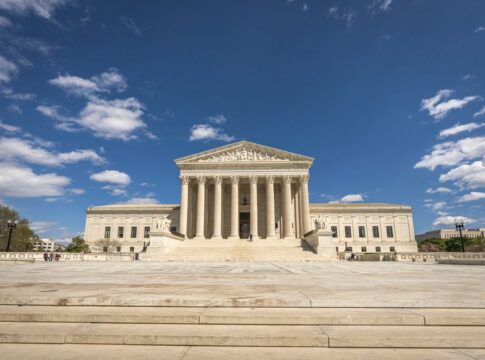
The Supreme Court delivered a split decision this week that has ignited fresh debate over the future of mail-in voting in America. President Donald Trump celebrates Supreme Court action that temporarily preserves his executive order restricting certain mail-in ballot practices, even as the justices simultaneously blocked the order from taking effect for the 2026 midterm elections. The ruling creates a peculiar legal landscape: Trump’s directive remains on the books, yet voters will not feel its impact at the polls this November.
The decision underscores the tension between executive authority and the mechanics of American democracy. Mail-in voting expanded dramatically during the pandemic and has become a fixture of how millions cast their ballots. Any attempt to curtail it now touches a nerve with voters who have grown accustomed to the convenience and accessibility it provides.
For Trump, the Court’s refusal to strike down his order entirely represents a symbolic victory, even if the practical effect is delayed. For state election officials and voters in places like California, the ruling means business as usual for the upcoming midterms. The legal battle, however, is far from over.
Key Takeaways
- The Supreme Court blocked Trump’s mail-in voting restrictions from applying to the 2026 midterm elections, preserving current voting procedures for this year.
- Trump’s executive order remains technically valid but unenforceable for the immediate election cycle, allowing the president to claim a partial win.
- California and other states with established mail-in voting systems will see no changes to their ballot access for 2026, according to reports.
- Senator Ruben Gallego publicly celebrated the Supreme Court’s decision to protect mail-in voting access for the midterms.
- The ruling sets up a potential legal showdown over federal versus state control of election procedures in future cycles.
- Voter access advocates view the decision as a temporary reprieve, while Trump supporters see it as validation of executive power to regulate elections.
The Background & Context
Mail-in voting has been a flashpoint in American politics since the 2020 election. What was once a relatively noncontroversial method used primarily by military personnel and absentee voters became a central feature of pandemic-era elections. States expanded access rapidly, allowing millions to vote from home amid health concerns. That shift changed the political calculus.
Trump has long criticized mail-in voting, arguing it creates opportunities for fraud and undermines election integrity. His administration pursued various legal and regulatory efforts to tighten controls over ballot-by-mail systems. The executive order at the center of this case represents one such attempt, seeking to impose federal restrictions on how states administer mail-in ballots.
The Constitution grants states primary authority over election administration. Federal intervention in this space is legally complex and politically fraught. States like California have built robust mail-in systems that now serve as the default for most voters. Any federal mandate that conflicts with state procedures creates immediate logistical and legal problems.
The Supreme Court’s decision reflects this tension. By keeping Trump’s order alive but blocking its immediate implementation, the justices essentially punted the larger constitutional questions to a later date. They ensured voters would not face confusion or disruption in the 2026 cycle while leaving the door open for future legal battles.
Why This Matters
Voting access sits at the heart of American democracy. How easily citizens can cast ballots determines who participates and, ultimately, who governs. Mail-in voting has proven especially important for working parents, elderly voters, people with disabilities, and those living in rural areas far from polling places. Any restriction carries real consequences for turnout and representation.
The Supreme Court’s intervention matters because it prevents sudden changes to voting rules just months before a major election. Election administrators need time to prepare. Voters need clarity about how to participate. A last-minute shift in mail-in ballot rules would have created chaos in counties and states across the nation.
California exemplifies the stakes. The state has moved to an all-mail ballot system for most elections, with every registered voter automatically receiving a ballot. Reversing that system on short notice would have been administratively impossible and legally dubious under state law. The Court’s decision preserves that status quo.
For Trump and his supporters, the issue centers on election security. They argue that mail-in voting lacks the safeguards of in-person voting and creates vulnerabilities. The fact that the Court did not strike down his order entirely allows the administration to claim validation of these concerns, even if the practical impact is delayed.
The decision also highlights the judiciary’s role as a check on executive power. Trump issued his order unilaterally, without congressional approval. The Supreme Court’s willingness to block its immediate effect demonstrates that even presidential directives must survive judicial scrutiny, especially when they affect fundamental rights like voting.
Reactions & Analysis
Political responses to the ruling broke along predictable lines. Senator Ruben Gallego, representing Arizona, publicly celebrated the Supreme Court’s decision to protect mail-in voting for the midterms. His statement reflects the view among many Democrats that mail-in access is a voting rights issue that should not be curtailed without compelling justification.
Trump, meanwhile, framed the decision as a win. His order remains on the books, and he can argue that the Court did not reject his authority to regulate elections. The temporary nature of the block allows him to claim that the justices simply wanted more time to consider the matter, not that his position lacks merit.
State election officials expressed relief. Changing voting procedures mid-cycle is a nightmare scenario for county clerks and registrars. They have already printed materials, trained poll workers, and communicated with voters about how to participate. The Court’s decision allows them to proceed with plans already in motion.
Legal analysts note that the Supreme Court’s order is procedural, not a final ruling on the merits. The justices have not said whether Trump’s restrictions are constitutional. They have simply prevented those restrictions from disrupting an imminent election. The underlying legal questions about federal power over state election systems remain unresolved.
Voting rights organizations view the decision as a temporary victory but warn that the fight is not over. They argue that any federal attempt to limit mail-in voting disproportionately affects vulnerable populations who rely on ballot-by-mail access. The fact that Trump’s order survives, even in suspended form, keeps the threat alive.
What Happens Next
The legal battle will continue after the midterms. Lower courts must still rule on the merits of Trump’s executive order, and those decisions will likely return to the Supreme Court. The justices will eventually need to address the fundamental question: how much power does the president have to regulate state election procedures?
If Trump’s order ultimately survives legal challenges, future elections could look very different. States might be forced to curtail mail-in voting or add new verification requirements. That would reverse years of expansion in ballot access and potentially affect millions of voters who have come to rely on voting by mail.
Congress could step in. Lawmakers have the authority to set federal election standards, and legislation could either codify mail-in voting protections or impose new restrictions. Given the current political divisions, such legislation seems unlikely, but the Supreme Court’s decision may spur action.
State legislatures will watch closely. If federal courts ultimately side with Trump, states will need to decide whether to comply or challenge the order. California and other blue states have already signaled they will fight any federal intrusion into their election systems. Red states may welcome federal restrictions that align with their own preferences.
Voters, meanwhile, should prepare for continued uncertainty. The rules governing how Americans cast ballots have become a partisan battleground. What was once a mundane administrative matter is now a high-stakes political fight with implications for who votes, how they vote, and ultimately who wins.
Frequently Asked Questions
What did the Supreme Court actually decide?
The Supreme Court blocked Trump’s mail-in voting restrictions from taking effect for the 2026 midterm elections, but did not strike down the executive order itself. This means the order remains legally valid but cannot be enforced for this election cycle. The Court has not yet ruled on whether the restrictions are constitutional, only that they should not disrupt the imminent midterms.
Will California voters see any changes to mail-in voting for 2026?
No. California’s mail-in voting system will remain unchanged for the 2026 midterm elections. The Supreme Court’s decision ensures that states like California can continue their current ballot-by-mail procedures without interference from Trump’s executive order, at least for this election cycle.
Why does Trump consider this a victory if his order is blocked?
Trump views the decision as a partial victory because the Supreme Court did not strike down his executive order. The order remains on the books, which allows him to argue that the Court validated his authority to regulate elections. The block is temporary and procedural, not a final rejection of his position, giving him grounds to claim success even though the practical effect is delayed.
Could mail-in voting restrictions still take effect in future elections?
Yes. The Supreme Court’s decision only applies to the 2026 midterms. Lower courts will continue to hear challenges to Trump’s executive order, and the case may return to the Supreme Court for a final ruling on the merits. If the order is ultimately upheld, mail-in voting restrictions could take effect in future election cycles, potentially affecting how millions of Americans cast their ballots.
The Supreme Court’s decision buys time but resolves nothing permanently. Americans will vote this November under familiar rules, but the larger fight over ballot access continues. As legal challenges wind through the courts and political battles rage in state capitals, one thing is certain: how we vote has become as contested as whom we vote for.