
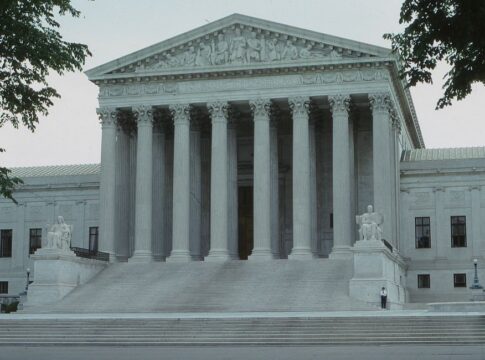
The Supreme Court dealt President Trump a major setback just weeks before the 2026 midterm elections, rejecting his administration’s attempt to impose sweeping new restrictions on mail-in voting nationwide. The ruling preserves existing ballot delivery procedures as millions of Americans prepare to cast their votes.
Last-Minute Restrictions Rejected
The Trump administration had sought to implement a U.S. Postal Service plan requiring states to submit voter name and address lists and place specific barcodes on ballot envelopes before the agency would deliver them. The restrictions followed a Trump executive order but faced immediate legal challenges. Two federal judges issued preliminary injunctions blocking the requirements, finding the Postal Service likely exceeded its authority by attempting to control state election procedures.
Mail-in voting has already commenced in Alabama, North Carolina, and Wisconsin, with additional states preparing to launch their programs. Western states including Hawaii, Oregon, and Washington conduct elections primarily or entirely through mail ballots, making the restrictions particularly disruptive to their established systems.
Constitutional Authority Questions
The Supreme Court majority determined the Trump administration showed little likelihood of prevailing on legal merits. A federal judge in Boston ruled the Postal Service lacks statutory authority to regulate mail-in voting procedures, a power traditionally reserved for states. Even conservative Justice Brett Kavanaugh, while suggesting the rule might fall within postal authority, concluded implementing it before the 2026 elections would violate the Administrative Procedure Act because election officials needed more preparation time.
Several Republican state election officials had joined opposition to the requirements, citing logistical impossibilities. The tight timeline between the proposed implementation and election day created operational chaos that transcended partisan divisions on voting procedures.
What This Means
The decision represents a significant check on executive power over election administration. The Postal Service will continue delivering ballots under existing protocols, maintaining consistency for voters who have come to rely on mail-in options. The ruling underscores constitutional limits on federal authority to impose election requirements on states, even when advanced through administrative agencies. With midterm campaigns entering their final stretch, the decision eliminates uncertainty that threatened to confuse voters and complicate ballot processing across multiple states with different election systems.