
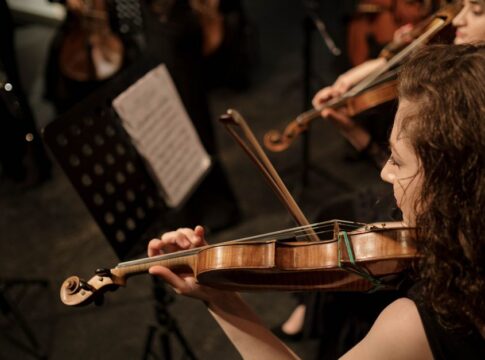
Photo: cottonbro studio / Pexels
By Daily American Press Newsroom, Entertainment Desk — Published September 27, 2026
Table of Contents
- Key Takeaways
- The Background & Context
- Why This Matters
- Reactions & Analysis
- What Happens Next
- Frequently Asked Questions
An era ends quietly in American journalism. The nation’s last full time classical music critic at a major metropolitan newspaper has retired, marking the close of a chapter in cultural coverage that once defined how millions of Americans engaged with the arts. The departure signals a seismic shift in how newspapers allocate resources in an entertainment landscape now dominated by streaming services, pop culture, and television coverage.
This retirement comes at a moment when classical music institutions face unprecedented challenges. Orchestras struggle to attract younger audiences. Arts budgets shrink. And the very notion of specialized cultural criticism—once a staple of serious journalism—has become an endangered species in newsrooms across the country.
The timing intersects with other upheaval in the classical world. Recent decisions at major institutions, including conductor changes at prominent orchestras, have sparked debate about the future of classical performance in America. Without dedicated critics to chronicle these shifts, the public conversation around high culture grows quieter.
Key Takeaways
- The retirement of the last full-time classical music critic at a major U.S. newspaper represents the end of an era in specialized arts journalism
- Major metropolitan newspapers have systematically eliminated dedicated classical music positions over the past two decades
- The shift reflects broader changes in media economics and audience preferences toward movies, streaming content, and pop culture coverage
- Classical music institutions now face reduced professional scrutiny and analysis at a critical moment in their evolution
- Recent conductor changes and institutional decisions at major orchestras underscore the need for informed cultural criticism
- The loss of specialized critics raises questions about accountability and informed public discourse in the arts
The Background & Context
American newspapers once employed dozens of full-time classical music critics. These journalists attended concerts multiple nights per week, reviewed recordings, interviewed composers and conductors, and served as cultural gatekeepers for their communities. The New York Times, Chicago Tribune, Boston Globe, Philadelphia Inquirer, and Los Angeles Times all maintained robust classical music desks.
The decline began in earnest during the early 2000s. Newsroom budget cuts accelerated after the 2008 financial crisis. Publishers faced a brutal calculus: maintain specialized critics covering niche audiences, or redirect resources toward content with broader appeal.
Entertainment coverage shifted decisively. Movies, television, streaming platforms, and pop culture commanded growing shares of entertainment sections. These topics attracted larger, younger audiences—the demographic newspapers desperately sought to retain. Classical music, with its aging subscriber base, became expendable.
The pattern repeated across the country. Papers eliminated full-time positions, replacing them with freelancers or general arts reporters who covered multiple beats. Some publications abandoned classical coverage entirely. Others relegated it to occasional features or wire service copy.
Los Angeles, as a major cultural center with world-class institutions like the Los Angeles Philharmonic, represented one of the last holdouts. The city’s vibrant classical scene—from the Hollywood Bowl to contemporary music ensembles—seemed to justify dedicated coverage. Yet even there, the economics proved unsustainable.
Why This Matters
The disappearance of classical music critics carries consequences beyond the arts pages. These journalists served multiple functions that enriched public life.
First, they provided accountability. When orchestras receive public funding or tax-exempt status, professional critics offer independent assessment of their performance. They evaluate whether institutions fulfill their educational missions, serve diverse communities, and maintain artistic standards. Without this scrutiny, boards and administrators operate with less transparency.
Second, critics educated audiences. A skilled reviewer explains what makes a performance exceptional or disappointing, contextualizes works within musical history, and helps listeners develop their own critical faculties. This educational function matters in a democracy where arts funding depends partly on public support.
Third, they documented cultural history. Newspaper archives preserve records of performances, premieres, and artistic trends. Future researchers, biographers, and historians rely on these accounts. When coverage disappears, so does institutional memory.
The broader implications extend to civic culture. Classical music institutions anchor many communities. They employ musicians, educators, and support staff. They attract tourism and contribute to local economies. They provide venues for civic gatherings and celebrations. Reduced coverage diminishes public awareness of these contributions.
The shift also reflects changing notions of cultural authority. Who decides what art matters? In the streaming era, algorithms and social media influencers increasingly shape taste. Professional critics—with training, experience, and editorial standards—offer a different model based on expertise rather than popularity metrics.
Reactions & Analysis
The classical music world has watched this trend with alarm. Musicians, administrators, and advocates recognize that media coverage drives ticket sales, donor engagement, and public support. Reduced visibility threatens already-fragile business models.
Some orchestras have adapted by hiring their own content creators, producing podcasts, and building social media followings. These efforts reach audiences directly but lack the independence of journalism. Self-promotion cannot substitute for critical assessment.
Music schools and conservatories face challenges preparing students for careers that receive diminishing public attention. Young musicians enter a profession where their achievements may go largely unchronicled in mainstream media. This affects not just their careers but public understanding of classical music as a living art form.
Recent institutional decisions highlight the need for informed analysis. When major orchestras change conductors or artistic direction, these decisions affect cultural life for years. Professional critics bring historical perspective and technical knowledge to such transitions, helping audiences understand their significance.
Journalism organizations have acknowledged the loss while defending their choices. Publishers argue they must serve broad audiences to survive. Entertainment sections now prioritize content that generates digital traffic—reviews of popular films, television recaps, celebrity news, and streaming recommendations. Classical coverage, however worthy, cannot compete by these metrics.
Some observers note that classical music criticism continues online through independent blogs, specialized publications, and freelance platforms. While valuable, these outlets lack the reach, resources, and institutional backing of major newspapers. They serve engaged enthusiasts rather than general audiences.
What Happens Next
The retirement marks a transition, not necessarily an ending. Classical music coverage will continue, but in fragmented form across multiple platforms with varying standards and reach.
Freelance critics will cover major events for newspapers on assignment. Specialized publications like Gramophone and Opera News will serve devoted audiences. Online platforms will provide space for longer-form analysis. Yet none of these arrangements replaces the consistent, authoritative presence of a full-time critic at a major metropolitan daily.
Classical institutions must adapt to this reality. Some are developing partnerships with public radio stations, which maintain stronger classical coverage. Others invest in their own media production, creating content that serves promotional and educational purposes simultaneously.
The broader question involves journalism’s role in cultural life. As newspapers retreat from specialized coverage, who fills the gap? Can civic culture sustain itself when professional observers disappear? These questions extend beyond classical music to theater, dance, visual arts, and other fields facing similar pressures.
For newspapers, the challenge involves balancing immediate economic pressures against long-term civic responsibilities. Entertainment coverage that prioritizes clicks over depth may attract audiences today while impoverishing public discourse tomorrow. The loss of classical critics represents one data point in this larger calculation.
Looking ahead, the classical music world faces a paradox. Performances continue at high levels. Orchestras commission new works. Young musicians achieve technical mastery that earlier generations might envy. Yet this artistic vitality occurs with decreasing media documentation and public awareness. The music plays on, but fewer professional observers bear witness.
Frequently Asked Questions
Why did newspapers eliminate classical music critics?
Economic pressures forced newspapers to make difficult choices about coverage priorities. Classical music attracts smaller, older audiences compared to movies, television, and pop culture. As advertising revenue declined and publishers sought to attract younger readers online, specialized critics covering niche topics became financially unsustainable. Entertainment sections redirected resources toward content that generates more web traffic and appeals to broader demographics.
Will classical music coverage disappear completely?
No, but it will change significantly. Freelance critics will continue covering major events on assignment. Specialized publications and websites will serve devoted audiences. Public radio stations maintain classical programming and criticism. However, the consistent, authoritative presence of full-time critics at major metropolitan newspapers—who attended concerts regularly and built deep knowledge of local institutions—has largely disappeared. Coverage becomes more sporadic and less comprehensive.
How does this affect classical music institutions?
Reduced media coverage makes it harder for orchestras and opera companies to reach potential audiences, attract donors, and maintain public visibility. Professional criticism provided both accountability and promotion—holding institutions to high standards while generating interest in their work. Without regular reviews, organizations must rely more heavily on self-promotion and social media, which lack the credibility of independent journalism. This particularly challenges smaller institutions with limited marketing budgets.
What can readers do to support arts journalism?
Subscribe to newspapers and publications that still maintain arts coverage, demonstrating that audiences value this content. Engage with arts criticism online by reading, sharing, and commenting on reviews and features. Support specialized classical music publications through subscriptions or donations. Attend performances and encourage institutions to partner with media outlets. Ultimately, arts journalism survives when audiences demonstrate they value it enough to support it financially, either directly or through readership that attracts advertisers.
The quiet retirement of America’s last full-time classical music critic at a major newspaper closes a chapter in American cultural life. What comes next remains uncertain. But the loss reminds us that journalism, like the arts it covers, requires sustained support to survive. When we lose the observers who help us understand and appreciate culture, we lose something essential to civic life—the shared conversation about what makes our communities worth living in.