
The Latest in Renewable Energy Innovations
The global transition toward sustainable energy sources has accelerated dramatically in recent years, driven by technological breakthroughs, declining costs, and increasing urgency to combat climate change. As nations worldwide commit to ambitious carbon-neutrality targets, renewable energy innovations are transforming how societies generate, store, and distribute power. These developments represent not merely incremental improvements but fundamental shifts in energy infrastructure that promise to reshape the global economy.
Next-Generation Solar Technology
Solar energy continues to dominate renewable energy expansion, with innovations pushing efficiency boundaries and application possibilities. Perovskite solar cells have emerged as a game-changing technology, offering the potential to surpass traditional silicon-based panels in both efficiency and cost-effectiveness. These cells can be manufactured using less energy-intensive processes and applied to flexible surfaces, opening possibilities for integration into building materials, vehicles, and portable devices.
Tandem solar cells, which combine multiple photovoltaic materials in layers, have achieved record-breaking efficiency rates exceeding 30 percent in laboratory settings. This approach captures different wavelengths of light more effectively than single-junction cells, maximizing energy conversion. Several manufacturers are now working to scale these technologies for commercial production, with some pilot projects already demonstrating real-world viability.
Bifacial solar panels represent another significant advancement, capturing sunlight from both sides to increase energy generation by up to 30 percent compared to traditional panels. These systems prove particularly effective when installed over reflective surfaces or in elevated configurations, making them ideal for agricultural applications where crops can grow beneath elevated panel arrays.
Advanced Wind Energy Systems
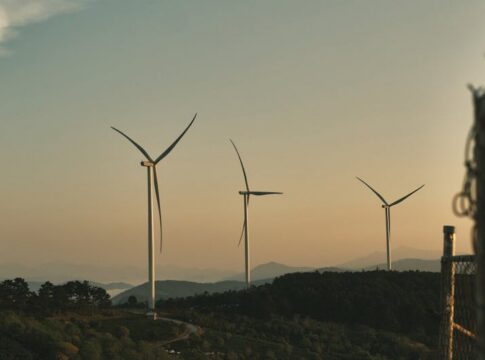
Wind power technology has evolved considerably beyond conventional horizontal-axis turbines. Offshore wind installations now feature turbines with rotor diameters exceeding 220 meters, capable of generating over 15 megawatts each. These massive structures can power thousands of homes and operate in deeper waters previously considered unsuitable for wind energy development.
Floating wind turbine platforms have unlocked vast oceanic areas for energy generation, no longer requiring fixed foundations on the seafloor. These systems can access stronger, more consistent winds found in deep waters while minimizing environmental impact on coastal ecosystems. Several countries have initiated large-scale floating wind farms, with technology improvements steadily reducing installation and maintenance costs.
Vertical-axis wind turbines are gaining renewed attention for urban and distributed energy applications. These compact systems operate effectively in turbulent wind conditions, produce less noise than traditional turbines, and present fewer hazards to wildlife. Their omnidirectional design eliminates the need for wind-tracking mechanisms, simplifying construction and maintenance.
Revolutionary Energy Storage Solutions
Energy storage represents perhaps the most critical challenge for renewable energy adoption, and recent innovations are providing increasingly viable solutions. Solid-state batteries promise to replace lithium-ion technology with safer, more energy-dense alternatives. These systems eliminate liquid electrolytes, reducing fire risks while potentially doubling energy storage capacity in the same physical space.
Flow batteries offer scalable, long-duration storage particularly suited to grid-level applications. Unlike conventional batteries that store energy in solid electrodes, flow batteries maintain energy in liquid electrolyte solutions housed in external tanks. This design allows independent scaling of power and energy capacity, with some systems capable of storing energy for 10 hours or longer.
Gravity-based energy storage systems utilize excess renewable energy to lift heavy masses, storing potential energy that can be released when demand increases. These mechanical systems avoid the degradation issues associated with chemical batteries and can operate for decades with minimal maintenance. Several facilities worldwide are implementing this technology using retired mine shafts, specially constructed towers, and other vertical structures.
Hydrogen Economy Developments
Green hydrogen production, created through electrolysis powered by renewable energy, has emerged as a crucial technology for decarbonizing sectors difficult to electrify directly. Recent improvements in electrolyzer efficiency and declining renewable energy costs are making green hydrogen increasingly economically competitive with hydrogen produced from fossil fuels.
Key applications include:
- Heavy industry processes requiring high-temperature heat, such as steel and cement production
- Long-haul transportation, including shipping and aviation, where battery weight limitations make electrification impractical
- Seasonal energy storage, converting surplus renewable energy during high-production periods into storable fuel
- Chemical feedstock for manufacturing processes currently dependent on fossil fuel derivatives
Solid oxide electrolyzers represent the latest advancement in hydrogen production technology, operating at higher temperatures to achieve greater efficiency than traditional alkaline or PEM electrolyzers. These systems can also run in reverse as fuel cells, providing flexible bidirectional energy conversion.
Smart Grid Integration and AI Optimization
Artificial intelligence and machine learning algorithms are revolutionizing renewable energy management by predicting generation patterns, optimizing distribution networks, and balancing supply with demand in real-time. These systems analyze weather data, historical consumption patterns, and grid conditions to maximize renewable energy utilization while maintaining stability.
Virtual power plants aggregate distributed energy resources, including rooftop solar installations, battery storage systems, and controllable loads, creating coordinated networks that function as single power generation units. This approach leverages existing infrastructure more effectively while providing grid services traditionally supplied by conventional power plants.
Blockchain technology is enabling peer-to-peer energy trading platforms where consumers with excess renewable generation can sell directly to neighbors, creating local energy markets that reduce transmission losses and increase grid resilience.
Emerging Technologies on the Horizon
Several promising technologies remain in developmental stages but show remarkable potential. Enhanced geothermal systems employ advanced drilling techniques to access heat energy from previously unreachable depths, potentially providing baseload renewable power in regions without conventional geothermal resources. Tidal and wave energy systems continue maturing, with several designs demonstrating improved durability and cost-effectiveness in harsh marine environments.
Space-based solar power, though still largely conceptual, has attracted renewed research interest. This approach would collect solar energy in orbit, unaffected by atmospheric conditions or day-night cycles, and transmit it to Earth via microwave beams. While significant technical and economic challenges remain, recent advances in wireless power transmission and reduced launch costs are making this vision more feasible.
Conclusion
The renewable energy sector stands at an inflection point where technological maturity, economic viability, and policy support converge to enable unprecedented deployment. These innovations collectively address the intermittency, storage, and integration challenges that previously limited renewable energy adoption. As these technologies continue advancing and costs decline, renewable energy systems are positioned not merely as alternatives to fossil fuels but as superior solutions offering greater reliability, flexibility, and sustainability for future energy needs.