
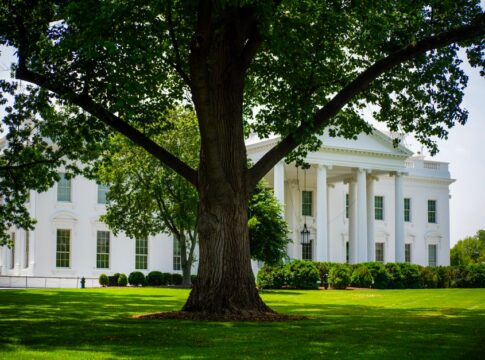
Photo: Ramaz Bluashvili / Pexels
By Daily American Press Newsroom, Politics Desk — Published September 25, 2026
Table of Contents
- Key Takeaways
- The Background & Context
- Why This Matters
- Reactions & Analysis
- What Happens Next
- Frequently Asked Questions
In a high-stakes diplomatic encounter, former President Donald Trump hosts Chinese President Xi Jinping at the White House for a state dinner that brings together world leaders and America’s most powerful technology executives. The meeting unfolds against a backdrop of escalating tensions between the world’s two largest economies, with trade disputes, technology competition, and geopolitical rivalries defining the relationship.
President Xi arrived bearing symbolic gifts designed to warm relations: two giant pandas and a promise to issue 100,000 student visas for American students to study in China. The gestures represent a calculated effort at soft diplomacy, reaching back to decades-old traditions of panda diplomacy while addressing educational and cultural exchange that has diminished in recent years.
The summit carries enormous weight for American voters, businesses, and workers whose livelihoods depend on stable US-China relations. With billions of dollars in trade at stake and technology leadership hanging in the balance, the outcomes of these discussions will ripple through Congress, shape campaign rhetoric in upcoming elections, and potentially influence legislation affecting everything from tariffs to tech regulation.
Key Takeaways
- Trump hosts White House state dinner for Chinese President Xi Jinping, bringing together political and technology leadership in a rare diplomatic gathering
- China offers two giant pandas as goodwill gesture, reviving traditional “panda diplomacy” that has characterized US-China relations for decades
- Xi announces 100,000 student visas for American students, dramatically expanding educational exchange opportunities between the nations
- Major technology CEOs attend the state dinner, underscoring the critical intersection of diplomacy, trade policy, and America’s tech sector
- The summit occurs amid ongoing tensions over trade, technology transfer, and geopolitical competition in the Indo-Pacific region
- Outcomes could influence Congressional action on China-related legislation and shape political campaign messaging ahead of elections
The Background & Context
US-China relations have traveled a rocky road over the past decade. What began as economic interdependence has evolved into strategic competition touching nearly every sector of American life. Trade deficits, intellectual property concerns, and national security questions have dominated political discourse in Washington.
Panda diplomacy dates back to 1972, when China gifted two giant pandas to the United States following President Nixon’s historic visit. The practice became a hallmark of warming relations between the nations. In recent years, however, several pandas have returned to China as loan agreements expired, with some observers viewing the departures as symbolic of cooling ties.
The student visa announcement addresses a significant decline in educational exchange. American enrollment in Chinese universities dropped sharply during the pandemic and has struggled to recover amid geopolitical tensions. Meanwhile, Chinese students constitute the largest group of international students at US universities, contributing billions to the American economy and filling critical roles in science and technology programs.
Technology has emerged as perhaps the most contentious arena. American lawmakers across both parties have raised alarms about Chinese access to advanced semiconductors, artificial intelligence capabilities, and sensitive data. Congress has passed bipartisan legislation restricting certain technology exports and investments. The presence of tech CEOs at the state dinner signals the industry’s stake in whatever agreements emerge from the summit.
Why This Matters
For ordinary Americans, the Trump-Xi summit carries concrete consequences. Trade policy affects prices at the checkout counter. A significant portion of consumer goods sold in the United States originates in China or relies on Chinese components. Tariffs and trade restrictions can drive up costs for families already struggling with inflation.
American farmers depend heavily on Chinese markets. Agricultural exports to China represent billions in annual sales, supporting rural communities across the heartland. Any deterioration in relations threatens these livelihoods, while improved ties could open new opportunities.
The technology sector employs millions of Americans and drives economic growth. Tech companies navigate a delicate balance: they need access to Chinese markets and manufacturing capabilities, yet face increasing pressure from Washington to decouple from China on national security grounds. The CEOs attending the state dinner represent companies whose decisions about China affect American jobs, innovation, and competitiveness.
National security concerns extend beyond abstract geopolitical competition. American military readiness depends on supply chains that often run through China. Critical minerals, advanced manufacturing, and pharmaceutical ingredients all involve Chinese production. Policymakers must weigh economic efficiency against strategic vulnerability.
The student visa initiative could benefit American higher education institutions facing enrollment pressures and budget constraints. International students pay full tuition and contribute to campus diversity. However, critics worry about intellectual property theft and the potential for espionage, concerns that have prompted some universities to restrict Chinese participation in sensitive research.
Reactions & Analysis
The summit format itself—a state dinner with tech executives—reflects the complex nature of modern US-China relations. Traditional diplomacy intersects with corporate interests and technological competition in ways that blur old boundaries between public and private sectors.
The panda gift taps into American affection for the endangered animals while serving Chinese strategic interests. Pandas remain one of China’s most effective soft power tools, generating goodwill and positive media coverage. The creatures draw millions of visitors to American zoos, creating constituencies that favor stable relations with China.
Political reactions in Washington will likely split along familiar lines. Some lawmakers view engagement with China as necessary for managing competition and preventing conflict. They argue that dialogue reduces the risk of miscalculation and creates opportunities to address shared challenges like climate change.
Others in Congress take a more hawkish stance. They contend that China exploits American openness while maintaining closed markets and authoritarian control. This faction pushes for tougher restrictions, greater support for Taiwan, and stronger alliances with Indo-Pacific partners to counter Chinese influence.
The business community generally favors stable relations and market access. Tech executives attending the dinner represent companies with significant Chinese operations and supply chain dependencies. They seek predictability and rules-based competition, even as they face pressure to reduce reliance on Chinese manufacturing.
What Happens Next
The immediate aftermath will focus on concrete deliverables. Did the leaders reach any agreements on trade? Will tariffs be adjusted? Are there commitments on technology transfer or market access? The details matter enormously for businesses making investment decisions and workers whose jobs depend on those choices.
Congress will scrutinize any agreements. Lawmakers hold significant power over trade policy and can block or modify executive actions. Bipartisan skepticism toward China means that any deal face tough questions about enforcement and reciprocity. Campaign season will amplify these debates, with candidates using China policy to demonstrate toughness or pragmatism depending on their political calculations.
The panda transfer involves logistics and diplomacy. Zoos must prepare habitats, negotiate loan terms, and manage public expectations. The process typically takes months and involves teams of specialists. Which American institutions receive the pandas, and under what terms, will generate intense competition and lobbying.
Student visa implementation requires coordination between education officials, universities, and immigration authorities. American institutions must recruit students, process applications, and provide support services. The initiative could reshape international education, creating new programs and partnerships while raising questions about academic freedom and research security.
Longer term, the summit’s success will be measured by whether it stabilizes the relationship or merely provides temporary relief. Structural tensions remain: competing political systems, divergent values, and conflicting visions for regional and global order. Technology competition will intensify as both nations race to dominate artificial intelligence, quantum computing, and biotechnology. Military tensions in the Taiwan Strait and South China Sea continue to pose risks of escalation.
Frequently Asked Questions
Why are pandas considered important diplomatic gifts?
Giant pandas serve as powerful symbols of goodwill between nations because of their universal appeal and endangered status. China has used panda diplomacy since the 1950s to build relationships and demonstrate friendship. The animals generate positive publicity, draw millions of zoo visitors, and create emotional connections that transcend political tensions. Receiving pandas signals a warming of relations, while their departure often reflects cooling ties between nations.
How will 100,000 student visas affect American universities?
The visa commitment could significantly boost American higher education institutions by increasing international enrollment and tuition revenue. It provides opportunities for cultural exchange and strengthens academic programs that benefit from diverse perspectives. However, universities must balance these benefits against concerns about research security, particularly in sensitive fields like advanced technology and defense-related sciences. The initiative may also prompt institutions to develop new programs specifically designed for Chinese students while ensuring appropriate safeguards for intellectual property.
What role do technology CEOs play in US-China relations?
Technology executives have become central figures in US-China relations because their companies operate globally while depending on Chinese manufacturing, markets, and talent. They advocate for stable relations and clear rules that allow business planning, yet face pressure from Washington to reduce Chinese dependencies for national security reasons. Their presence at the state dinner reflects their stake in diplomatic outcomes that affect supply chains, market access, and the regulatory environment in which they operate.
Could this summit change Congressional attitudes toward China?
While the summit may create temporary goodwill, fundamental Congressional skepticism toward China remains bipartisan and deeply rooted. Lawmakers face constituent pressures regarding jobs, national security, and human rights that transcend any single diplomatic meeting. However, concrete agreements on trade or other issues could influence specific legislation, particularly if they demonstrably benefit American workers and businesses. Campaign dynamics will also shape how politicians characterize the summit and its outcomes to voters.
As the state dinner concludes and leaders depart, Americans will watch for tangible results that affect their daily lives. The spectacle of diplomacy matters less than the substance of agreements and their implementation. Whether this summit represents a genuine turning point or merely a photo opportunity will become clear in the weeks and months ahead, as policies translate into paychecks, prices, and the security of communities across the nation.