
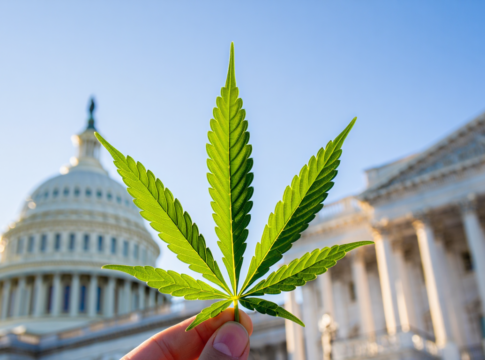
The Trump administration delivered a major federal policy shift on marijuana, moving state-licensed medical cannabis products from the strictest drug classification to a lower-risk category that acknowledges legitimate medical applications and opens doors for expanded research and business operations.
Federal Government Eases Marijuana Restrictions
Acting Attorney General Todd Blanche signed an order on April 23 that reclassifies marijuana products approved by the Food and Drug Administration or licensed by states for medical use from Schedule I to Schedule III. Schedule I drugs include heroin, LSD, and ecstasy, substances that the Drug Enforcement Administration considers have no medical value and high abuse potential. Schedule III classification recognizes moderate to low dependence risk and legitimate medical applications.
Blanche emphasized the research implications in his statement, noting that rescheduling allows investigation into safety and efficacy, ultimately providing patients with better care and doctors with more reliable information. The order establishes an expedited registration process for companies holding state medical marijuana licenses, enabling them to manufacture, distribute, and dispense marijuana for medical purposes under federal law. The change also delivers tax benefits for the industry operating across 45 states where marijuana holds legal status for medical or recreational purposes.
Political Divisions On Drug Policy
President Trump publicly celebrated the development during an April 23 White House event, calling rescheduling a significant achievement. The administration is expediting broader marijuana reclassification efforts, with the Drug Enforcement Administration scheduled to hold an administrative hearing on June 29. This follows Trump’s December 18 executive action finalizing a reclassification push begun under President Joe Biden. However, 22 Republican senators sent Trump a letter after his December order, calling marijuana harmful and urging reconsideration.
Changing American Attitudes On Cannabis
Public opinion has shifted dramatically over two decades, with 64 percent of Americans supporting legalization according to a Gallup survey, up from 36 percent twenty years ago. Republican support has dipped recently despite Trump’s personal position favoring less restrictive policies. During the 2024 campaign, Trump endorsed a Florida ballot measure that would have legalized marijuana statewide, though voters ultimately rejected it. The president has pursued aggressive drug enforcement through military strikes against alleged drug vessels off Venezuela’s coast while maintaining a softer stance on marijuana. Trump recently signed another executive order accelerating access to medical treatments using psychedelic drugs, signaling broader openness to alternative medicine approaches previously restricted at the federal level.