
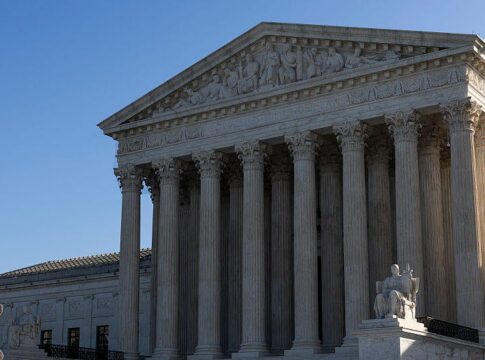
The Supreme Court declined to hear a challenge to Maryland’s sweeping restrictions on carrying firearms in public spaces, allowing the state to enforce bans on guns in parks, museums, public transit, casinos, and other locations despite constitutional concerns raised by gun rights advocates.
Challenge to Sensitive Places Law Rejected
Maryland gun owners and Second Amendment groups sought Supreme Court intervention after the Fourth Circuit Court of Appeals upheld nearly all of the state’s location-based firearms prohibitions. The restrictions prevent law-abiding citizens from carrying weapons on school property, at public demonstrations, in entertainment venues, healthcare facilities, and government buildings. Plaintiffs filed their lawsuits the same day the restrictions became law, arguing the regulations violated fundamental constitutional rights by making it nearly impossible to exercise Second Amendment protections in public.
The Fourth Circuit applied the Supreme Court’s 2022 framework requiring gun regulations to align with the nation’s historical tradition of firearms regulation. The appeals court found Maryland’s restrictions consistent with that standard, citing historical analogues and noting previous Supreme Court decisions from 2008 and 2010 affirmed bans in schools and government buildings.

“I harbor serious doubts that our Nation’s historical tradition of firearm regulation supports many of these sweeping restrictions.”


What Gun Owners Argued
The plaintiffs contended that if the right to carry firearms in public excludes government-owned locations, areas where First Amendment activities occur, and places where people gather for meals and recreation, the Second Amendment right to bear arms becomes meaningless. They urged the Supreme Court to provide clearer guidance to lower courts as more states enact similar location-specific prohibitions. The challenge represented one of the most significant questions facing courts following the high court’s 2022 decision establishing the historical tradition test for evaluating gun laws.
State Defends Historical Precedent
Maryland Attorney General Anthony Brown defended the restrictions by pointing to what he called a rich American tradition of prohibiting firearms in confined and crowded locations. He emphasized that the Supreme Court previously endorsed longstanding bans in schools, legislative assemblies, polling places, and courthouses while acknowledging the list was not exhaustive. Chief Justice John Roberts wrote in a recent opinion that the proper analysis involves determining whether challenged regulations align with principles underlying regulatory traditions, a standard Brown argued Maryland’s law satisfies.
What This Means for Gun Rights
The Supreme Court’s refusal to take the case leaves gun owners in Maryland and potentially other states facing increasingly restrictive limits on where they can legally carry firearms for self-defense. The decision signals that lower courts have considerable latitude in interpreting what constitutes sensitive places under the historical tradition framework, potentially encouraging other states to pursue similar comprehensive restrictions on public carry rights.
Sources
Cbsnews: Supreme Court turns away challenge to Maryland restrictions on guns in sensitive places