
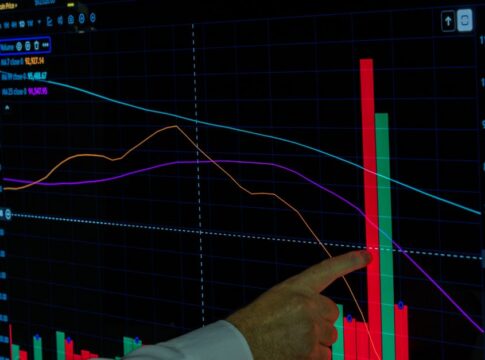
Photo: Rafael Minguet Delgado / Pexels
By Daily American Press Newsroom, Economy Desk — Published November 12, 2026
Table of Contents
- Key Takeaways
- The Background & Context
- Why This Matters
- Reactions & Analysis
- What Happens Next
- Frequently Asked Questions
Gold prices have clawed their way back above the $4,040 threshold after a sharp selloff driven by renewed inflation concerns and mounting speculation that the Federal Reserve may not be finished raising interest rates. The precious metal’s recovery comes as Wall Street investors grapple with conflicting signals about the economy’s trajectory and the central bank’s next move.
The rebound follows a period of turbulence in which gold experienced an inflation-driven selloff. Traders are now recalibrating their positions as fresh consumer price index data threatens to reshape expectations for monetary policy. The stakes are high for American households already squeezed by elevated costs and uncertain about jobs and economic stability.
According to market reports, gold is now eyeing a potential breakout toward $4,150, a level that could signal renewed confidence in the metal as a hedge against economic uncertainty. Yet the path forward remains clouded by the Federal Reserve’s ongoing assessment of inflation pressures and labor market conditions.
Key Takeaways
- Gold prices have recovered to trade above $4,040 after experiencing a selloff linked to inflation data and shifting Federal Reserve rate hike expectations.
- Market participants are reassessing the likelihood of additional interest rate increases as new consumer price index figures threaten to alter the monetary policy landscape.
- The precious metal is positioned near a technical threshold, with analysts watching for a potential breakout toward $4,150.
- Investors are balancing concerns about persistent inflation against hopes that the Fed may pause its tightening cycle.
- The recovery in gold prices reflects broader uncertainty on Wall Street about the economy’s direction and the effectiveness of current monetary policy.
- American consumers and investors face continued volatility as the interplay between inflation, jobs data, and interest rates remains unresolved.
The Background & Context
Gold has long served as a barometer for economic anxiety and a refuge during periods of monetary policy uncertainty. The metal’s recent price action reflects the complex crosscurrents buffeting financial markets as the Federal Reserve attempts to engineer a soft landing for the economy while wrestling inflation back toward its two percent target.
The recent selloff that preceded this week’s recovery was triggered by inflation data that suggested price pressures remain more stubborn than policymakers had hoped. When inflation runs hot, it typically prompts the Federal Reserve to maintain or even increase interest rates. Higher rates make non-yielding assets like gold less attractive compared to interest-bearing investments such as Treasury bonds.
Yet gold’s relationship with interest rates is nuanced. While rising rates can dampen immediate demand for the metal, prolonged monetary tightening also raises the specter of economic slowdown or recession—scenarios in which gold historically shines as a safe-haven asset. This dual nature creates the kind of volatility investors have witnessed in recent trading sessions.
The Federal Reserve has been navigating treacherous terrain since it began raising rates aggressively in 2022 to combat the worst inflation spike in four decades. After a series of increases that brought the federal funds rate to levels not seen in years, officials had signaled a potential pause. But fresh economic data has complicated that narrative, forcing market participants to reconsider whether the central bank’s work is truly done.
Consumer price index figures—the government’s primary measure of inflation—remain the focal point for these debates. Even modest surprises in CPI data can trigger significant market reactions, as traders rapidly adjust their bets on future Fed actions. The recent inflation-driven selloff in gold exemplifies how sensitive the market has become to these data releases.
Why This Matters
For ordinary Americans, the dance between gold prices, inflation, and Federal Reserve policy may seem abstract. But the implications are concrete and far-reaching. Interest rate decisions affect everything from mortgage costs to credit card rates to the returns on savings accounts. When the Fed raises rates to combat inflation, borrowing becomes more expensive, potentially slowing home purchases and business investment.
Gold prices also serve as a real-time referendum on economic confidence. When investors pile into the metal, it often signals anxiety about the dollar’s purchasing power, the stability of financial markets, or the sustainability of economic growth. A recovery in gold prices above $4,040 suggests that despite recent optimism about inflation moderating, deep-seated concerns persist.
The jobs market adds another layer of complexity. Strong employment figures can fuel inflation by putting upward pressure on wages, which companies may pass along to consumers through higher prices. But robust job growth also means more Americans are earning paychecks and supporting their families. The Federal Reserve must balance these competing considerations, and its decisions ripple through the entire economy.
Wall Street’s reaction to these dynamics affects Main Street in tangible ways. Stock market volatility can erode retirement account balances. Bond market turbulence can make it harder for states and municipalities to finance infrastructure projects. And currency fluctuations tied to interest rate expectations can influence the prices Americans pay for imported goods, from electronics to clothing to automobiles.
The potential breakout toward $4,150 that analysts are monitoring represents more than just a technical trading level. It would signal that a critical mass of investors believes economic uncertainty will persist, prompting them to seek the perceived safety of precious metals. Such a move could presage broader market instability or a loss of confidence in the Fed’s ability to manage inflation without triggering a recession.
Reactions & Analysis
Market observers are parsing every data point for clues about the Federal Reserve’s next move. The recent steadying of gold near $4,040 reflects a tentative equilibrium as investors weigh competing scenarios. Some analysts believe the inflation data that sparked the selloff will force the Fed’s hand, compelling policymakers to maintain a hawkish stance longer than markets had anticipated.
Others argue that the recovery in gold prices demonstrates resilience and suggests that investors are not fully convinced the Fed will follow through with additional rate hikes. This camp points to signs of cooling in certain economic sectors and argues that the central bank has already done enough to bring inflation under control, even if the data hasn’t fully reflected that progress yet.
The technical picture adds fuel to the debate. According to market reports, gold’s positioning near current levels sets up a potential move toward $4,150, a breakout that would require sustained buying pressure and likely some catalyst—perhaps weaker-than-expected economic data or dovish comments from Fed officials. Traders are watching for such triggers while managing the risk of renewed volatility.
The interplay between inflation expectations and rate hike bets has created a feedback loop. When consumer price data comes in hotter than expected, traders immediately price in a higher probability of Fed tightening. This typically strengthens the dollar and pressures gold lower. But if the resulting economic anxiety outweighs the rate impact, gold can recover as investors seek protection against broader instability.
Wall Street strategists emphasize that the current environment demands nimbleness. The rapid shift from selloff to recovery illustrates how quickly sentiment can change based on new information. Investors who positioned for continued weakness in gold were caught off guard by the rebound, underscoring the challenges of navigating markets when monetary policy remains in flux.
What Happens Next
The trajectory of gold prices in coming weeks will largely depend on two factors: incoming economic data and Federal Reserve communications. If inflation continues to moderate and jobs growth cools to a more sustainable pace, the central bank may feel comfortable pausing or even ending its rate hike cycle. Such a scenario would likely support further gains in gold as real interest rates decline.
Conversely, if price pressures prove more persistent or the labor market remains unexpectedly tight, the Fed could signal additional tightening ahead. That would test gold’s recent recovery and potentially push prices back below the $4,040 level. The metal’s ability to hold above this threshold in the face of hawkish Fed rhetoric would demonstrate significant underlying demand.
The potential breakout toward $4,150 represents a key technical and psychological level. A sustained move above that price point would likely attract additional buying from momentum traders and could shift the narrative from cautious recovery to renewed bull market. But such a breakout would require a catalyst—perhaps a disappointing jobs report, signs of credit stress, or unexpected weakness in consumer spending.
Longer term, the relationship between gold and the broader economy will continue to evolve as the Fed’s inflation fight progresses. If the central bank succeeds in bringing prices under control without triggering a severe recession, gold may trade in a range as investors lose the urgency to seek safe havens. But if the economy tips into contraction or inflation proves intractable, gold could embark on a more sustained rally.
Investors should also watch the dollar’s strength, which moves inversely to gold prices. A weaker dollar makes gold cheaper for foreign buyers and typically supports higher prices. Fed policy heavily influences currency markets, creating another channel through which interest rate decisions affect the precious metal.
Frequently Asked Questions
Why do gold prices rise when investors worry about Federal Reserve policy?
Gold serves as a hedge against economic uncertainty and inflation. When investors fear the Fed’s interest rate decisions could trigger recession or fail to control inflation, they often buy gold as a store of value. The metal doesn’t pay interest or dividends, but it’s seen as a reliable asset during turbulent times. Recent recovery above $4,040 reflects this dynamic as traders reassess the economic outlook.
How do inflation and interest rates affect gold prices?
The relationship is complex. Higher inflation often supports gold prices because the metal preserves purchasing power when currency values erode. However, the Federal Reserve typically raises interest rates to combat inflation, which can pressure gold lower since higher rates make yield-bearing assets more attractive. The current market reflects this tension, with gold recovering despite rate hike expectations because investors remain concerned about broader economic stability.
What does the $4,150 breakout level mean for investors?
The $4,150 level represents a technical threshold that, if breached, could signal stronger momentum for gold prices. Market analysts watch such levels because they often trigger additional buying from traders following technical patterns. A sustained move above $4,150 would suggest that demand for gold as a safe-haven asset is intensifying, potentially indicating deeper concerns about the economy or inflation outlook.
Should average Americans care about gold price movements?
Yes, because gold prices reflect broader economic anxieties that affect everyone. When gold rallies, it often signals concerns about inflation eroding purchasing power, uncertainty about jobs and growth, or instability in financial markets. These same forces influence mortgage rates, borrowing costs, and the overall health of the economy. Gold serves as a barometer for economic confidence, making its movements relevant even for those who don’t own the metal.
As gold steadies above $4,040 and investors eye the potential for further gains, the coming weeks will test whether this recovery has staying power or represents merely a pause in a broader adjustment. The answer will depend on data yet to be released and decisions yet to be made in the marble halls of the Federal Reserve. For now, the precious metal’s rebound serves as a reminder that economic uncertainty remains elevated, and the path forward is anything but clear.