
The Trump administration unveiled new rules Monday requiring food manufacturers to notify federal regulators when adding ingredients to products, but health experts warn the proposal still allows companies to police themselves on what goes into American food.
Self-Certification Continues Under New Plan
Under the proposed regulation, manufacturers must inform the Food and Drug Administration when they classify additives as generally recognized as safe, or GRAS, and provide data on existing additives. The GRAS designation, established in the 1950s to streamline approval for common ingredients like paprika and vanilla, has become what critics call a dangerous loophole. Companies currently face no requirement to notify the FDA when deciding what they consider GRAS, allowing thousands of unstudied chemicals into the food supply without government oversight.
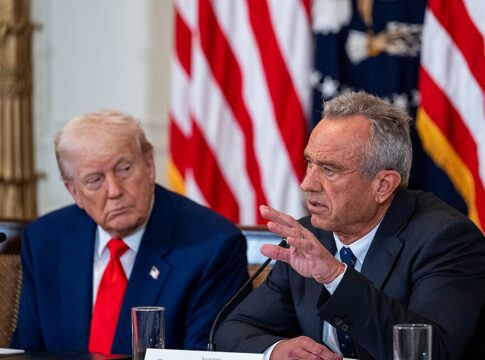
Health Secretary Robert F. Kennedy Jr. announced the proposal during a Monday media event, where Dr. Dariush Mozaffarian of the Food Is Medicine Institute at Tufts University explained how the original exemption transformed into a loophole exploited by manufacturers. The FDA has previously banned substances initially deemed GRAS after health concerns emerged, including Red No. 3, linked to cancer in animals, and brominated vegetable oil, connected to liver and brain damage.
Experts Say Proposal Falls Short
Alyssa Moran, deputy director of the Center for Food and Nutrition Policy at the University of Pennsylvania, criticized the rule for maintaining industry self-certification. Companies can introduce ingredients first and notify the FDA later, with no specified timeline for disclosure. Jennifer Pomeranz of New York University School of Global Public Health called the proposal an important first step but questioned whether submitted data would prove ingredient safety beyond basic identification and usage information.
What This Means
The Food Industry Association acknowledged the proposal’s importance while noting legal limitations on FDA reform authority. Chief public policy officer Stephanie Harris called for Congressional action to establish uniform, science-based ingredient transparency requirements that strengthen federal oversight while preventing conflicting state regulations. Kennedy also announced that a federally recognized definition for ultraprocessed foods remains under final review, though the administration provided no details on the proposed text or implementation timeline.