
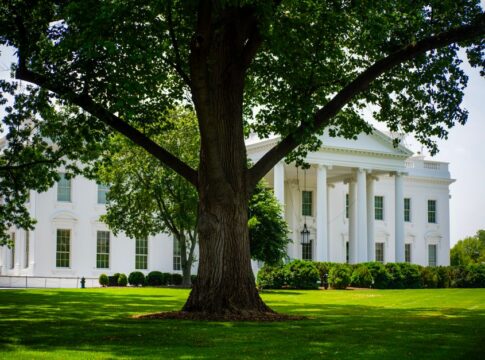
Photo: Ramaz Bluashvili / Pexels
By Daily American Press Newsroom, Politics Desk — Published September 7, 2026
Table of Contents
- Key Takeaways
- The Background & Context
- Why This Matters
- Reactions & Analysis
- What Happens Next
- Frequently Asked Questions
Former President Donald Trump has announced the completion of renovations to the White House helipad, a project that resumed last August after years of dormancy. The declaration comes as Trump continues to maintain a visible presence in national politics, using infrastructure achievements—both real and symbolic—to bolster his political narrative ahead of the 2024 campaign cycle. Trump says White House helipad work reflects his ongoing fixation with grand-scale projects and physical markers of presidential power, a pattern that has defined much of his public life.
The helipad project, though seemingly mundane in the broader landscape of federal infrastructure, carries symbolic weight. It represents not just functional improvements to executive facilities but also Trump’s persistent engagement with the trappings of the presidency even after leaving office. The timing of the announcement, coupled with his well-documented obsession with opulent spaces—including ballrooms and ceremonial venues—suggests a calculated effort to remind voters of his executive tenure and his vision for a potential return to power.
For American taxpayers and voters, infrastructure projects at the White House are more than cosmetic upgrades. They involve public funds, security considerations, and questions about priorities in an era of competing national needs. Understanding the context and implications of such announcements requires examining Trump’s broader relationship with presidential symbolism and how it intersects with contemporary political messaging.
Key Takeaways
- Trump announced completion of White House helipad renovations that restarted in August
- The project reflects Trump’s continued engagement with presidential infrastructure and symbolism
- Reports indicate Trump maintains an obsession with ballrooms and grand ceremonial spaces
- The announcement comes amid Trump’s active 2024 campaign and ongoing political activities
- Infrastructure claims serve dual purposes: practical updates and political messaging
- The helipad completion raises questions about federal spending priorities and executive facility management
The Background & Context
Presidential infrastructure projects have long served practical and symbolic functions. The White House helipad, formally known as the South Lawn landing zone, provides secure transportation for the president and visiting dignitaries. Maintenance and upgrades to such facilities typically occur across multiple administrations, often with little fanfare unless they involve significant expenditure or disruption.
Trump’s relationship with physical spaces and infrastructure has been a defining characteristic of his public persona for decades. Long before his presidency, he built a real estate empire predicated on visible grandeur and luxury branding. That aesthetic sensibility carried directly into his time in office, where he frequently discussed infrastructure projects, military parades, and physical improvements to federal properties.
According to reports, Trump maintains a particular fascination with ballrooms and ceremonial venues. This obsession extends beyond mere appreciation; it reflects a worldview where physical magnificence communicates power, success, and legitimacy. The helipad announcement fits within this pattern—a tangible achievement that can be photographed, discussed, and leveraged for political purposes.
The August restart of the helipad project occurred during a period of intense political activity for Trump. Facing multiple legal challenges while simultaneously campaigning for a return to the presidency, Trump has consistently sought to project an image of continued relevance and executive capability. Infrastructure announcements, even relatively minor ones, serve this strategic purpose by keeping him connected to the machinery of government in the public imagination.
Federal infrastructure projects typically involve complex approval processes, budgetary allocations, and oversight mechanisms. While specific details about the helipad renovation costs and scope remain limited in available reporting, such projects generally require coordination between the General Services Administration, the Secret Service, the Department of Defense, and White House operations staff. The multi-year timeline and August restart suggest bureaucratic complexity or funding delays that are common in government construction projects.
Why This Matters
For American citizens, announcements about White House infrastructure touch on several important concerns. First, there’s the question of fiscal responsibility. Every dollar spent on executive facilities comes from taxpayer funds, and voters have a legitimate interest in understanding whether such expenditures represent prudent investments or unnecessary extravagance.
Second, these projects illuminate the relationship between political messaging and governance. When a former president announces the completion of a federal project, it blurs lines between official government functions and campaign activities. This matters in an election year when voters are evaluating candidates’ records and promises. Infrastructure claims can be used to demonstrate competence and follow-through, but they can also distract from policy debates or accountability discussions.
Third, Trump’s focus on physical spaces and grand projects reflects a broader political philosophy about what government should prioritize. His emphasis on visible, tangible achievements contrasts with approaches that prioritize less photogenic but potentially more impactful investments in social programs, environmental protection, or regulatory reform. Understanding these priorities helps voters make informed choices about leadership and national direction.
The helipad completion also raises questions about continuity and transition between administrations. Federal projects often span multiple presidencies, creating ambiguity about who deserves credit or bears responsibility. This ambiguity becomes politically significant when former presidents seek to claim achievements that occurred partially or entirely after they left office.
For Congress and legislative oversight, presidential infrastructure spending represents an ongoing accountability challenge. Appropriations committees must balance executive branch needs against competing priorities while ensuring transparency and preventing waste. High-profile announcements like Trump’s helipad declaration can trigger renewed scrutiny of how federal facilities are managed and funded.
Reactions & Analysis
Political observers note that Trump’s infrastructure announcements serve multiple audiences simultaneously. For his base, they reinforce narratives of action and accomplishment. For undecided voters, they offer concrete examples meant to counter criticisms of chaos or incompetence. For opponents, they provide opportunities to question spending priorities and challenge claims of personal credit for institutional processes.
The timing of the announcement deserves scrutiny. Coming after the August project restart, the declaration of completion suggests either a remarkably fast construction timeline or a definition of “completion” that may differ from technical project closure. Government infrastructure projects typically involve extensive testing, inspection, and certification phases that can extend well beyond visible construction work.
Trump’s documented obsession with ballrooms and ceremonial spaces, as reported, provides useful context for interpreting his infrastructure messaging. These preferences reveal a consistent worldview where physical grandeur communicates authority and success. This perspective influenced his presidency and continues to shape his political communication strategy. Critics argue this focus on aesthetics can overshadow substantive policy work, while supporters contend that inspiring spaces and well-maintained facilities reflect appropriate respect for American institutions.
Media coverage of presidential infrastructure claims often struggles to balance legitimate news value against the risk of amplifying political messaging. A helipad renovation is genuinely newsworthy if it involves significant cost, innovative design, or security implications. But it can also serve as a vehicle for broader political narratives that may not withstand detailed scrutiny.
What Happens Next
As the 2024 campaign intensifies, voters can expect Trump to continue highlighting infrastructure and construction projects as evidence of executive competence. These claims will likely feature prominently in campaign materials, rally speeches, and debate talking points. The effectiveness of this strategy will depend partly on media scrutiny and partly on whether voters prioritize tangible projects over other considerations like policy positions or personal character.
Congressional oversight committees may investigate the costs and timeline of the helipad project, particularly if questions arise about expenditures or contracting processes. Such investigations often occur when political figures make high-profile claims about government projects, as legislators seek to verify accuracy and ensure proper use of public funds.
The completed helipad will serve future presidents regardless of party, making it a genuinely bipartisan infrastructure investment even if its announcement carries partisan overtones. How the Biden administration uses and maintains the facility, and whether they acknowledge the previous administration’s role in the project, will reflect broader norms about credit-sharing and institutional continuity.
Future presidential campaigns will likely continue using infrastructure achievements as campaign tools. The helipad announcement sets a precedent for how former presidents remain engaged with federal projects and claim credit for work that extends beyond their tenure. This pattern raises ongoing questions about accountability, transparency, and the appropriate boundaries between governance and politics.
Frequently Asked Questions
What exactly was completed in the White House helipad project?
While specific details remain limited in available reporting, the project involved renovations to the White House helipad that restarted in August. Presidential helipad projects typically include surface repairs, lighting upgrades, security enhancements, and infrastructure improvements to ensure safe aircraft operations. The exact scope and cost of this particular project have not been fully detailed in public announcements.
Why does Trump focus so much on infrastructure and physical spaces?
According to reports, Trump maintains a longstanding obsession with ballrooms and grand ceremonial spaces, reflecting a broader worldview where physical magnificence communicates power and success. This aesthetic preference, rooted in his real estate background, has consistently influenced his political messaging and priorities. Infrastructure projects provide tangible, visible achievements that align with his communication style and brand identity.
How do presidential infrastructure projects get funded and approved?
Federal infrastructure projects at the White House typically require coordination between multiple agencies including the General Services Administration, Secret Service, and Department of Defense. Funding comes through congressional appropriations for executive branch operations and security. Projects must undergo planning, budgeting, contracting, and oversight processes that can span multiple years and administrations.
Can former presidents take credit for projects completed after they leave office?
This remains a gray area in political accountability. When projects begin during one administration but complete during another, credit attribution becomes ambiguous. Former presidents often claim achievements for initiatives they started, while current administrations may emphasize their role in completion. Voters must evaluate these competing claims by examining timelines, funding sources, and decision-making authority to determine appropriate credit.
The helipad announcement represents more than a simple construction update. It illustrates how infrastructure, symbolism, and political messaging intersect in American governance. As voters navigate the 2024 campaign landscape, distinguishing between substantive achievements and political theater becomes increasingly important. The completed helipad will serve the presidency for years to come, regardless of who occupies the office—a reminder that some accomplishments transcend individual political fortunes even when claimed as personal victories.