
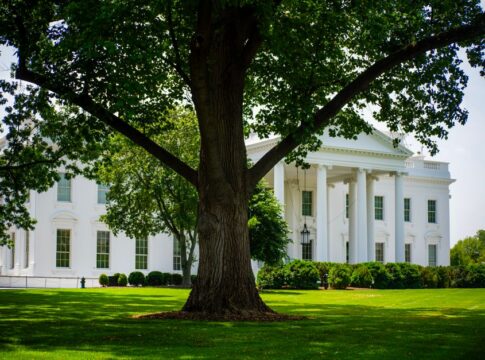
Photo: Ramaz Bluashvili / Pexels
By Daily American Press Newsroom, Politics Desk — Published September 8, 2026
Table of Contents
- Key Takeaways
- The Background & Context
- Why This Matters
- Reactions & Analysis
- What Happens Next
- Frequently Asked Questions
The scaffolding is coming down. After months of construction work hidden behind protective barriers, the Trump White House renovation project at the North Portico is approaching its final stages. Workers have begun removing the temporary structures that have obscured one of America’s most iconic facades, signaling that the ambitious overhaul is nearing completion.
The North Portico—the columned entrance facing Pennsylvania Avenue where presidents greet foreign dignitaries and departing leaders wave goodbye—has been shrouded in construction materials for an extended period. Now, as the protective covering comes down, the public is getting its first glimpse of what changes have been made to this historic entrance. For taxpayers and political observers alike, the project raises questions about cost, timing, and the priorities of an administration managing both infrastructure needs and political pressures.
The renovation comes at a moment when the Trump administration faces scrutiny across multiple fronts, from campaign activities to legislative battles in Congress. Yet the White House, as both symbol and working government building, requires ongoing maintenance—a reality that transcends politics even as every presidential decision becomes fodder for political debate.
Key Takeaways
- The North Portico renovation project at the White House has reached its final stages, with scaffolding and protective shrouding being removed from the historic entrance.
- The North Portico serves as the primary ceremonial entrance to the White House, facing Pennsylvania Avenue and hosting diplomatic arrivals and departures.
- The project has kept one of America’s most photographed architectural features hidden from public view for an extended construction period.
- White House renovation work typically requires careful coordination to balance preservation requirements, security needs, and continued government operations.
- The completion timing coincides with ongoing political activities including campaign events and congressional legislative work.
- Questions about project costs, scope, and necessity remain relevant to taxpayers funding federal building maintenance.
The Background & Context
The White House has undergone continuous renovation and maintenance since its construction was completed in 1800. Every administration inherits a building that serves simultaneously as executive office, ceremonial venue, museum, and private residence. The competing demands create constant tension between preservation and modernization.
The North Portico itself dates to 1829, when President Andrew Jackson commissioned its construction. The iconic columned entrance has witnessed nearly two centuries of American history. Foreign leaders have arrived through its doors. Presidents have departed for inaugurations, funerals, and final helicopter rides. Protesters have gathered within view of its columns. Journalists have broadcast from its steps.
Maintaining such a structure requires specialized expertise. The National Park Service oversees White House preservation work, ensuring that renovations meet historic preservation standards. Any significant construction project must navigate layers of bureaucracy, security protocols, and public relations considerations. Previous administrations have faced criticism for renovation timing and costs—President Harry Truman’s extensive 1948-1952 overhaul required the first family to move out entirely, while more recent projects have drawn scrutiny over budgets and disruption.
The current project’s extended timeline reflects the complexity of working on a functioning government building. Unlike a typical construction site, work must proceed around presidential schedules, security sweeps, and diplomatic events. Contractors cannot simply close the building for renovations. Instead, they must coordinate with the Secret Service, White House staff, and preservation experts while maintaining the building’s operational capacity.
Why This Matters
White House renovation projects matter for reasons extending beyond architecture. They represent a tangible intersection of history, governance, and public resources. Taxpayers fund the maintenance of federal buildings, making transparency about costs and scope a matter of public accountability. When renovation work affects the nation’s most visible government building, citizens have legitimate interest in understanding what is being done, why, and at what expense.
The symbolism cannot be ignored either. The White House facade represents American democracy to global audiences. When scaffolding obscures that facade, it creates visual metaphors that critics and supporters alike seize upon. Opponents may characterize it as emblematic of chaos or mismanagement. Supporters might frame it as necessary investment in national infrastructure. The reality typically lies somewhere between these political narratives—buildings require maintenance, and maintenance requires temporary disruption.
For the Trump administration specifically, the project’s completion timing carries political implications. As the president pursues both governance and campaign activities, the visual restoration of the White House presents an opportunity to project competence and completion. Conversely, any revelations about cost overruns or construction problems could provide ammunition for political opponents in Congress and on the campaign trail.
Beyond politics, the project affects daily White House operations. Staff, visitors, and journalists navigate around construction zones. Security protocols adjust to accommodate workers and equipment. The ceremonial aspects of presidential activities—the carefully choreographed arrivals and departures that communicate authority and continuity—must adapt to construction realities. Removing the scaffolding restores both function and symbolism.
Reactions & Analysis
Public reaction to White House renovation projects typically divides along predictable lines. Supporters emphasize the necessity of maintaining historic structures and ensuring the building remains functional for future administrations. Critics question costs, timing, and whether resources might be better allocated elsewhere. These debates reflect broader disagreements about government spending priorities and the appropriate use of taxpayer funds.
Architectural historians and preservation experts generally support careful maintenance of the White House as a nationally significant structure. The building’s historic designation requires adherence to preservation standards that can make renovations more expensive and time-consuming than typical construction projects. Specialists in historic preservation understand that deferred maintenance ultimately costs more than proactive upkeep, as small problems compound into structural crises.
Political analysts view the project through the lens of messaging and optics. The visual impact of scaffolding removal provides a tangible accomplishment—a visible before-and-after comparison that communicates progress. In an era of polarized politics where legislative achievements prove difficult, completing infrastructure projects offers concrete evidence of action. Whether voters care about White House renovations remains debatable, but the symbolism of restoration and completion carries intuitive appeal.
Congressional oversight of executive branch spending includes White House maintenance budgets. Legislators from both parties have historically scrutinized renovation costs, particularly when projects exceed initial estimates or timelines. The completion of the North Portico work will likely prompt budget reviews and accountability questions, standard procedure for major federal construction projects regardless of which party controls the White House.
What Happens Next
With scaffolding removal underway, attention will shift to the final details and official completion. The White House will likely schedule a formal unveiling or acknowledgment of the finished work, though the extent of public ceremony remains to be determined. Such events offer opportunities for presidential remarks about stewardship, history, and continuity—themes that resonate across political divides even when specific policies do not.
Budget documentation will eventually reveal the project’s total costs, triggering analysis about whether the work stayed within estimates and delivered promised improvements. Transparency advocates and congressional overseers will scrutinize expenditures, comparing them to initial projections and similar projects at other historic federal buildings. Any significant discrepancies will generate criticism and demands for explanation.
The completed renovation will serve future administrations regardless of party. White House infrastructure improvements transcend individual presidencies, becoming part of the building’s ongoing evolution. The next occupant will inherit whatever changes have been made, just as President Trump inherited conditions left by previous administrations. This continuity represents both the strength and challenge of maintaining a building that serves as working office and national monument.
Broader questions about White House maintenance will persist. The building requires constant upkeep, and future projects will generate similar debates about costs, timing, and priorities. Each administration must balance preservation requirements against operational needs and political considerations. The North Portico project offers lessons about managing complex renovations in a highly visible, politically charged environment—lessons that will inform future work on this irreplaceable structure.
Frequently Asked Questions
What is the North Portico of the White House?
The North Portico is the iconic columned entrance facing Pennsylvania Avenue on the north side of the White House. Constructed in 1829 during Andrew Jackson’s presidency, it serves as the primary ceremonial entrance where presidents greet foreign dignitaries and where many historic moments have been photographed. The portico’s distinctive columns and architecture make it one of the most recognizable features of the presidential residence.
How long has the renovation project been underway?
While specific project timelines have not been publicly detailed in available reports, the renovation has been extensive enough to require prolonged scaffolding and protective shrouding that kept the North Portico hidden from public view for an extended period. White House renovation projects typically take months to years depending on scope, as work must proceed around presidential schedules and security requirements while meeting historic preservation standards.
Who pays for White House renovation projects?
Taxpayers fund White House maintenance and renovation through federal appropriations managed by the National Park Service and the White House budget. Major renovation projects require congressional appropriation and oversight. The White House is considered a nationally significant historic structure, and its preservation is treated as a federal responsibility rather than a personal expense for the sitting president.
Will the public be able to see the completed renovation?
The North Portico faces Pennsylvania Avenue and is visible to the public from outside the White House security perimeter. Once scaffolding and protective covering are fully removed, pedestrians and tourists will be able to view the renovated entrance from public areas. However, close-up access remains restricted by security protocols that have been standard practice for decades. Public White House tours, when available, typically do not include the North Portico entrance area.
As the protective barriers come down and the North Portico emerges from months of construction work, the White House takes another step in its centuries-long evolution. Buildings endure while administrations change. The work of preservation continues regardless of political winds. And America’s most famous residence prepares once again to serve as backdrop for the next chapter of national history.