
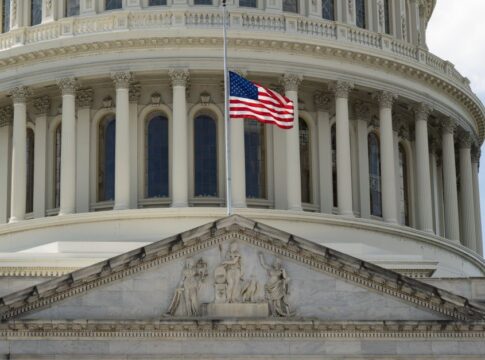
Photo: David Dibert / Pexels
By Daily American Press Newsroom, Politics Desk — Published October 16, 2026
Table of Contents
- Key Takeaways
- The Background & Context
- Why This Matters
- Reactions & Analysis
- What Happens Next
- Frequently Asked Questions
The 119th Congress is shaping up to be one of the least productive legislative sessions in four decades. As lawmakers grapple with partisan gridlock and narrow majorities, the pace of lawmaking has slowed to a crawl that raises serious questions about the functionality of American democracy. This troubling trend comes at a time when voters are increasingly frustrated with Washington’s inability to address pressing national challenges.
The current session stands in stark contrast to previous Congresses that managed to pass significant legislation even amid political divisions. With the 119th congress among the slowest in recent memory, the implications extend far beyond the Capitol—touching everything from economic policy to infrastructure investment to healthcare reform. Citizens who elected these representatives expecting action are instead witnessing legislative paralysis.
This dysfunction arrives as Americans prepare for upcoming elections with deep concerns about congressional effectiveness. Public sentiment reflects growing impatience with a political system that seems more focused on campaign messaging than governing, raising fundamental questions about accountability and representation in our democracy.
Key Takeaways
- The 119th Congress ranks among the least productive legislative sessions over the past 40 years, marking a significant decline in congressional output.
- Narrow partisan majorities and deep political divisions have contributed to legislative gridlock that prevents meaningful bills from advancing.
- Public polling indicates a majority of Americans expect Democrats to win control of the House in upcoming elections, reflecting voter dissatisfaction with current congressional performance.
- The split public opinion on Senate control demonstrates the uncertain political landscape as citizens evaluate congressional effectiveness.
- Legislative inaction affects critical policy areas including economic measures, infrastructure projects, and social programs that directly impact American families.
- The productivity crisis in Congress occurs against a backdrop of increasing voter cynicism about the political system’s ability to deliver results.
The Background & Context
Congressional productivity has fluctuated throughout American history, but the past four decades offer a revealing benchmark. During periods of unified government, when one party controlled both chambers and the presidency, legislation typically moved more swiftly. Even divided governments occasionally produced landmark bipartisan achievements when political will existed to find common ground.
The current 119th Congress operates in an environment of razor-thin majorities. Small margins mean that even a handful of defections can doom legislation. Party leadership struggles to maintain discipline while individual members face pressure from ideologically pure primary voters who punish compromise. This creates a vicious cycle: lawmakers fear electoral consequences for working across the aisle, yet voters grow frustrated with inaction.
Historical comparisons reveal the depth of today’s challenge. Previous Congresses facing similar partisan divisions still managed to pass appropriations bills, authorize defense spending, and address emergencies. The machinery of government, while sometimes sluggish, continued functioning. Today’s legislative paralysis represents something different—a near-complete breakdown in the basic mechanics of lawmaking.
The causes run deeper than simple partisanship. Congressional rules and procedures have evolved in ways that empower individual members to obstruct. The filibuster in the Senate requires supermajorities for most legislation. The House, traditionally more nimble, now sees frequent rebellion within party ranks. Leadership spends more time managing internal coalitions than negotiating with the opposition.
Campaign dynamics reinforce these patterns. Modern political campaigns increasingly focus on messaging and fundraising rather than legislative accomplishment. A member of Congress can build a national profile through media appearances and social media engagement without ever passing a bill. This incentive structure rewards performance over productivity, theater over governance.
Why This Matters
Legislative gridlock carries real consequences for American families. When Congress fails to act, problems fester. Infrastructure crumbles without investment. Economic policies remain frozen in outdated frameworks. Social programs lack the updates needed to serve changing populations. The cost of inaction compounds over time.
Consider the federal budget process. Ideally, Congress should pass appropriations bills before each fiscal year begins, allowing agencies to plan and execute programs efficiently. Instead, the government lurches from continuing resolution to continuing resolution, creating uncertainty that wastes taxpayer dollars. Federal employees don’t know their budgets. Contractors delay projects. States struggle to plan when federal funding remains unclear.
Beyond immediate policy impacts, congressional dysfunction erodes democratic legitimacy. Citizens elect representatives expecting them to represent their interests through legislation. When Congress becomes a venue for symbolic gestures rather than substantive lawmaking, voters lose faith in the system. This cynicism feeds extremism and makes future compromise even harder.
The international dimension matters too. America’s global competitors watch congressional paralysis and draw conclusions about democratic governance. When authoritarian regimes point to Washington gridlock as evidence that democracy doesn’t work, congressional dysfunction becomes a national security issue. Allies question whether the United States can maintain commitments when its legislature can’t function.
Economic markets also react to legislative uncertainty. Businesses make investment decisions based partly on policy predictability. When Congress can’t pass basic legislation, companies delay hiring and capital expenditures. This drag on economic growth ultimately costs jobs and reduces prosperity for working families.
Reactions & Analysis
Public opinion reflects growing frustration with congressional performance. According to available research, a majority of Americans now expect Democrats to win control of the House in upcoming elections—a clear signal that voters are evaluating current congressional effectiveness and finding it wanting. This anticipated shift in power represents a referendum on legislative productivity.
The public remains split on Senate control, however, demonstrating the complex political calculations voters make. Senate races often turn on individual candidates and state-specific issues rather than national trends. This division suggests Americans distinguish between their frustration with Congress as an institution and their views of individual senators.
Political analysts point to structural factors beyond any single party’s control. The geographic sorting of Americans into increasingly homogeneous communities creates safe seats where primary challenges pose greater threats than general elections. This pushes members toward ideological extremes rather than the center where compromise happens.
Some observers argue that low productivity isn’t necessarily bad—that gridlock prevents harmful legislation and protects against government overreach. This perspective holds that the Founders designed a system meant to move slowly and require broad consensus. Critics counter that there’s a difference between deliberative caution and complete paralysis.
Reform proposals circulate among good-government groups and frustrated legislators. Ideas include changing filibuster rules, reforming the committee system, and altering campaign finance laws to reduce the influence of extreme donors. Yet these reforms themselves require legislative action—a chicken-and-egg problem when Congress can’t pass basic bills.
What Happens Next
The trajectory for the remainder of the 119th Congress looks challenging. With upcoming elections dominating the political calendar, members face even stronger incentives to focus on campaign messaging rather than legislating. The closer elections approach, the more every vote becomes a potential attack ad.
Must-pass legislation will likely continue moving through continuing resolutions and last-minute deals. The debt ceiling, appropriations, and other deadline-driven measures may force temporary cooperation. But transformative policy changes seem unlikely absent a dramatic shift in political dynamics.
Future Congresses will inherit the consequences of today’s inaction. Problems left unaddressed grow more expensive and difficult to solve. The longer Congress delays infrastructure investment, the more costly repairs become. The longer economic policies remain outdated, the harder eventual transitions will be.
Electoral outcomes will determine whether the pattern continues or breaks. A decisive victory by either party could provide the unified control needed for action—though narrow majorities would likely perpetuate gridlock. Voters hold the ultimate power to reward or punish legislative productivity through their ballots.
The broader question is whether American political institutions can adapt to contemporary challenges. The constitutional system wasn’t designed for today’s level of partisan polarization and media fragmentation. Either norms and practices will evolve to enable governance despite these pressures, or dysfunction will deepen until crisis forces change.
Frequently Asked Questions
How is congressional productivity measured?
Congressional productivity is typically measured by counting the number of bills passed and signed into law, though this metric has limitations. Researchers also examine the significance of legislation, the number of committee hearings held, and the passage of major appropriations bills. Quality matters as much as quantity—a single transformative law may represent more productivity than dozens of minor bills. Comparisons across decades require adjusting for changes in how Congress operates and what counts as substantive legislation.
Why has the 119th Congress been so unproductive?
Multiple factors contribute to the low productivity of the 119th Congress. Narrow partisan majorities make it difficult for leadership to advance legislation without near-unanimous support from their own party. Deep ideological divisions prevent the bipartisan cooperation that previous Congresses relied upon. Changes in campaign dynamics incentivize members to focus on media presence and fundraising rather than legislating. Procedural rules like the Senate filibuster require supermajorities that are increasingly difficult to achieve in polarized times.
What happens when Congress doesn’t pass legislation?
When Congress fails to legislate, existing laws and policies remain in place even if they’ve become outdated or inadequate. Federal agencies continue operating under previous appropriations through continuing resolutions, creating budget uncertainty. Problems that require legislative solutions go unaddressed, often growing worse and more expensive over time. Executive branch agencies may attempt to fill gaps through regulation, though this approach has legal limits and can be reversed by future administrations.
Can voters do anything about congressional gridlock?
Voters ultimately hold the power to address congressional dysfunction through elections. By rewarding legislators who demonstrate willingness to compromise and punishing those who prioritize obstruction, citizens can change incentive structures. Participating in primary elections is particularly important since these often determine winners in safe seats. Voters can also support electoral reforms like ranked-choice voting or redistricting changes that might reduce polarization. However, changing entrenched patterns requires sustained civic engagement beyond single election cycles.
The 119th Congress’s historic unproductivity represents more than a statistical curiosity. It reflects fundamental challenges in American governance that won’t resolve themselves. Whether through electoral accountability, institutional reform, or renewed commitment to compromise, addressing legislative paralysis remains essential to a functioning democracy. The question is whether the political system can adapt before public faith in democratic institutions erodes beyond repair.