
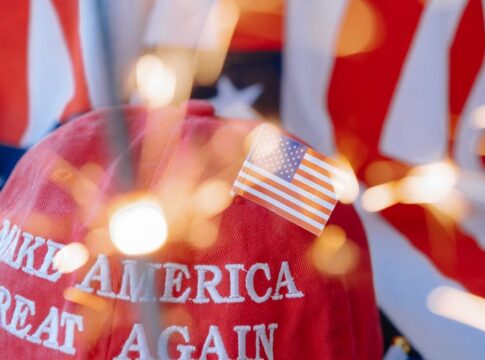
Photo: Polina Zimmerman / Pexels
By Daily American Press Newsroom, National Desk — Published November 20, 2026
Table of Contents
- Key Takeaways
- The Background & Context
- Why This Matters
- Reactions & Analysis
- What Happens Next
- Frequently Asked Questions
The U.S. Department of Justice under the Trump administration appears to be retreating from a wave of voter fraud prosecutions that once dominated headlines and fueled intense national debate. Reports indicate that cases once pursued with vigor have slowed dramatically, raising questions about the original scope and merit of investigations that many legal experts and civil rights advocates warned were politically motivated attacks on American democracy.
The shift represents a significant turn in federal government policy around election integrity. What began as an aggressive push to prosecute alleged voter fraud—a cornerstone of Trump’s political messaging—has now dwindled to what observers describe as a trickle. This national news story carries profound implications for how Americans understand the integrity of their electoral system and the role of federal law enforcement in safeguarding it.
According to reports, the cascade of voter-fraud cases initiated by the Justice Department has slowed considerably in the period following recent midterm elections. The pullback comes amid mounting criticism from state officials, including California Governor Gavin Newsom, who publicly celebrated a federal court decision that rejected what he characterized as the Trump DOJ’s “despicable attacks on democracy.”
Key Takeaways
- The Department of Justice under Trump backing election fraud prosecutions has significantly reduced its caseload in recent months, with the volume of new cases slowing to minimal levels.
- Federal courts have pushed back against some of the DOJ’s election-related legal actions, with at least one ruling described by state officials as a decisive rejection of federal overreach.
- The slowdown follows midterm elections and raises questions about the political timing and motivation behind the original surge in prosecutions.
- State leaders, particularly in Democratic-led states like California, have framed the retreat as a vindication of their defense of voting rights and democratic norms.
- Legal experts and civil rights organizations had warned that the aggressive prosecution strategy could intimidate voters and undermine confidence in elections.
- The shift in DOJ activity represents a potential turning point in the national debate over election security versus voter access.
The Background & Context
Election fraud prosecutions became a signature issue for the Trump administration. The president repeatedly claimed—without substantial evidence—that widespread voter fraud threatened American elections. These assertions formed the foundation for policy initiatives, including the now-defunct Presidential Advisory Commission on Election Integrity and a directive to federal prosecutors to prioritize voter fraud cases.
The Justice Department’s traditional approach to election-related prosecutions had been cautious and measured. Career prosecutors typically avoided bringing cases that could appear to interfere with ongoing elections or suppress voter participation. That calculus shifted under Trump’s leadership.
Federal prosecutors ramped up investigations. Cases that might have once been handled at the state level or declined entirely received federal attention. The Supreme Court and lower federal courts became battlegrounds for disputes over voting rights, access, and alleged fraud. Voter ID laws, mail-in ballot procedures, and registration requirements all faced heightened scrutiny.
Critics argued the prosecutions served a dual purpose: legitimizing unfounded claims of widespread fraud while creating a chilling effect on voting, particularly among minority communities and other populations that tend to support Democratic candidates. Civil rights organizations documented instances where investigations targeted naturalized citizens, individuals with language barriers, and communities of color.
The legal landscape grew increasingly contentious. State attorneys general—especially in states with Democratic leadership—mounted vigorous defenses against what they viewed as federal intrusion into state-run election systems. Constitutional questions about federalism and the balance of power between state and federal governments came to the forefront.
Why This Matters
The American public has a fundamental stake in how election fraud allegations are investigated and prosecuted. Trust in democratic institutions depends on citizens believing their votes count and that elections are fair.
When the federal government pursues fraud cases aggressively, it sends a message. If the prosecutions are legitimate, they protect democracy. If they’re politically motivated, they undermine it. The apparent retreat by the DOJ raises uncomfortable questions about which scenario Americans have been witnessing.
Taxpayers funded these investigations and prosecutions. Resources devoted to cases that ultimately peter out or fail in court represent money that could have addressed other priorities. Federal prosecutors have limited bandwidth. Prioritizing election fraud necessarily means de-prioritizing other crimes.
The impact on voters themselves cannot be overstated. Individuals caught up in fraud investigations face legal jeopardy, financial costs, and reputational damage. Communities targeted by aggressive enforcement may feel intimidated or unwelcome at the polls. Naturalized citizens, in particular, have reported heightened anxiety about participating in elections after high-profile prosecutions of immigrants accused of illegal voting.
The slowdown also matters for future elections. If the DOJ’s retreat signals that many of the cases lacked merit, it could embolden efforts to expand voter access and roll back restrictive voting laws. Conversely, if prosecutors are simply shifting strategies, new waves of enforcement could emerge.
Reactions & Analysis
California Governor Newsom’s response to a federal court ruling against the Trump DOJ exemplifies the partisan divide surrounding these issues. His characterization of the Justice Department’s actions as “despicable attacks on democracy” reflects the view among many Democratic officials that the prosecutions were never about protecting election integrity but rather about suppressing votes and validating false narratives.
The federal court decision that prompted Newsom’s statement represents a significant legal setback for the administration’s approach. While details of the specific ruling are not fully elaborated in available reports, the fact that a federal judge rejected the DOJ’s position suggests that at least some of the legal theories underpinning the prosecution strategy failed to withstand judicial scrutiny.
Legal scholars have long debated the appropriate federal role in policing elections. The Constitution grants states primary authority over election administration, but federal laws prohibit certain forms of fraud and discrimination. Finding the right balance has always been delicate.
Voting rights advocates view the DOJ’s pullback as overdue. Organizations that monitor election access have documented how fraud prosecutions, even when they don’t result in convictions, can deter eligible voters from participating. The psychological impact of seeing neighbors or community members investigated creates fear that spreads beyond the individuals directly involved.
Conservative analysts, meanwhile, express concern that the slowdown reflects political pressure rather than prosecutorial judgment. They argue that voter fraud, while perhaps not widespread, does occur and deserves serious federal attention. The reduction in cases, from this perspective, might signal a troubling reluctance to enforce election laws.
What Happens Next
The trajectory of federal election enforcement remains uncertain. Much depends on political dynamics, court decisions, and whether evidence of significant fraud emerges in future elections.
State-level battles over voting laws will likely intensify. With less aggressive federal prosecution, states have more latitude to set their own policies. Expect continued fights over mail-in voting, early voting periods, voter ID requirements, and registration procedures.
Congress may weigh in. Legislation addressing election security, voter access, and federal enforcement authority could reshape the landscape. However, partisan gridlock makes major reforms unlikely without significant shifts in political power.
The Supreme Court’s composition and recent decisions on voting rights cases will influence how lower courts handle election-related disputes. The high court’s approach to federalism questions and its interpretation of voting rights statutes will set boundaries for both state and federal action.
For individual voters, the immediate impact may be subtle. Fewer prosecutions could mean less intimidation and greater confidence in participating. But the underlying tensions—between security and access, between federal and state authority, between competing visions of democracy—remain unresolved.
The 2024 election cycle looms. How the Justice Department handles election-related matters during that consequential period will provide the clearest indication of whether the current slowdown represents a genuine policy shift or merely a temporary pause.
Frequently Asked Questions
Why did the Trump DOJ initially pursue so many voter fraud cases?
The Trump administration made combating alleged voter fraud a central priority, driven by the president’s repeated claims that widespread fraud affected election outcomes. The Justice Department responded by directing prosecutors to prioritize these cases, resulting in a significant increase in investigations and prosecutions compared to previous administrations. Critics argued this reflected political motivation rather than evidence-based enforcement.
What does it mean for democracy when voter fraud prosecutions slow down?
The implications depend on why the prosecutions slowed. If cases are being dropped because they lacked merit, it suggests the original wave of prosecutions may have been unjustified and potentially harmful to voter confidence and participation. If the slowdown reflects resource constraints or strategic shifts, it might indicate changing priorities within the Justice Department. Either way, the pattern raises questions about the appropriate role of federal law enforcement in policing elections.
How have federal courts responded to the DOJ’s election fraud prosecutions?
At least some federal courts have rejected the Justice Department’s legal positions in election-related cases, as evidenced by the ruling that prompted California Governor Newsom’s public criticism. These judicial decisions suggest that courts are scrutinizing the government’s legal theories and, in some instances, finding them insufficient. Court pushback can significantly constrain prosecutorial strategies and signal to other judges how to evaluate similar cases.
Will this affect how future elections are monitored and enforced?
Almost certainly. The apparent retreat from aggressive voter fraud prosecution sets a precedent that will influence both state and federal approaches to election enforcement. States may feel emboldened to resist federal intervention in their election systems, while future administrations will likely consider the legal and political consequences of aggressive prosecution strategies. The long-term impact will depend on how courts continue to rule and whether evidence emerges of fraud that demands federal attention.
The story of Trump’s Justice Department backing away from election fraud cases is still being written. What began as a high-profile enforcement push has quieted considerably, leaving Americans to wonder whether the original alarm was justified or whether the real threat to democracy came from the prosecutions themselves. As the nation moves toward another presidential election, these questions will only grow more pressing.