
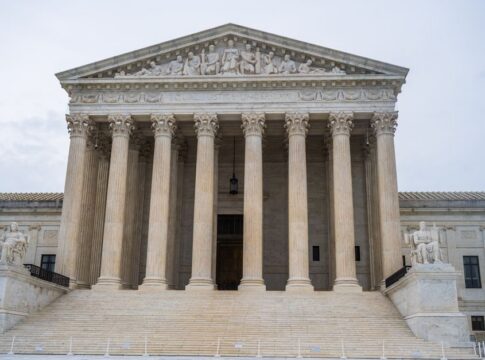
Photo: Guohua Song / Pexels
By Daily American Press Newsroom, National Desk — Published November 15, 2026
Table of Contents
- Key Takeaways
- The Background & Context
- Why This Matters
- Reactions & Analysis
- What Happens Next
- Frequently Asked Questions
Justice Samuel Alito has issued a stark warning about the Supreme Court‘s vulnerability, suggesting the nation’s highest judicial body sits precariously between executive power and a legislative branch capable of defunding it entirely. The comments come in the wake of significant Democratic gains in Congress, raising fresh questions about the balance of power among America’s three branches of government and the independence of the federal judiciary.
Alito says supreme court justices face an unprecedented institutional threat. His remarks, delivered just days after Democrats secured control of Congress in what observers characterized as a landslide victory, signal deep anxiety within the conservative majority about potential legislative action targeting the court. The justice’s language—warning that lawmakers could literally “turn off the lights”—paints a picture of judicial vulnerability rarely articulated so bluntly by a sitting member of the nation’s highest bench.
The timing is no coincidence. With control of both chambers now in Democratic hands, progressive lawmakers have floated various proposals to reform or constrain what they view as an increasingly activist conservative court. Alito’s warnings suggest the justices are acutely aware of their institutional fragility.
Key Takeaways
- Justice Samuel Alito warned that Congress has the power to “turn off the lights” at the Supreme Court, highlighting the judiciary’s financial dependence on the legislative branch.
- The comments came days after Democrats won control of Congress in what has been described as a landslide election victory.
- Alito characterized the Supreme Court as caught between presidential authority and congressional power, suggesting the court lacks independent enforcement mechanisms.
- The remarks reflect growing tension between the conservative-majority court and a Democratic Congress that has discussed various reform proposals.
- Legal experts view the comments as an unusually candid acknowledgment of the court’s institutional vulnerability and dependence on the other branches of government.
- The statement raises questions about judicial independence and the constitutional balance of power in the federal government.
The Background & Context
The Supreme Court has long occupied a unique position in American governance. Unlike the president, who commands the military and executive agencies, or Congress, which controls the federal purse strings, the judiciary possesses what Alexander Hamilton famously called “neither force nor will, but merely judgment.” The court depends entirely on the other branches to fund its operations and enforce its decisions.
This constitutional arrangement has generally worked through a combination of institutional respect, political norms, and public legitimacy. But recent years have strained these unwritten rules. The court’s conservative supermajority, cemented by three Trump appointees, has issued a series of controversial decisions that overturned decades of precedent, from abortion rights to environmental regulation to affirmative action.
Democrats have responded with proposals ranging from expanding the number of justices to imposing term limits to strengthening ethics requirements. Some progressive lawmakers have even suggested using Congress’s appropriations power to pressure the court on specific issues. Until now, these remained largely theoretical threats. Alito’s comments suggest the justices take them seriously.
The recent Democratic electoral victory has transformed the political landscape. With control of both the House and Senate, Democrats theoretically possess the legislative muscle to pursue court reform without Republican cooperation, though the specifics of the electoral outcome and resulting margins remain crucial to understanding what’s actually feasible.
Why This Matters
For ordinary Americans, the independence of the federal judiciary represents a cornerstone of constitutional democracy. Courts serve as the final arbiter of disputes between citizens and government, between states and the federal government, and among the branches themselves. When justices begin worrying publicly about Congress cutting their funding, it signals a breakdown in the institutional trust that makes the system work.
The practical implications extend beyond abstract constitutional theory. Every American who files a lawsuit, faces criminal charges, or challenges government action depends on an independent judiciary willing to rule based on law rather than political pressure. If justices feel vulnerable to retaliation from Congress or the president, their willingness to issue unpopular but legally sound decisions may erode.
Taxpayers and voters also have a stake in this debate. The Supreme Court’s budget, while modest compared to other federal agencies, comes from congressional appropriations. In theory, lawmakers could slash funding, reduce staff, or eliminate resources for clerks, security, or building maintenance. Such actions would cripple the court’s ability to function without technically violating the Constitution’s guarantee of lifetime tenure for federal judges.
The national news cycle has been dominated by concerns about democratic norms and institutional stability. Alito’s warning adds another dimension to these anxieties. If one branch can threaten another with financial starvation, the careful balance envisioned by the framers begins to collapse. The defense of judicial independence becomes not just a legal abstraction but a practical necessity for maintaining the rule of law.
Reactions & Analysis
Legal scholars and political observers have reacted with a mixture of concern and skepticism to Alito’s remarks. Some view the comments as a legitimate warning about preserving judicial independence in an era of heightened partisan polarization. The court, after all, has no army to enforce its rulings and no revenue source beyond what Congress provides. From this perspective, Alito is simply stating an uncomfortable truth about the judiciary’s structural weakness.
Others interpret the warning differently. Critics suggest the justice is engaging in political rhetoric designed to preempt Democratic reform efforts by framing them as attacks on judicial independence rather than legitimate exercises of congressional authority. The characterization of recent Democratic victories as creating a threatening environment for the court has struck some observers as revealing the conservative justices’ own political anxieties.
The description of Alito as a “Trumpy Justice” in some coverage reflects the perception that his jurisprudence aligns closely with conservative political priorities. His opinions on issues from religious liberty to executive power have consistently favored conservative outcomes, leading critics to question whether his warnings about judicial independence are entirely principled or partly self-interested.
Constitutional experts note that Congress does possess broad authority over the federal courts. Article III gives lawmakers power to establish lower courts, set their jurisdiction, and fund their operations. The Constitution provides few explicit protections for the Supreme Court beyond the prohibition on reducing justices’ salaries during their tenure. Whether this arrangement threatens or protects judicial independence depends largely on political norms and mutual restraint.
What Happens Next
The immediate future likely involves continued tension between the Democratic Congress and the conservative Supreme Court. Lawmakers may pursue ethics reform, transparency requirements, or changes to the court’s emergency docket procedures—measures that would constrain judicial discretion without directly threatening the institution’s existence.
More dramatic proposals, such as court expansion or mandatory retirement ages, face significant political and practical obstacles. Even with Democratic control, such measures would require overcoming potential Senate filibusters, maintaining party unity, and persuading moderate members that the benefits outweigh the risks of further institutional conflict.
Alito’s warning may itself influence this calculus. By publicly highlighting the court’s vulnerability, he may be attempting to rally public support for judicial independence or warn Democrats that aggressive action could backfire politically. Alternatively, the comments could galvanize reformers who view the current court as insufficiently accountable.
The relationship between the federal government’s branches will continue to evolve. If Congress does pursue significant court reform, the justices would face difficult choices about how to respond. They could issue rulings defending their own institutional prerogatives, potentially escalating the conflict. Or they could moderate their jurisprudence, seeking to reduce political pressure through more cautious decision-making.
For the American public, the coming months will test whether the constitutional system can accommodate deep political disagreements without collapsing into institutional warfare. The defense of democratic norms requires all parties to recognize both the formal powers they possess and the informal restraints that make shared governance possible.
Frequently Asked Questions
Can Congress actually defund the Supreme Court?
Technically, yes. Congress controls all federal appropriations, including funding for the Supreme Court’s operations, staff, and facilities. However, doing so would be unprecedented and would likely trigger a constitutional crisis. While lawmakers could theoretically reduce the court’s budget to minimal levels, such action would be seen as an attack on judicial independence and would face enormous political and legal challenges. The Constitution does prohibit reducing justices’ salaries, but other operational funding remains within congressional discretion.
What reforms to the Supreme Court are Democrats actually considering?
Democratic lawmakers have proposed various reforms, ranging from modest ethics requirements to more dramatic structural changes. These include expanding the number of justices, imposing term limits, strengthening recusal rules, and increasing transparency around the court’s emergency docket. The feasibility of each proposal depends on political will, Senate procedures, and constitutional constraints. More modest ethics reforms enjoy broader support than court expansion, which remains controversial even among some Democrats.
Has a Supreme Court justice ever warned about congressional threats before?
While justices have occasionally defended judicial independence in speeches and opinions, Alito’s explicit warning about Congress’s power to “turn off the lights” is unusually blunt. Supreme Court justices typically avoid direct political commentary about the other branches, preferring to maintain an appearance of being above partisan conflict. The candid nature of Alito’s remarks suggests either deep concern about genuine threats or a willingness to engage in institutional politics more directly than traditional norms would suggest.
What happens if the Supreme Court and Congress enter into direct conflict?
A direct confrontation between Congress and the Supreme Court would create a constitutional crisis with no clear resolution mechanism. The framers designed the separation of powers to create checks and balances, but they relied on mutual restraint and respect for institutional boundaries. If Congress aggressively defunded the court or the court struck down fundamental congressional powers, the conflict would ultimately depend on public opinion, political pressure, and the willingness of other actors—including the president—to take sides. Such scenarios remain theoretical but have become more plausible as partisan polarization intensifies.
Justice Alito’s warning serves as a reminder that America’s constitutional system, for all its venerated status, depends on fragile norms and mutual forbearance. As political polarization deepens and institutional trust erodes, the unwritten rules that have preserved judicial independence for more than two centuries face their sternest test in generations. What happens next will shape not just the Supreme Court’s future, but the future of American democracy itself.