
Photo: Mark Stebnicki / Pexels
By Daily American Press Newsroom, National Desk — Published November 20, 2026
Table of Contents
- Key Takeaways
- The Background & Context
- Why This Matters
- Reactions & Analysis
- What Happens Next
- Frequently Asked Questions
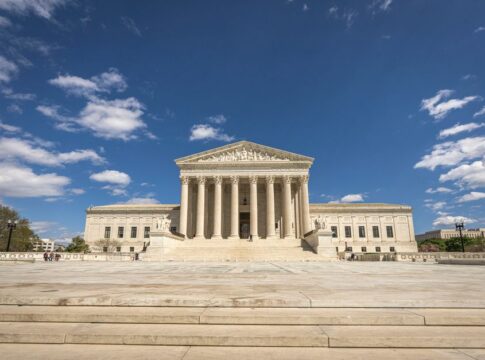
The nation’s highest court has delivered a significant rebuke to the Trump administration’s aggressive campaign against diversity, equity, and inclusion programs in federal research funding. The Supreme Court rejects the administration’s attempt to halt research grants tied to DEI initiatives at the University of California and other institutions, marking a pivotal moment in the ongoing national debate over the role of diversity considerations in government-funded science and higher education.
The decision comes amid a sweeping federal effort to dismantle DEI-related programs across government agencies and contractors. By declining to intervene, the justices have allowed lower court rulings protecting these research grants to stand—at least for now. The move represents a rare setback for an administration that has made opposition to diversity initiatives a centerpiece of its domestic policy agenda.
For taxpayers and the scientific community, the ruling preserves billions of dollars in federally funded research that includes diversity-related components. It also signals that even a conservative-leaning Supreme Court may have limits on how far executive power can reach into academic institutions and scientific inquiry.
Key Takeaways
- The Supreme Court declined to take up the Trump administration’s emergency request to block research funding connected to diversity, equity, and inclusion programs at UC and other research institutions.
- The decision allows lower court orders protecting these federal research grants to remain in effect while legal challenges continue in the judicial system.
- The ruling represents a significant defeat for the administration’s broader campaign to eliminate DEI considerations from federal contracting and grant-making processes.
- Research institutions including the University of California system can continue receiving federal funding for projects that incorporate diversity-related goals or criteria.
- The case highlights tensions between executive branch authority over federal spending and the independence of academic research institutions.
- Legal battles over DEI programs in government and higher education are expected to continue in various courts nationwide.
The Background & Context
The collision between the Trump administration and university research programs over diversity initiatives reflects a broader cultural and political battle that has intensified over the past several years. Following the Supreme Court’s 2023 decision restricting affirmative action in college admissions, conservative activists and officials have expanded their focus to other areas where race and diversity considerations play a role in institutional decision-making.
Federal research grants represent enormous sums. The National Institutes of Health alone distributes more than $40 billion annually. The National Science Foundation adds billions more. Many of these grants, particularly in recent years, have included components addressing diversity in scientific fields, broadening participation of underrepresented groups, or studying health disparities affecting different populations.
The Trump administration has argued that such considerations constitute illegal discrimination. Executive orders issued earlier this year directed agencies to scrutinize and potentially terminate programs that include DEI-related elements. The University of California system, one of the world’s premier public research institutions, became a flashpoint when federal officials moved to block or review grants that mentioned diversity goals.
UC and other institutions fought back in court, arguing that the administration’s actions exceeded legal authority and threatened academic freedom. Lower courts issued preliminary injunctions protecting the grants while the legal merits could be fully examined. The administration then sought emergency intervention from the Supreme Court to lift those protections.
Why This Matters
The Supreme Court’s decision to stay out of this fight—at least at this stage—carries profound implications for American research, education, and the balance of power between federal agencies and universities.
For researchers, the ruling means projects can continue without sudden funding disruptions that could derail years of work. Scientific studies don’t stop and start easily. Graduate students depend on grant funding. Lab equipment requires maintenance. Clinical trials follow strict timelines. An abrupt funding cutoff would have cascading effects across the research ecosystem.
For universities, the decision affirms that academic institutions retain some autonomy over how they structure research programs and allocate resources. The alternative—federal micromanagement of research priorities based on political considerations—would fundamentally alter the relationship between government and higher education that has driven American scientific leadership for decades.
For citizens, the stakes involve both principle and practice. Some Americans view DEI programs as essential tools for addressing historical inequities and ensuring diverse perspectives in research. Others see them as improper considerations of race and identity that violate principles of equal treatment. This divide reflects deeper disagreements about how the nation should reckon with questions of fairness, merit, and opportunity.
The practical implications extend to health research that examines disparities affecting different communities, educational programs aimed at diversifying scientific fields where certain groups remain underrepresented, and social science research exploring how institutions can better serve diverse populations. All could be affected by how these legal battles ultimately resolve.
Reactions & Analysis
The Supreme Court’s refusal to intervene has been characterized differently depending on political perspective. Critics of DEI programs view it as a temporary setback in a longer campaign. Defenders see it as validation that the administration overreached.
Legal experts note that the Court’s decision to decline the case at this stage doesn’t necessarily indicate how the justices might rule if a fully developed case reaches them later. Emergency applications receive less scrutiny than cases argued with full briefing and oral argument. The Court may simply have concluded that the lower court proceedings should play out before the justices weigh in.
University administrators have expressed relief that research programs can continue without disruption. The uncertainty surrounding federal funding had created anxiety across campuses, with some institutions unsure whether to proceed with planned studies or how to advise researchers applying for grants.
The administration’s supporters argue that the fight is far from over. They point to ongoing litigation in multiple jurisdictions and continued executive branch efforts to reshape federal grant-making policies. From their perspective, eliminating race-conscious programs from government operations remains a priority that will be pursued through various legal and administrative channels.
Civil rights organizations that have opposed the administration’s DEI crackdown welcomed the Supreme Court’s decision. They contend that diversity considerations in research serve legitimate purposes—from ensuring clinical trials include diverse participants to addressing health disparities that disproportionately affect certain communities.
What Happens Next
The immediate effect is continuity. Research grants remain in place. Universities can proceed with planned studies. But the underlying legal questions remain unresolved.
Lower courts will continue examining whether the administration’s actions violate the Administrative Procedure Act, exceed executive authority, or improperly interfere with academic freedom. These cases could take months or years to reach final resolution. Appeals are virtually certain regardless of how trial courts rule.
Meanwhile, the administration retains other tools. Agency officials can revise grant application processes, change review criteria, or issue new regulations governing how federal research dollars are distributed. Each of these actions would likely trigger fresh legal challenges, creating a cycle of policy changes and court battles.
Congress also has a role. Lawmakers could pass legislation either protecting diversity considerations in federal grants or prohibiting them. Given partisan divisions, such legislation faces uncertain prospects. But the issue may feature in upcoming budget negotiations and appropriations debates.
The broader trajectory of DEI programs nationwide remains unclear. Private companies, state governments, and educational institutions are all grappling with similar questions about how to balance diversity goals with legal constraints. How courts resolve the federal grant cases will influence these parallel debates.
For now, researchers can breathe easier. But the reprieve may be temporary. The fundamental disagreement about whether and how government should consider diversity in allocating public resources shows no signs of resolution.
Frequently Asked Questions
What exactly did the Supreme Court decide in this case?
The Supreme Court declined to take up the Trump administration’s emergency request to block federal research grants connected to diversity, equity, and inclusion programs. This means lower court orders protecting these grants remain in effect while the underlying legal cases continue. The Court did not rule on the merits of whether DEI considerations in federal grants are legal or constitutional—it simply chose not to intervene at this stage of the litigation.
Does this decision mean DEI programs in federal research are permanently protected?
No. The Supreme Court’s decision not to hear the case at this time does not resolve the underlying legal questions. The administration can continue pursuing its challenges in lower courts, and the issue could eventually return to the Supreme Court in a different form. This ruling preserves the status quo temporarily but does not establish permanent legal protection for diversity considerations in federal grant-making.
How much federal research funding was at stake in this case?
While specific dollar amounts were not detailed in the available reports, federal research grants to institutions like the University of California system involve billions of dollars annually across numerous scientific disciplines. The implications extend beyond any single institution to affect research universities nationwide that receive federal funding for projects incorporating diversity-related components or goals.
Why does the Trump administration oppose DEI programs in research grants?
The administration argues that considering race, ethnicity, or diversity in allocating federal funds constitutes illegal discrimination and violates principles of equal treatment. Officials contend that merit alone should determine grant awards, without regard to diversity goals. This position aligns with broader administration efforts to eliminate DEI considerations from federal contracting, employment, and programs across government agencies.
The Supreme Court’s decision leaves both sides claiming partial victories while the fundamental questions remain unresolved. For American research institutions and the millions who depend on federally funded science, the path forward remains uncertain. What’s clear is that the debate over diversity, merit, and fairness in public institutions will continue shaping national policy and politics for years to come.