
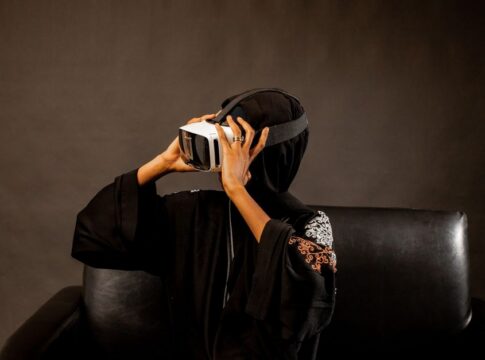
Photo: Ila Bappa Ibrahim / Pexels
By Daily American Press Newsroom, Entertainment Desk — Published November 5, 2026
Table of Contents
- Key Takeaways
- The Background & Context
- Why This Matters
- Reactions & Analysis
- What Happens Next
- Frequently Asked Questions
The World Cup once stood as a rare cultural monolith—a shared global experience uniting billions in front of screens simultaneously. But that era is fading. As Americans increasingly retreat into personalized streaming queues and algorithmically curated feeds, the very notion of a unified cultural moment is dissolving. Forget world culture as we knew it: entertainment has splintered into countless micro-audiences, each consuming content tailored to their preferences, rarely intersecting with what their neighbors are watching.
This fragmentation represents a fundamental shift in how societies experience stories, music, sports, and art. Where once families gathered around a single television to watch the same primetime shows, today’s viewers navigate an ocean of on-demand options. The paradox is striking: we have more access to diverse content than ever before, yet we share fewer common cultural touchstones with our fellow citizens.
The phenomenon extends beyond mere viewing habits. It touches how communities form bonds, how generations communicate, and how democracies sustain shared narratives. When pop culture fragments, so too does the common ground upon which civic life is built.
Key Takeaways
- Cultural consumption has shifted from mass shared experiences to individualized, fragmented viewing patterns across streaming platforms and digital media.
- Even major global events like the World Cup face a paradox: while technically reaching large audiences, they no longer command the universal cultural attention they once did.
- The crisis of narration in modern society reflects difficulty in telling coherent stories when audiences are scattered across countless platforms and preference niches.
- This fragmentation affects not just entertainment but fundamental aspects of civic life, including shared understanding and community cohesion.
- The transformation from broadcast culture to streaming culture has accelerated dramatically in recent years, reshaping how Americans consume movies, TV shows, and other media.
- Traditional cultural unifiers—from appointment television to major sporting events—no longer hold the same binding power in an era of infinite choice.
The Background & Context
For most of the twentieth century, American culture operated on a broadcast model. Three major networks dictated what millions watched simultaneously. Families scheduled their evenings around prime-time programming. Water cooler conversations the next morning centered on the same sitcom episodes or dramatic finales. The Super Bowl, the Oscars, and presidential debates drew massive, simultaneous audiences.
Cable television began the fracture in the 1980s and 1990s. Suddenly, viewers could choose from dozens, then hundreds of channels. Niche interests found dedicated programming. But even then, certain shows—”Seinfeld,” “Friends,” “The Sopranos”—still captured broad swaths of the public.
The streaming revolution changed everything. Netflix, Hulu, Disney+, HBO Max, Apple TV+, Paramount+, and countless others now compete for attention. Each platform houses thousands of titles. Algorithms recommend different content to different users based on viewing history. Two people can both be “watching Netflix” yet have entirely different experiences, never encountering the same shows.
This shift happened with remarkable speed. A decade ago, traditional television still dominated. Today, cord-cutting is standard among younger Americans. Streaming services release entire seasons at once, eliminating the shared weekly anticipation that once united viewers. Social media amplifies the effect: users curate feeds that reinforce existing preferences, rarely encountering perspectives or entertainment choices outside their bubble.
The fragmentation extends to movies. Theatrical releases no longer guarantee cultural ubiquity. Many films debut directly on streaming platforms, seen by subscribers but invisible to others. Box office hits that might once have been universally known now pass unnoticed by large segments of the population.
Why This Matters
Cultural fragmentation carries consequences far beyond entertainment preferences. Shared stories have always served as social glue. They provide common reference points, facilitate conversation across differences, and create a sense of belonging to something larger than oneself.
When Americans lack shared cultural experiences, they lose opportunities to build understanding across divides. A nation where citizens consume entirely different media diets struggles to maintain common ground. Political polarization deepens when people not only disagree on policy but inhabit entirely separate informational and cultural universes.
For families, the shift creates generational gaps. Parents and children no longer watch the same shows or follow the same celebrities. The casual cultural literacy that once bridged age groups—knowing the same songs, recognizing the same TV characters—diminishes. Each generation retreats into its own streaming ecosystem.
Communities face similar challenges. Local gatherings once revolved around shared cultural events—watching a popular series finale together, discussing a blockbuster everyone had seen. Now, finding common cultural ground requires deliberate effort. Book clubs and watch parties become intentional attempts to recreate what once happened organically.
The economic implications are substantial too. Advertisers struggle to reach broad audiences. Entertainment companies pour billions into content that reaches fragmented viewership. The model that sustained network television and Hollywood studios for decades no longer functions. Streaming platforms lose money chasing subscribers in an oversaturated market.
Civic life suffers when citizens lack shared narratives. Democratic discourse depends on some level of common understanding and mutual reference points. When people consume entirely different information streams and entertainment, they develop incompatible frameworks for interpreting events. The crisis of narration—the difficulty of telling coherent stories in a fragmented world—becomes a crisis of meaning itself.
Reactions & Analysis
Cultural observers have noted the tension between abundance and cohesion. We enjoy unprecedented access to diverse content from around the world. Any genre, any era, any language is available instantly. Yet this bounty comes at a cost: the loss of simultaneity, of shared experience, of cultural moments that unite rather than divide.
The World Cup paradox illustrates this tension perfectly. The tournament remains one of the planet’s largest sporting events, technically reaching billions. Yet its cultural impact has diminished even as its reach has expanded. Americans increasingly treat it as optional rather than essential viewing. Competing entertainment options—personalized streaming recommendations, social media feeds, video games—fragment attention even during what should be a unifying global event.
Industry executives grapple with the new reality. Some streaming services experiment with weekly release schedules, trying to recapture the communal anticipation of traditional television. Others double down on algorithmic personalization, betting that hyper-targeted content will win subscriber loyalty. Neither approach has solved the fundamental problem: how to create shared cultural moments in an age of infinite choice.
Educators and storytellers confront the crisis of narration daily. How do you tell stories that resonate across fragmented audiences? Traditional narrative structures assumed shared cultural knowledge and common reference points. Those assumptions no longer hold. Writers and directors must now decide whether to target niche audiences or attempt the increasingly difficult task of crafting broadly appealing content.
Some analysts argue the fragmentation is healthy, democratizing culture by giving voice to previously marginalized perspectives. Others worry about the social costs of losing common ground. Both perspectives contain truth. The challenge lies in preserving diversity while maintaining enough cohesion for functional civic life.
What Happens Next
The trajectory seems clear: fragmentation will continue. New platforms will emerge. Algorithms will grow more sophisticated at predicting individual preferences. Virtual reality and immersive technologies will further personalize entertainment experiences. The days of mass shared cultural events are unlikely to return.
Yet counter-trends may emerge. Humans crave connection and shared experience. Live events—concerts, sports, theater—may gain renewed importance precisely because they offer what streaming cannot: collective presence and simultaneous experience. Communities might deliberately create shared cultural moments, organizing group viewings or discussions to combat isolation.
Regulatory questions loom. Should governments encourage platforms that facilitate shared experiences? Are there antitrust concerns when a handful of tech companies control the algorithms that shape cultural consumption? How do we ensure diverse voices are heard in a fragmented marketplace that rewards niche targeting?
The entertainment industry will keep adapting. Some companies may pivot toward creating “event” programming designed to break through the noise and capture broad attention. Others will mine data to serve ever-narrower audience segments. The economics remain uncertain; many streaming platforms are unprofitable, sustained by corporate parents willing to absorb losses while competing for market position.
For ordinary Americans, the challenge is personal. How do we maintain connections across our fragmented cultural landscape? How do we ensure our children develop broad cultural literacy rather than algorithmic tunnel vision? These questions lack easy answers but demand attention as we navigate an entertainment ecosystem fundamentally different from anything previous generations experienced.
Frequently Asked Questions
Why is cultural fragmentation happening now?
The combination of streaming technology, algorithm-driven recommendations, and the proliferation of content platforms has created an environment where individuals can consume entirely personalized entertainment. Unlike the broadcast era when limited channels meant shared viewing experiences, today’s infinite options allow people to retreat into customized media bubbles. The economic incentive for platforms to maximize individual engagement through personalization accelerates this trend.
Is cultural fragmentation necessarily bad for society?
The effects are mixed. Fragmentation allows previously marginalized voices and niche interests to find audiences, democratizing culture in important ways. However, it also reduces shared experiences that help build community cohesion and mutual understanding. The loss of common cultural reference points can deepen social divisions and make civic discourse more difficult. The challenge is balancing diversity with enough commonality to sustain functional communities.
Can anything reverse the trend toward fragmented entertainment consumption?
A complete reversal is unlikely given technological and economic realities. However, deliberate efforts to create shared cultural experiences—through communal viewing events, curated programming that appeals broadly, or platforms designed to facilitate collective rather than isolated consumption—could mitigate some effects. Live events and appointment viewing of special programming may also maintain pockets of shared experience within the broader fragmented landscape.
How does streaming differ from previous media revolutions like cable TV?
While cable television increased channel options, it still operated on a broadcast schedule that created some simultaneity of viewing. Streaming eliminates even that shared timing, allowing completely asynchronous consumption. The algorithmic personalization of streaming platforms also creates fundamentally different experiences for different users on the same service, something cable never did. The scale and speed of content production for streaming far exceeds what cable offered, exponentially increasing fragmentation.
As Americans scroll through endless streaming options tonight, searching for something to watch, they participate in a quiet revolution. The shared cultural fabric that once bound communities is unraveling, thread by thread. Whether we can weave something new from these fragments—or whether we’ll continue drifting into isolated entertainment silos—remains one of the defining questions of our digital age. The answer will shape not just what we watch, but how we live together.