
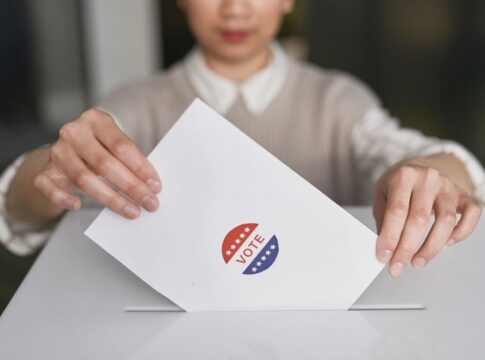
Photo: Edmond Dantès / Pexels
By Daily American Press Newsroom, Politics Desk — Published November 28, 2026
Table of Contents
- Key Takeaways
- The Background & Context
- Why This Matters
- Reactions & Analysis
- What Happens Next
- Frequently Asked Questions
American politics may be entering a new era. Democrats have secured their largest House majority in more than a quarter-century, raising fundamental questions about whether the nation is experiencing a genuine realignment of political power or simply a temporary swing of the electoral pendulum. The party’s commanding performance in recent midterm elections has delivered them 258 seats in the House of Representatives—the most substantial majority since 1992—signaling what could be a transformative moment in how Americans align themselves politically and what they expect from their government.
This realignment politics democrats conversation extends far beyond simple vote tallies. It touches on deeper currents running through the American electorate: shifting demographics, changing attitudes toward government’s role in daily life, and evolving expectations about accountability in Washington. For voters across the country, the implications reach into every corner of policy, from healthcare and immigration to how taxpayer dollars are spent on federal programs.
The scale of the Democratic victory has surprised even seasoned political observers. A gain of this magnitude typically reflects more than dissatisfaction with the party in power—it often signals a broader recalibration of voter priorities and allegiances that can shape politics for years to come.
Key Takeaways
- Democrats have won 258 House seats, their largest majority since 1992, suggesting a potential long-term shift in American political alignment.
- The midterm results raise questions about whether this represents a temporary electoral swing or a more fundamental realignment of voter coalitions and priorities.
- The expanded majority gives Democrats greater legislative power to advance their policy agenda on healthcare, immigration, and government spending.
- Concerns about government accountability and waste have emerged as significant issues, with watchdog agencies flagging problems in federal spending programs.
- The election outcome will shape congressional oversight, campaign strategies, and the legislative landscape heading into the next presidential cycle.
- Both parties now face pressure to demonstrate they can govern effectively and address voter concerns about how tax dollars are used.
The Background & Context
To understand the significance of the current moment, we need to look back. The last time Democrats held this many House seats was during the early 1990s, an era that preceded the Republican Revolution of 1994 and the subsequent decades of closely divided government. That period saw intense battles over the size and scope of federal programs, debates that feel remarkably familiar today.
Midterm elections traditionally serve as a referendum on the party controlling the White House. Voters use these contests to express approval or frustration with the direction of the country. But not all midterms are created equal. Some represent modest course corrections. Others mark inflection points where the political landscape fundamentally shifts.
The concept of political realignment has deep roots in American history. Scholars point to several major realignments: the Civil War era, the Progressive Era, the New Deal coalition, and the Reagan Revolution. Each reshaped party coalitions, redrew the electoral map, and established new governing philosophies that lasted for decades. The question now is whether we’re witnessing another such moment.
Several factors suggest this could be more than a typical midterm swing. Demographic changes have accelerated. Younger voters are participating at higher rates. Suburban areas that once reliably supported Republicans have become competitive or shifted Democratic. Urban-rural divides have deepened. These aren’t temporary conditions—they reflect structural changes in where Americans live and how they view politics.
Why This Matters
For ordinary Americans, the composition of Congress directly affects their daily lives. It determines which bills become law. It shapes oversight of federal agencies. It influences everything from tax policy to infrastructure spending to healthcare access.
A House majority of this size gives Democrats significant power to set the legislative agenda. They can advance bills on issues they’ve prioritized: expanding healthcare coverage, addressing climate change, reforming immigration policy, and increasing oversight of government spending. With 258 seats, they have cushion to absorb defections from moderate members while still passing legislation.
But power brings responsibility. Voters who delivered this majority will expect results. They’ll want to see their concerns addressed, not just partisan positioning. This creates pressure on Democratic leadership to demonstrate they can govern effectively, not just win elections.
The question of government waste and accountability has become particularly salient. Reports from government watchdogs highlighting problems with federal spending—such as concerns about waste in immigration detention programs—remind voters that they have a stake in how their tax dollars are used. When agencies spend inefficiently or without proper oversight, it’s not abstract—it’s money that could have gone to schools, roads, or healthcare.
For Republicans, this moment demands introspection. A loss of this magnitude forces a party to reconsider its message, its coalition, and its policy priorities. Do they need to broaden their appeal? Adjust their positions on key issues? Rebuild relationships with voter groups that have drifted away?
Reactions & Analysis
Political analysts are divided on what the election results truly signify. Some view the Democratic gains as a clear repudiation of Republican policies and a mandate for change. Others caution against reading too much into a single election cycle, noting that midterms often produce exaggerated swings that don’t necessarily predict future outcomes.
The size of the Democratic majority—258 seats—provides important context. This isn’t a narrow victory that could easily flip in the next cycle. It represents gains across diverse districts, from urban centers to suburban communities to some rural areas. That geographic breadth suggests the appeal of the Democratic message extended beyond the party’s traditional base.
Campaign strategists from both parties are already dissecting the results for lessons. Democrats will seek to understand which messages resonated most effectively and how to maintain their coalition. Republicans face the more difficult task of diagnosing what went wrong and charting a path back to majority status.
Government watchdog agencies have added another dimension to the political conversation by highlighting concerns about federal spending practices. Their warnings about waste in programs like immigration detention give ammunition to those arguing for stronger congressional oversight—a role the newly empowered Democratic majority is likely to embrace vigorously.
What Happens Next
The immediate future will test whether Democrats can translate electoral success into legislative achievement. With their expanded majority, they’ll have opportunities to pass significant legislation. But they’ll also face the challenge of maintaining unity within a caucus that spans from progressive to moderate members with different priorities and constituencies.
Oversight will likely become a major focus. Congressional committees will have the power to investigate administration policies, summon officials to testify, and demand documents. This oversight function—particularly around issues like government spending and program efficiency—could produce both substantive policy improvements and political theater.
For the American public, the coming months will reveal whether this election truly represents a realignment or simply a particularly strong midterm performance. Realignments don’t happen overnight. They unfold over multiple election cycles as new coalitions solidify and governing philosophies become entrenched.
Several factors will determine whether this moment becomes a lasting realignment. Can Democrats hold their gains in subsequent elections? Do demographic and geographic trends continue to favor them? Do they deliver on policy promises in ways that satisfy voters? Can Republicans find a compelling counter-message that rebuilds their coalition?
The answers won’t be clear for years. But the scale of the Democratic victory suggests something significant has shifted. Whether that shift becomes permanent depends on what happens next—how both parties respond, what policies get enacted, and whether voters feel their lives improve as a result.
Frequently Asked Questions
What does political realignment actually mean?
Political realignment refers to a fundamental and lasting shift in the coalitions that support each party, the issues that define political debate, and the geographic patterns of electoral support. Unlike temporary electoral swings where control of government changes hands but underlying patterns remain stable, a true realignment reshapes politics for a generation or more. It typically involves changes in which groups support which party, new issues rising to prominence, and altered electoral maps that persist across multiple election cycles.
How does a 258-seat House majority compare historically?
A 258-seat majority represents a commanding position in the House of Representatives, where 218 seats are needed for control. This is the largest Democratic majority since 1992, giving the party substantial power to advance legislation even if some members defect on particular votes. Historically, majorities of this size have enabled parties to pursue ambitious legislative agendas, though success still depends on Senate cooperation and presidential support or the ability to override vetoes.
Why do midterm elections often favor the party not holding the presidency?
Midterm elections typically function as a check on presidential power, with voters often expressing frustration or concern about the direction of the country by supporting the opposition party. Factors include lower turnout among the president’s supporters who lack the motivation of a presidential race, mobilization of opposition voters who want to constrain the administration, and accumulated grievances about policies or performance. However, the magnitude of the current Democratic gains exceeds typical midterm swings, suggesting deeper currents at work.
What role does government oversight play after an election like this?
Congressional oversight becomes particularly important when one party controls the House, as it provides a check on executive branch actions and federal spending. Committees can investigate programs, hold hearings, subpoena documents, and recommend reforms. Issues like waste in federal detention spending, flagged by government watchdogs, become fodder for oversight hearings that can lead to policy changes, budget adjustments, or new legislation. This oversight function is a core constitutional responsibility that often intensifies after significant electoral shifts.
The coming years will reveal whether this election marks a true realignment or a dramatic but temporary shift. For now, Americans have delivered a clear verdict at the ballot box. How their elected representatives respond—and whether they can address the concerns that drove voters to produce such a decisive outcome—will shape our politics for years to come. Democracy is not a single election but an ongoing conversation between citizens and their government, and that conversation has just taken a significant turn.