Photo: Rafael Minguet Delgado / Pexels
By Daily American Press Newsroom, Economy Desk — Published November 27, 2026
Table of Contents
- Key Takeaways
- The Background & Context
- Why This Matters
- Reactions & Analysis
- What Happens Next
- Frequently Asked Questions
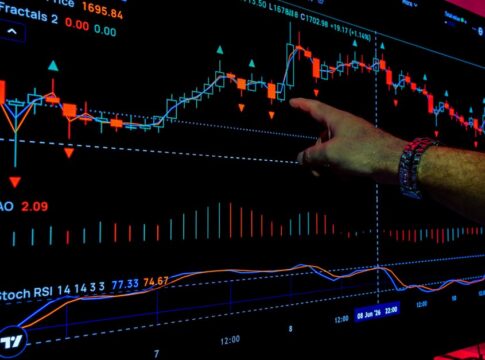
Wall Street is gripped by anxiety. Investors are selling off stocks and retreating to safer assets. Yet the American economy is posting some of its strongest growth numbers in years. Why are investors freaking out even as economic data suggests the nation is charging ahead? The answer lies in a paradox that has confounded market watchers and policymakers alike: robust economic performance can actually spook markets when it raises fears about inflation, interest rates, and the sustainability of recent gains.
Recent reports reveal that third-quarter GDP growth has been revised sharply higher, painting a picture of an economy firing on multiple cylinders. Jobs remain plentiful, consumer spending continues, and corporate earnings have held up better than many feared. Yet this very strength has investors on edge, worried that the Federal Reserve will keep interest rates elevated for longer than hoped. Adding to the unease, major financial institutions are warning that a lasting sell-off in artificial intelligence stocks—one of the market’s hottest sectors—poses one of the biggest risks to the broader economy.
The disconnect between Main Street vitality and Wall Street jitters reflects deeper tensions in the American economic landscape. What looks like prosperity to workers and businesses can appear as a threat to investors betting on lower borrowing costs and easier monetary policy. Understanding this divergence matters to every American, whether they own stocks or not, because market turbulence can ripple through retirement accounts, hiring decisions, and the cost of everything from mortgages to car loans.
Key Takeaways
- U.S. third-quarter GDP growth was revised sharply higher, indicating stronger economic performance than initially reported
- Despite positive economic data, investors are experiencing significant anxiety and market volatility
- Bank of America has identified a lasting AI stock sell-off as one of the biggest risks facing the economy
- Strong economic growth paradoxically worries investors by suggesting the Federal Reserve may maintain higher interest rates longer
- The disconnect between economic strength and market nervousness reflects concerns about inflation, interest rate policy, and sector-specific vulnerabilities
- Market turbulence has real-world implications for retirement savings, business investment, and consumer borrowing costs
The Background & Context
The current market anxiety emerges from a unique moment in American economic history. For more than a year, the Federal Reserve has maintained interest rates at levels not seen in decades, attempting to cool an economy that ran too hot coming out of the pandemic. The strategy was to engineer a “soft landing”—slowing growth enough to tame inflation without triggering a recession.
Throughout 2023 and into 2024, investors repeatedly bet that this tightening cycle would end soon. Markets rallied on hopes that rate cuts were imminent. Each piece of economic data became a tea leaf to read: strong numbers suggested rates would stay high, while weakness hinted at coming relief. This created a perverse dynamic where good news for the economy became bad news for stocks.
The GDP revision underscores just how resilient the American economy has proven. Initial estimates are routinely adjusted as more complete data arrives, but a sharp upward revision suggests the economy has more momentum than economists initially recognized. Consumer spending, business investment, and government expenditures all contribute to GDP, and stronger-than-expected performance in these areas indicates that high interest rates have not yet succeeded in significantly slowing economic activity.
Meanwhile, artificial intelligence has emerged as the dominant investment theme of recent years. Tech giants and startups alike have poured billions into AI development, and their stock prices soared on promises of revolutionary productivity gains. This concentration of market gains in a narrow slice of technology stocks created its own vulnerability. When enthusiasm wanes or reality fails to match hype, the reversal can be swift and severe.
Why This Matters
The stakes extend far beyond the trading floors of Lower Manhattan. When investors grow nervous, the consequences cascade through the entire economy in ways that touch ordinary Americans who may never check a stock ticker.
Retirement accounts hold the savings of millions of workers. A sustained market downturn erodes 401(k) balances and pension fund assets, potentially delaying retirement plans or forcing retirees to cut back on spending. Younger workers may see years of patient saving evaporate, while those nearing retirement face the prospect of working longer than planned.
Business investment decisions hinge partly on market conditions. When stock prices fall and borrowing costs remain elevated, companies become more cautious about expansion, hiring, and capital projects. A factory that might have been built gets postponed. Jobs that would have been created remain unfilled. Innovation that requires upfront investment gets shelved until conditions improve.
The interest rate environment affects consumer borrowing directly. Mortgages, auto loans, credit cards, and student debt all carry rates influenced by Federal Reserve policy and market expectations. If strong economic data convinces the Fed to maintain higher rates longer, families pay more to buy homes, finance cars, or carry credit card balances. The dream of homeownership slips further from reach for first-time buyers facing both high prices and elevated mortgage rates.
The AI sector’s health matters because it represents not just stock market speculation but real business investment and employment. Tech companies employ hundreds of thousands of workers in high-paying jobs. A sustained sell-off could lead to layoffs, hiring freezes, and reduced spending in communities from Silicon Valley to Seattle, Austin to Boston. The ripple effects would touch restaurants, housing markets, and local tax revenues.
Reactions & Analysis
Financial institutions are sounding alarm bells about specific vulnerabilities. Bank of America’s warning about AI stock risks reflects concern that the sector has become overvalued relative to near-term profit potential. When a major bank identifies a particular risk as among the biggest facing the economy, it signals that professional investors are reassessing assumptions and potentially repositioning portfolios.
The sharp upward revision to GDP growth presents Federal Reserve policymakers with a dilemma. Their mandate includes both price stability and maximum employment. A surging economy suggests the labor market remains tight and inflation risks persist. This data point argues for maintaining restrictive monetary policy even as investors clamor for relief. The Fed must balance these competing pressures while trying to avoid both runaway inflation and an unnecessary recession.
Market volatility itself becomes a factor in economic decision-making. Businesses facing uncertain market conditions may delay investments. Consumers watching their portfolios decline may pull back on discretionary spending. This creates feedback loops where investor anxiety can become self-fulfilling, slowing an economy that data suggests remains strong.
The divergence between economic fundamentals and market sentiment also reveals differing time horizons. Economic data reports what has already happened—past growth, past job creation, past spending. Markets attempt to price in future conditions—where growth is heading, what the Fed will do next, whether current trends can continue. This forward-looking nature means markets often move before the economy does, sometimes correctly anticipating turns and sometimes overreacting to noise.
What Happens Next
The resolution of this tension between strong economic data and investor anxiety will likely unfold over coming months. Several scenarios could play out, each with distinct implications for markets and the broader economy.
If economic growth continues at the revised higher pace, the Federal Reserve may indeed maintain elevated interest rates longer than markets currently expect. This could lead to further market volatility as investors adjust expectations and repricing occurs across asset classes. Eventually, sustained high rates would likely slow the economy, potentially vindicating investor concerns but only after a lag.
Alternatively, the economy could slow on its own as the cumulative effects of past rate hikes work through the system. Economic impacts often take twelve to eighteen months to fully materialize. If growth moderates and inflation continues declining, the Fed might gain confidence to cut rates, potentially relieving investor anxiety and supporting market recovery.
The AI sector faces its own reckoning. Either the technology will begin delivering the productivity gains and profit growth that justify current valuations, stabilizing the sector, or disappointment will lead to a more severe correction. Bank of America’s warning suggests major institutions are preparing for the possibility of the latter, which could have significant wealth effects if the sell-off spreads beyond tech to broader market indices.
Political factors also loom. Economic policy debates, fiscal spending decisions, and regulatory approaches can all influence both economic performance and market sentiment. As election cycles approach, policy uncertainty typically increases, adding another layer of complexity to an already fraught situation.
Frequently Asked Questions
Why would strong economic growth make investors nervous?
Strong growth often fuels inflation and prompts the Federal Reserve to keep interest rates high to cool the economy. Higher rates make bonds more attractive relative to stocks, increase borrowing costs for companies, and reduce the present value of future corporate earnings. Investors who hoped for rate cuts to boost stock prices become anxious when robust economic data suggests those cuts may be delayed or canceled.
How does the AI stock sell-off threaten the broader economy?
AI stocks have driven much of the recent market gains, and many investors and institutions hold concentrated positions in these companies. A sustained sell-off would reduce wealth, potentially triggering cutbacks in consumer spending and business investment. Tech companies facing lower valuations might reduce hiring, delay projects, or even conduct layoffs. The psychological impact could also spread to other sectors, creating broader market declines that affect retirement accounts and business confidence.
What does a GDP revision tell us about economic health?
GDP revisions occur as more complete data becomes available after initial estimates. A sharp upward revision indicates the economy grew faster than originally measured, suggesting stronger consumer spending, business investment, or other economic activity. This reveals greater economic momentum and resilience than policymakers and investors initially understood, which can influence decisions about interest rates, investment strategies, and economic forecasts.
How long might this disconnect between markets and the economy last?
The duration depends on how economic data evolves and how the Federal Reserve responds. If growth remains strong, the tension could persist for many months as markets adjust to the reality of higher-for-longer interest rates. If the economy begins slowing or inflation falls faster than expected, the disconnect might resolve more quickly. Historical precedents suggest these divergences can last anywhere from a few months to over a year before economic reality and market expectations realign.
The paradox of investor anxiety amid economic strength reveals fundamental tensions in modern capitalism. Markets look forward while data looks back. What benefits workers and businesses today may threaten asset prices tomorrow. As this dynamic plays out, millions of Americans will feel the effects whether they follow financial news or not. The coming months will test whether the economy can maintain its momentum and whether markets can find stability amid uncertainty.