
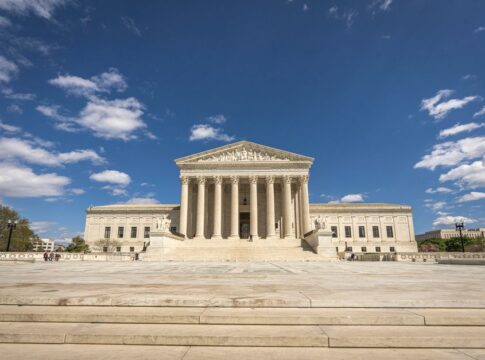
Photo: Mark Stebnicki / Pexels
By Daily American Press Newsroom, National Desk — Published November 28, 2026
Table of Contents
- Key Takeaways
- The Background & Context
- Why This Matters
- Reactions & Analysis
- What Happens Next
- Frequently Asked Questions
The nation’s highest court is poised to wade into one of the most contentious debates in American law. The Supreme Court will hear arguments on whether bans targeting semiautomatic rifles, commonly known as AR-15-style weapons, violate the Second Amendment. This marks a pivotal moment in the ongoing legal battle over gun rights and public safety, with profound implications for millions of gun owners and communities across the United States.
The case arrives as federal and state governments grapple with how to balance constitutional protections with efforts to reduce gun violence. At stake is the future of assault weapons bans that have been enacted in several states and localities, including Cook County, Illinois, where local prosecutors are preparing to defend their restrictions before the justices.
Legal experts and advocacy groups on both sides of the gun debate are watching closely. The Court’s decision could reshape firearms regulation nationwide, potentially affecting laws in states that have implemented similar prohibitions on semiautomatic rifles and high-capacity magazines.
Key Takeaways
- The Supreme Court has granted a new case examining whether the Second Amendment protects the possession of semiautomatic rifles, including AR-15-style weapons.
- Cook County State’s Attorney Eileen O’Neill Burke is preparing arguments to uphold the county’s assault weapons ban ahead of oral arguments before the high court.
- The case represents one of the most significant Second Amendment challenges in recent years, potentially affecting gun laws across multiple states.
- The decision could determine whether state and local governments retain the authority to ban specific categories of firearms they deem dangerous to public safety.
- Gun rights advocates argue that semiautomatic rifles are protected under the Constitution, while gun control proponents maintain that such weapons pose unique threats to communities.
The Background & Context
Assault weapons bans have been a flashpoint in American politics for decades. The federal government enacted a nationwide ban on certain semiautomatic firearms in 1994, but that legislation expired in 2004 and was never renewed by Congress. Since then, individual states and localities have pursued their own restrictions, creating a patchwork of regulations across the country.
Cook County’s assault weapons ban is among those local measures now facing constitutional scrutiny. State’s Attorney Eileen O’Neill Burke has taken on the responsibility of defending the county’s restrictions, arguing that they serve legitimate public safety interests without infringing on core Second Amendment rights.
The Supreme Court’s recent jurisprudence has dramatically reshaped gun rights litigation. In landmark decisions over the past fifteen years, the Court has recognized an individual right to keep and bear arms for self-defense and has struck down overly restrictive gun control measures. These precedents have emboldened challenges to assault weapons bans, with litigants arguing that semiautomatic rifles are in common use for lawful purposes and therefore cannot be prohibited.
The legal question turns on how courts should interpret the Second Amendment in the context of modern firearms. Semiautomatic rifles function by firing one round with each trigger pull and automatically loading the next cartridge, distinguishing them from fully automatic weapons, which have been heavily regulated since the 1930s. Proponents of bans argue that these weapons’ capacity for rapid fire and use of high-capacity magazines make them uniquely dangerous, particularly in mass shooting scenarios.
Why This Matters
For American gun owners, this case could determine whether they retain the legal right to purchase and possess some of the most popular firearms in the country. AR-15-style rifles are among the best-selling firearms in the United States, with millions in civilian hands. A ruling upholding bans could render those weapons illegal in certain jurisdictions, forcing owners to surrender, modify, or relocate their firearms.
Communities that have experienced gun violence see the stakes differently. Local governments have turned to assault weapons bans as a tool to prevent mass casualty events, which often involve semiautomatic rifles. Public health researchers have documented the increased lethality of shootings involving these weapons compared to handguns or other firearms. For residents of areas with such bans, the Court’s decision could mean the difference between maintaining local safety measures or seeing them invalidated.
The case also raises fundamental questions about federalism and the balance of power between national constitutional rights and local governance. If the Court strikes down assault weapons bans, it would limit the ability of state and local governments to craft gun policies tailored to their communities’ needs. Conversely, upholding such bans would affirm that constitutional rights can accommodate reasonable regulations designed to protect public safety.
Law enforcement agencies find themselves caught in the middle. Police departments in jurisdictions with assault weapons bans have supported these measures as tools to reduce officer and civilian casualties. Yet officers in other areas argue that law-abiding citizens should have access to effective means of self-defense. The Court’s ruling will influence how police departments across the nation approach firearms policy and enforcement.
Reactions & Analysis
Cook County’s top prosecutor has signaled her office’s commitment to defending the local assault weapons ban. State’s Attorney Eileen O’Neill Burke is preparing the legal case to present before the Supreme Court, outlining arguments for why the restrictions should remain in place. Her involvement underscores the importance local officials place on maintaining these regulations as part of their public safety strategy.
Gun rights organizations have long challenged assault weapons bans as unconstitutional infringements on Second Amendment freedoms. They contend that semiautomatic rifles are protected arms under the Constitution and that their common use for hunting, sport shooting, and home defense places them beyond the reach of government prohibition. These groups view the Supreme Court’s decision to hear the case as an opportunity to vindicate what they see as fundamental rights.
Gun violence prevention advocates, meanwhile, are mobilizing to support the bans. They point to mass shootings involving AR-15-style weapons as evidence of the need for restrictions. For these groups, the case represents a critical test of whether governments can take meaningful action to address gun violence or whether constitutional interpretation will block even modest regulatory efforts.
Legal scholars are divided on how the Court might rule. Some predict the justices will apply strict scrutiny to assault weapons bans, potentially striking them down as violations of the Second Amendment. Others suggest the Court may carve out a middle path, allowing some regulations while prohibiting others based on their scope and justification. The composition of the Court and its recent Second Amendment decisions provide fodder for both interpretations.
What Happens Next
Oral arguments before the Supreme Court will provide the first public indication of how the justices are thinking about these issues. The quality of advocacy and the questions posed during argument often signal the Court’s concerns and potential leanings. Lawyers on both sides will face intense questioning about the historical understanding of the Second Amendment, the nature of modern semiautomatic rifles, and the empirical evidence regarding their use in crime and self-defense.
A decision is expected by the end of the Court’s current term. Given the significance of the case, the justices may take considerable time crafting their opinions. The ruling could be narrow, addressing only the specific ban before the Court, or broad, establishing principles that govern all assault weapons restrictions nationwide.
If the Court upholds assault weapons bans, expect more states and localities to consider enacting similar measures. Democratic-controlled legislatures have long sought to pass such laws but have faced legal uncertainty. A favorable ruling would remove that obstacle and potentially lead to a wave of new restrictions.
Should the Court strike down the bans, states with existing restrictions would face difficult choices. They might attempt to craft narrower regulations that could survive judicial review, or they could shift focus to other gun control measures such as background checks, waiting periods, or red flag laws. The decision would also energize gun rights advocates to challenge other firearms regulations they view as unconstitutional.
Congress could theoretically respond to the Court’s decision through legislation, though the political dynamics make federal action on guns extremely difficult. A ruling either way might prompt legislative efforts, but the deep partisan divide on firearms policy suggests any congressional response would face significant hurdles.
Frequently Asked Questions
What exactly is the Supreme Court deciding in this case?
The Supreme Court will determine whether the Second Amendment protects the possession of semiautomatic rifles, including AR-15-style weapons. The case challenges assault weapons bans that prohibit civilians from owning these firearms, with legal arguments centering on whether such restrictions violate constitutional rights to keep and bear arms.
How could this decision affect gun owners in states without assault weapons bans?
Even gun owners in states without current bans could be affected by this ruling. If the Court upholds assault weapons bans, it could encourage more states to enact similar restrictions. Conversely, a decision striking down the bans would make it much harder for any state to impose such regulations in the future, providing greater certainty for gun owners nationwide.
When will the Supreme Court issue its decision?
The Court typically issues decisions in cases argued during its term by the end of June. After hearing oral arguments, the justices will deliberate and draft opinions. Given the significance and complexity of Second Amendment cases, the decision could come near the end of the term as the justices work through the legal and constitutional issues involved.
What weapons are covered by assault weapons bans like Cook County’s?
Assault weapons bans typically target semiautomatic rifles with certain features such as detachable magazines, pistol grips, or barrel shrouds. The AR-15 and similar rifles are the most commonly cited examples. These bans generally do not affect traditional hunting rifles, shotguns, or handguns, though specific provisions vary by jurisdiction. The bans also often include restrictions on high-capacity magazines.
As the Supreme Court prepares to hear this landmark case, Americans on all sides of the gun debate are bracing for a decision that could reshape the legal landscape for years to come. The outcome will reflect the Court’s vision of how an eighteenth-century constitutional provision applies to twenty-first-century weapons technology—a challenge that continues to test our legal system and our democracy.