
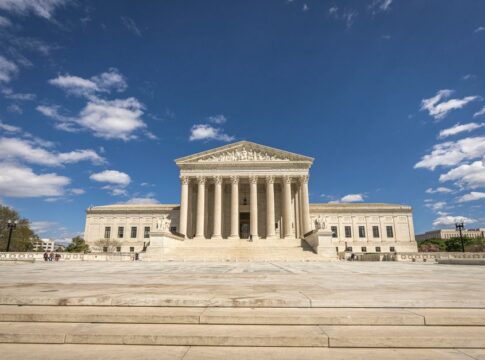
Photo: Mark Stebnicki / Pexels
By Daily American Press Newsroom, National Desk — Published November 24, 2026
Table of Contents
- Key Takeaways
- The Background & Context
- Why This Matters
- Reactions & Analysis
- What Happens Next
- Frequently Asked Questions
The Supreme Court takes another consequential case to its docket, this time examining whether the federal government can ban Americans from distilling spirits in their own homes. The justices have agreed to hear arguments challenging a longstanding federal prohibition that allows home brewing of beer and winemaking but criminalizes the production of distilled alcohol for personal consumption. This case arrives at a moment when craft distilling has exploded commercially, yet home enthusiasts face potential federal charges for doing in miniature what thousands of licensed distilleries do legally every day.
The legal challenge strikes at the heart of federal regulatory power. For decades, Americans have been permitted to ferment beer and wine at home without licensing or taxation, a practice codified in federal law during the Carter administration. Yet distilling—essentially the process of heating and condensing fermented liquids to increase alcohol content—remains strictly forbidden under federal statute, regardless of quantity or intent.
According to reports from multiple legal observers, the case will test whether this disparate treatment violates constitutional principles. The prohibition carries serious consequences: violators face potential felony charges, substantial fines, and imprisonment. Meanwhile, the craft spirits industry has grown into a multi-billion-dollar sector, with small-batch distilleries celebrated as artisanal entrepreneurs rather than criminals.
Key Takeaways
- The Supreme Court has agreed to review the federal ban on home distillation of spirits, a prohibition that has stood for decades while home beer and wine production remain legal.
- Current federal law allows Americans to produce limited quantities of beer and wine at home without licenses or taxes, but distilling any amount of spirits carries criminal penalties including potential felony charges.
- The case challenges whether the government’s different treatment of home distilling versus home brewing and winemaking can withstand constitutional scrutiny.
- Thousands of commercial craft distilleries operate legally across the nation, highlighting what critics call the absurdity of criminalizing identical activity at home for personal use.
- The outcome could affect how federal regulatory authority extends into private homes and personal consumption choices.
- Legal experts view the case as part of broader questions about the scope of federal power over individual activities conducted within one’s own residence.
The Background & Context
The federal prohibition on home distilling traces its roots to the early days of American taxation. Distilled spirits have long been a significant source of federal revenue, and the government has jealously guarded its monopoly on legal production. During Prohibition, all alcohol production was banned. After repeal, commercial distilling resumed under strict federal licensing and taxation, but home production remained forbidden.
A shift came in 1978 when President Jimmy Carter signed legislation legalizing home brewing of beer. Congress later extended similar permissions to home winemaking. These laws allow households to produce substantial quantities—up to 100 gallons per adult annually, with a household cap of 200 gallons—without paying excise taxes or obtaining federal permits. The only requirement: the product must be for personal or family use, not for sale.
No such exemption exists for distilled spirits. A home enthusiast who ferments a mash and then distills it into whiskey, gin, or vodka commits a federal crime, even if the quantity is tiny and intended solely for personal consumption. The Bureau of Alcohol, Tobacco, Firearms and Explosives enforces this ban, though prosecution of small-scale home distillers is relatively rare.
The legal landscape has grown increasingly incongruous. Craft distilleries have proliferated across all fifty states, celebrated by local governments and tourism boards. Distilling equipment is widely available for purchase. Online communities share recipes and techniques. Yet the federal prohibition remains absolute for non-commercial production.
Advocates for reform argue the distinction makes little sense. The distillation process itself is not inherently more dangerous than home brewing, they contend, and modern equipment includes safety features that mitigate risks. The tax revenue argument rings hollow, they say, when home brewers and winemakers already produce alcohol tax-free in far larger volumes than most home distillers would ever attempt.
Why This Matters
This case carries implications far beyond hobbyist distillers. At stake is the question of how far federal regulatory power extends into private homes and personal activities that pose minimal risk to others. The outcome could influence debates over everything from food production to cottage industries.
For citizens interested in craft beverages, the current regime creates an arbitrary line. A person can legally brew complex beers, ferment elaborate meads, and age wines in oak barrels—all without government permission. But heating that same fermented liquid to separate alcohol from water? That’s a federal crime. The inconsistency strikes many as difficult to justify on policy grounds.
The safety arguments traditionally offered by the government have weakened over time. Modern stills designed for home use incorporate pressure relief valves, temperature controls, and other features that address historical concerns about explosions or fires. Commercial distilleries, including tiny operations producing just hundreds of bottles annually, operate safely under reasonable regulations. Critics ask why similar rules couldn’t apply to home production rather than an outright ban.
Tax enforcement presents another angle. The federal government collects substantial excise revenue from spirits—far more per gallon than from beer or wine. Allowing home distilling could theoretically reduce this revenue stream. Yet the home brewing and winemaking exemptions already permit significant tax-free alcohol production. The actual revenue loss from home distilling would likely be negligible compared to commercial sales, particularly if quantity limits similar to beer and wine were imposed.
Constitutional scholars see broader federalism questions. The case may test limits on Congress’s taxing and commerce powers as applied to purely personal, non-commercial activity within the home. Previous Supreme Court decisions have sometimes narrowed federal authority over individual conduct that doesn’t substantially affect interstate commerce. This case could add another data point to that evolving jurisprudence.
Reactions & Analysis
As noted by legal observers, the Supreme Court’s decision to hear the case signals that at least four justices see substantial constitutional questions worth examining. The Court receives thousands of petitions annually and grants review in fewer than one hundred cases, suggesting the justices view this dispute as raising significant issues beyond the specific facts.
Supporters of lifting the ban point to what they characterize as absurd outcomes under current law. A person can legally purchase a still, legally ferment a mash, and legally possess distilled spirits—but the act of combining these legal elements to produce spirits at home becomes a federal crime. The prohibition applies even to distilling for purposes like extracting essential oils or producing fuel alcohol, though enforcement in those contexts is murky.
Civil liberties advocates have taken interest in the case as an example of federal overreach into private conduct. They argue that activities undertaken in one’s home, for personal use, with no intent to sell or distribute, should generally fall outside federal criminal law absent compelling public safety justifications. The fact that similar activities (beer and wine production) are explicitly permitted undercuts claims that home alcohol production inherently threatens public welfare.
Industry groups have remained relatively quiet, though some craft distillers privately acknowledge the inconsistency. Licensed distilleries face substantial regulatory burdens, and some worry that home distilling could be portrayed as undermining their carefully cultivated artisanal image. Others see no threat, noting that home brewing didn’t destroy the craft beer industry but rather helped create a culture of appreciation that fueled its growth.
Government defenders maintain that distillation presents unique risks and that the tax enforcement rationale remains valid. They note that spirits contain higher alcohol concentrations than beer or wine, making improper production potentially more dangerous. The revenue argument persists: excise taxes on distilled spirits generate billions annually for the federal treasury, and any erosion of that base concerns fiscal authorities.
What Happens Next
The Supreme Court will hear oral arguments in the coming term, with a decision expected by next summer. The justices must decide whether the federal ban survives constitutional scrutiny and, if not, what remedy is appropriate. Several outcomes are possible.
The Court could uphold the prohibition entirely, deferring to Congress’s judgment that distilling warrants different treatment than brewing or winemaking. Such a ruling would preserve the status quo and leave any policy changes to the legislative branch. Congress would remain free to amend the law, but absent political will, the ban would continue indefinitely.
Alternatively, the justices could strike down the prohibition as exceeding federal authority or violating equal protection principles. This would require the government either to ban all home alcohol production or to permit distilling on terms similar to beer and wine. Given the popularity of home brewing and winemaking, the latter seems more likely politically.
A narrow ruling is also possible, addressing specific aspects of the ban while leaving the broader framework intact. The Court might require the government to justify the distinction more rigorously or to provide some pathway for licensed home distilling under appropriate safety and quantity restrictions.
Whatever the outcome, the case will clarify important principles about federal regulatory power over private conduct. Lower courts have struggled with these questions across various contexts, and Supreme Court guidance would provide needed direction. The decision may influence pending challenges to other federal prohibitions on personal activities.
For the thousands of Americans who currently distill illegally at home, the stakes are personal. A favorable ruling would bring their hobby out of the shadows and eliminate the risk of federal prosecution. For the broader public, the case represents a test of how much the federal government can dictate what citizens do in their own homes when no one else is harmed.
Frequently Asked Questions
Is it currently legal to distill spirits at home for personal use?
No. Federal law prohibits any distillation of spirits without a permit, regardless of quantity or intended use. While home brewing of beer and winemaking are legal for personal consumption in limited quantities, distilling remains a federal crime that can result in fines and imprisonment. This prohibition applies nationwide, though enforcement against small-scale home distillers is inconsistent.
Why is home brewing legal but home distilling illegal?
Congress legalized home brewing in 1978 and later extended similar permissions to winemaking, allowing households to produce limited quantities tax-free for personal use. However, no such exemption was created for distilled spirits. The government has historically cited tax enforcement concerns and safety risks as justifications for treating distilling differently, though critics argue these distinctions are weak given that beer and wine are already produced tax-free at home in substantial volumes.
What could happen if the Supreme Court strikes down the ban?
If the Court rules the federal prohibition unconstitutional, Congress would need to decide whether to permit home distilling under regulations similar to those for beer and wine, or potentially to reimpose bans on all home alcohol production. The more likely outcome would be legalization with quantity limits, safety requirements, and restrictions against commercial sale, mirroring the current home brewing framework. The decision could also affect other federal prohibitions on private conduct.
When will the Supreme Court decide this case?
The Court will hear oral arguments during its current term, with a final decision expected by the end of the term in late June or early July. The exact timing depends on the Court’s schedule and the complexity of the legal issues presented. Until then, the federal ban remains in full effect, and home distilling continues to be illegal under federal law regardless of state laws or regulations.
The Supreme Court’s willingness to examine this decades-old prohibition reflects evolving views about federal power and personal liberty. Whether the justices ultimately side with home distilling enthusiasts or preserve the government’s ban, their reasoning will shape debates over regulatory authority for years to come. For now, Americans wait to learn whether the highest court in the land will recognize a constitutional right to distill spirits in their own kitchens.