
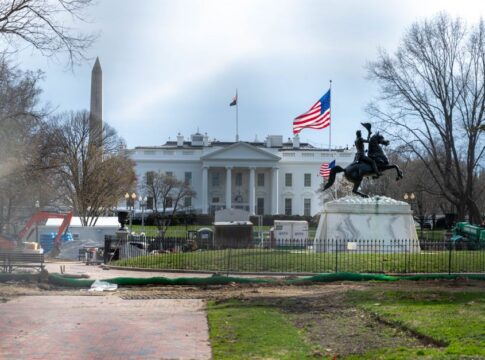
Photo: Quang Vuong / Pexels
By Daily American Press Newsroom, National Desk — Published November 25, 2026
Table of Contents
- Key Takeaways
- The Background & Context
- Why This Matters
- Reactions & Analysis
- What Happens Next
- Frequently Asked Questions
The White House has taken concrete steps toward replacing a stalled judicial nominee from the Trump era, according to sources familiar with the matter. The administration has initiated a background check on a candidate recommended by a prominent Texas senator, signaling a potential shift in strategy after months of gridlock over a contested federal court appointment. This development represents the latest chapter in an ongoing battle over the federal judiciary that has captured national attention and highlights the enduring political tensions surrounding judicial confirmations.
The White House moves come as part of a broader effort to fill vacancies on the federal bench, a critical function of the executive branch that shapes American law for generations. With judicial appointments serving lifetime terms, each nomination carries enormous weight for issues ranging from civil rights to corporate regulation. The decision to potentially replace a nominee already in the pipeline underscores both the political complexities of the confirmation process and the administration’s determination to secure confirmations in a divided Senate.
At the heart of this story is a Texas judicial seat that has become a flashpoint in the perpetual struggle between the White House and Congress over who sits on the federal courts. The background check on Senator John Cornyn’s preferred candidate suggests the administration may be seeking a path forward after encountering resistance to the original Trump-era selection.
Key Takeaways
- The White House has begun a background investigation on a new judicial candidate for a contested Texas federal court position, marking a potential replacement for a blocked Trump nominee.
- The candidate under review was reportedly recommended by Senator John Cornyn, a senior Republican from Texas with significant influence over judicial selections in his state.
- This development reflects ongoing tensions in the federal judicial confirmation process, where nominees can face months or years of scrutiny and political opposition.
- Background checks by the administration typically represent a serious step toward formal nomination, though they do not guarantee a final selection.
- The move illustrates how judicial appointments remain a high-stakes arena where national news intersects with long-term governance and the defense of constitutional principles.
- Federal judicial vacancies have significant implications for the administration of justice, affecting everything from criminal prosecutions to civil litigation across the country.
The Background & Context
Federal judicial appointments have long been among the most consequential and contentious responsibilities of any administration. Unlike cabinet positions or other executive appointments, federal judges serve for life, barring impeachment or voluntary retirement. This permanence means that a president’s judicial legacy can extend decades beyond their time in office, shaping legal precedents on issues from voting rights to environmental regulation.
The confirmation process itself is a complex dance involving multiple players. The president nominates candidates, typically after consulting with home-state senators through a tradition known as “senatorial courtesy.” The Senate Judiciary Committee then vets nominees through hearings and background investigations before voting to advance them to the full Senate. A simple majority is required for confirmation, but political dynamics can stall or derail nominations at any stage.
Texas, as the nation’s second-largest state by population, has multiple federal district and appellate court seats. These positions handle thousands of cases annually, from immigration disputes along the southern border to complex commercial litigation in major metropolitan areas like Houston and Dallas. When vacancies persist, court dockets slow and justice is delayed for litigants across the spectrum.
The Trump administration made judicial appointments a centerpiece of its domestic agenda, successfully confirming more than 200 federal judges during its four years. Some of these nominees faced significant opposition from Democrats and advocacy groups who questioned their qualifications or ideological perspectives. In certain cases, nominees withdrew or were never brought to a vote due to sustained resistance.
The current situation appears to involve one such contested nomination that has carried over into a new political landscape. Rather than continue fighting for a nominee facing insurmountable opposition, the administration appears to be exploring alternative candidates who might secure broader support, particularly from influential senators like Cornyn who wield considerable power over judicial selections in their home states.
Why This Matters
For ordinary Americans, federal judges are the officials most likely to directly impact their lives when legal disputes arise. These judges preside over criminal trials, rule on employment discrimination claims, interpret federal regulations affecting businesses, and decide constitutional questions that define the scope of individual rights. Their decisions set precedents that bind lower courts and guide legal practice for years to come.
The composition of the federal judiciary affects the balance of power in American democracy. Judges serve as a check on both executive and legislative overreach, but they also interpret laws in ways that can expand or contract government authority. A judiciary perceived as too ideologically uniform in either direction can undermine public confidence in the legal system’s fairness and impartiality.
Judicial vacancies create real problems for court systems and the communities they serve. When seats remain unfilled, remaining judges must shoulder heavier caseloads, potentially leading to rushed decisions or delayed justice. Civil litigants may wait years for their day in court. Criminal defendants’ constitutional right to a speedy trial can be compromised. Businesses face uncertainty when commercial disputes languish unresolved.
The political fight over judicial nominees also reflects deeper divisions about the role of courts in American life. Conservatives generally favor judges who interpret laws and the Constitution according to their original public meaning, while progressives often prefer jurists who view the law as a living document that should adapt to changing social conditions. These philosophical differences translate into real-world consequences on issues from abortion rights to gun regulations to healthcare policy.
For taxpayers, the judicial confirmation process itself carries costs. Background investigations, committee hearings, and floor debates consume government resources and congressional time that could be devoted to other legislative priorities. Prolonged vacancies mean the federal government is not operating at full capacity in one of its core constitutional functions: administering justice.
Reactions & Analysis
The initiation of a background check suggests multiple parties have been working behind the scenes to find a path forward on this contested seat. Senator Cornyn’s involvement is particularly significant. As a senior member of the Senate Judiciary Committee and a former state attorney general, Cornyn carries substantial weight on judicial matters, especially for Texas appointments. His recommendation of an alternative candidate indicates a pragmatic recognition that the original nominee could not secure confirmation.
For the White House, the decision to potentially replace a Trump-era nominee represents a delicate political calculation. On one hand, abandoning a previous administration’s selection could be seen as a concession to political pressure. On the other, securing actual confirmations and filling vacant seats serves the administration’s broader goal of ensuring a functioning federal judiciary. The practical need to move forward may have outweighed symbolic considerations.
Legal observers note that background checks, while significant, do not guarantee a nomination will proceed. The FBI and other agencies conduct extensive investigations into potential nominees’ personal histories, financial records, and professional conduct. These reviews can take months and occasionally uncover disqualifying information. Even if a candidate passes this scrutiny, political considerations may still prevent a formal nomination.
The situation also highlights the ongoing influence of the previous administration’s judicial priorities. Many Trump nominees remain in various stages of the confirmation pipeline, creating continuity questions for subsequent administrations. Some have been allowed to proceed, others withdrawn, and still others remain in limbo as political calculations evolve.
What Happens Next
The immediate next step will be completion of the background investigation on Cornyn’s recommended candidate. This process typically takes several months as investigators interview references, review financial disclosures, and examine the candidate’s judicial philosophy and prior rulings or writings. Only after this vetting is complete can the White House make a final decision on whether to proceed with a formal nomination.
If the administration does nominate the new candidate, the Senate Judiciary Committee would schedule a hearing. The nominee would face questions from senators about their qualifications, judicial philosophy, and views on controversial legal issues. Interest groups on both sides would mobilize to support or oppose the nomination, generating public pressure on senators to vote one way or another.
The political dynamics in the Senate will prove crucial. With narrow margins in recent years, even a handful of defections can doom a nomination or guarantee its success. Senators from Texas will have outsized influence, as will swing-vote senators who often hold the balance of power on contentious confirmations.
Looking further ahead, this case may set a precedent for how the administration handles other stalled or controversial nominees. If replacing a blocked candidate with a compromise choice proves successful, it could become a template for resolving other confirmation battles. Conversely, if this effort also fails, it might embolden opposition to future nominees and prolong the broader struggle over the judiciary.
The vacancy itself will remain until a nominee is confirmed and sworn in. This means the affected court will continue operating short-handed, with implications for case scheduling and the administration of justice in the region. The longer the seat stays empty, the greater the backlog of cases and the more pressure builds to find a resolution.
Frequently Asked Questions
Why would the White House replace a judicial nominee instead of continuing to push for confirmation?
When a nominee faces insurmountable political opposition and lacks the votes for Senate confirmation, continuing to push forward can be counterproductive. It ties up the confirmation process, leaves a judicial vacancy unfilled, and expends political capital that could be used on other priorities. By selecting a new candidate with broader support, the administration increases the likelihood of actually filling the seat and ensuring the court can function at full capacity.
What role does Senator Cornyn play in Texas judicial nominations?
Under the tradition of senatorial courtesy, home-state senators have significant influence over federal judicial nominations in their states. As a senior Texas senator and member of the Judiciary Committee, Cornyn’s recommendations carry substantial weight. Presidents typically consult with home-state senators before nominating judges, and opposition from a home-state senator can effectively block a nomination. Cornyn’s recommendation of an alternative candidate suggests he has leverage in this situation.
How long does the background check process typically take for judicial nominees?
FBI background investigations for federal judicial nominees typically take several months to complete. The process involves extensive interviews with colleagues, friends, and associates, review of financial records and tax returns, examination of prior writings and judicial opinions, and investigation of any potential conflicts of interest or ethical issues. The timeline can vary depending on the complexity of a candidate’s background and the thoroughness of the investigation required.
What happens to federal court operations when judicial seats remain vacant?
Judicial vacancies create significant operational challenges for federal courts. Remaining judges must handle larger caseloads, which can lead to longer delays in resolving cases. Civil litigants may wait years for trials or hearings. Criminal defendants may experience delays that test constitutional speedy trial requirements. Courts may have to limit the number of cases they accept or postpone less urgent matters. The effects ripple through the entire legal system, affecting everyone from individual citizens to major corporations involved in federal litigation.
As this situation continues to develop, it serves as a reminder of how judicial appointments remain one of the most consequential and politically charged aspects of federal governance. The outcome will affect not just one court seat, but the broader dynamics of how administrations and the Senate navigate the complex terrain of judicial confirmations in an era of intense political polarization.